Ask how caliphs, sultans, emperors, companies, and national leaders claimed authority, and who accepted, negotiated, or resisted those claims.
Timeline
Islamic World and Indian Ocean Timeline
A long route through early Islam, caliphates, Baghdad, Indian Ocean travel, South Asian sultanates, Mughal power, company rule, rebellion, partition, and Bangladesh.
Timeline Guide
How did early Islam, caliphates, Indian Ocean routes, South Asian empires, company rule, and postcolonial statehood become one connected world-history route?
Read this edited guide as a path through dates, places, affected lives, source limits, and contested memory rather than as an exhaustive database.
This timeline is built to prevent two common thin readings. The first treats Islamic history as a short sequence from Muhammad to conquest. The second treats Indian Ocean and South Asian history as background for European expansion. The route does something larger: it begins with community formation in Arabia, follows caliphal institutions and sacred memory, moves through Baghdad and Cairo, crosses maritime routes and South Asian sultanates, then continues into Mughal power, company rule, anti-colonial politics, partition, and Bangladesh.
The opening chapter moves from revelation to public order. Beginning of Muhammad's revelations, the Hijra, Badr, Jerusalem, the Umayyads, Karbala, and the Dome of the Rock show belief becoming community, community becoming political authority, and political authority becoming memory, architecture, and dispute. The early sequence gives readers the core vocabulary: leadership, legitimacy, migration, sacred geography, dynasty, martyrdom, and monument.
The Abbasid chapter changes the scale. The Abbasid Revolution, Talas, Baghdad, and the House of Wisdom show the caliphate as an eastern, urban, scholarly, and administrative system. Baghdad matters not because it was magically enlightened, but because patronage, paper, translation, medicine, mathematics, astronomy, law, commerce, and court power met in one capital. Fatimid Cairo and the Mongol sack of Baghdad then keep the route honest: Islamic authority was contested, regional, and vulnerable.
The Indian Ocean chapter widens the map. Chola pressure on Srivijaya, Mansa Musa's hajj, Ibn Battuta's travels, Malacca, Zheng He, and Vasco da Gama show ports, pilgrims, fleets, merchants, scholars, textiles, gold, diplomatic gifts, and monsoon routes. The ocean is not an empty space between civilizations. It is a system where political authority often depended on controlling movement, hosting strangers, taxing trade, and translating between communities.
Start With These Dates
- c. 610 CEBeginning of Muhammad's Revelations
Islamic tradition places the first revelations to Muhammad near Mecca, beginning a religious movement that would transform Arabia and much of the wider world.
- 622 CEHijra to Medina
Muhammad and his followers migrated from Mecca to Medina, creating a new community that linked religious authority with social and political organization.
- March 624 CEBattle of Badr
The early Muslim community fought Meccan opponents at Badr, a battle remembered in Islamic tradition as a decisive moment of communal survival.
- 637 CERashidun Conquest of Jerusalem
Jerusalem surrendered to the Rashidun caliphate after Byzantine control in the Levant weakened, placing one of the eastern Mediterranean's most sacred cities inside the expanding Islamic political world.
- 1324-1325 CEMansa Musa's Hajj
Mansa Musa's pilgrimage to Mecca displayed Mali's wealth, Islamic connections, and diplomatic visibility across North Africa and the wider Muslim world.
- March-April 1930Salt March
Mahatma Gandhi led a march to the sea to protest Britain's salt monopoly, turning a common commodity into a symbol of colonial resistance.
- August 1947Indian Independence and Partition
British India became independent as India and Pakistan, while partition produced mass migration, communal violence, and unresolved border questions.
- 1971 CEBangladesh Liberation War
Bengali nationalists fought for independence after political crisis and military repression in East Pakistan, leading to the creation of Bangladesh.
Sources Used Here
- Encyclopaedia Britannica: Islamic world, conversion and crystallization
Reference for early Islamic expansion, Umayyad-Abbasid transition, conversion, and social change.
- The Metropolitan Museum of Art: Trade and Travel in the Islamic World
Reference for Islamic-world land and sea routes, travel, and exchange with China, the Near East, and Indian Ocean networks.
- The Metropolitan Museum of Art: Trade and Travel in the Islamic World
Reference for routes, travel, trade goods, and cross-regional exchange across Islamic and Indian Ocean worlds.
- UNESCO: Silk Roads Programme
Reference for cross-regional exchange, routes, cultural contact, and movement between Eurasian and oceanic systems.
- Encyclopaedia Britannica: Delhi sultanate
Reference for Delhi Sultanate chronology, rulers, regional significance, and later absorption into Mughal history.
The South Asian chapter links sultanate and Mughal history to that oceanic and Islamic frame. The Delhi Sultanate, Timur's sack of Delhi, Panipat, and Akbar's Ibadat Khana show how Persianate, Central Asian, Indic, Islamic, military, and courtly worlds interacted. Mughal India becomes more readable when it is not isolated: it inherits sultanate institutions, Central Asian memory, gunpowder warfare, regional alliances, revenue politics, and religious debate.
The colonial and postcolonial chapter turns the route toward modernity. Plassey shows a company becoming political power in Bengal. The Indian Rebellion of 1857 shows the fragility and violence of that order. Suez changes maritime geography again. The Salt March shows anti-colonial politics through law, walking, publicity, and mass participation. Independence and partition give 1947 its double meaning, while Bangladesh in 1971 shows that postcolonial borders and statehood remained unsettled.
The timeline holds together because it follows routes and legitimacy rather than one dynasty. Caliphs, sultans, emperors, merchants, travelers, scholars, pilgrims, company officials, rebels, nationalists, refugees, and new states all appear. Each event asks who can make authority believable across distance and diversity, and which routes carry that claim: desert roads, pilgrimage paths, river capitals, port cities, monsoon lanes, court languages, railways, newspapers, and refugee corridors.
The evidence lens changes as the route moves. Early Islamic events rely on later narrative traditions, sacred memory, chronicles, inscriptions, architecture, and comparative context. Abbasid and Fatimid history adds urban histories, court sources, biographical dictionaries, coins, manuscripts, and material culture. Indian Ocean pages depend on travel writing, port archaeology, merchant records, inscriptions, ceramics, ship routes, and later colonial archives. Modern South Asian pages draw on newspapers, official records, memoirs, court documents, oral memory, and refugee testimony. The timeline teaches readers to ask what kind of source is speaking before they accept the shape of the story.
The route also keeps affected groups visible. Rulers and commanders matter, but so do non-Arab converts, Christian and Jewish communities in conquered cities, translators, physicians, merchants, sailors, enslaved people, women in court and household networks, artisans, pilgrims, rural taxpayers, sepoys, textile workers, refugees, and linguistic communities. A thin timeline would move from capital to capital. This one asks how people lived inside the routes that made capitals powerful.
Geography is the organizing grammar. Mecca and Medina create a Hijaz opening; Jerusalem and Damascus pull the story into late antique sacred and imperial space; Baghdad and Cairo make river and palace cities central; Malacca, Gujarat, Bengal, and the Red Sea make maritime routes visible; Delhi, Panipat, Fatehpur Sikri, Plassey, Meerut, Dandi, and Dhaka give South Asia a land-and-river route through empire and nationhood. The map is not a supplement to the timeline. It explains why certain events could travel farther than their local setting.
The page is designed for multiple search paths. A reader searching for an Islamic world timeline can follow caliphates, Karbala, Baghdad, and Cairo. A reader searching for Indian Ocean trade can follow Srivijaya, Chola power, Ibn Battuta, Malacca, Zheng He, Vasco da Gama, and Suez. A reader searching for South Asian history can follow Delhi, Panipat, Akbar, Plassey, 1857, Salt March, independence, partition, and Bangladesh. The same route serves those intents without creating duplicate pages that compete with one another.
A final reading path moves by problem rather than date. Start with legitimacy if the question is caliphates and dynasties. Start with routes if the question is trade and travel. Start with institutions if the question is scholarship, law, or administration. Start with coercion if the question is empire, company rule, and rebellion. Start with borders if the question is partition and Bangladesh. The timeline is long because the history is connected, but each reader can carry one lens through the whole route.
The story is strongest when read in layers. First, follow the dates from c. 610 CE to 1971 CE. Then read across the event types: religious history, migration, battle, conquest and surrender. The timeline becomes more than chronology when those dates reveal decisions, institutions, violence, reform, and memory.
Mansa Musa's Hajj sits near the middle of the sequence. Ask what had already become unavoidable by 1324-1325 CE, what actors still believed they could control, and which consequences were already beginning to move beyond the original setting.
The named events are Beginning of Muhammad's Revelations, Hijra to Medina, Battle of Badr, Rashidun Conquest of Jerusalem, Umayyad Caliphate Founded, Battle of Karbala. Each one pushes a more precise question: what changed, who benefited, who paid the cost, and what later page explains the aftermath more clearly?
Read the timeline against geography too. Places matter because power moves through corridors, borders, cities, ports, capitals, and frontiers. The map below keeps those distances visible while the event pages explain the human and institutional consequences.
A good timeline has a pulse: pressure, decision, expansion, resistance, and aftermath. When you move through Late Antiquity and Early Islamic World, keep asking whether an event is creating a new problem, revealing a hidden weakness, or making an earlier choice harder to reverse.
The human layer matters because timelines can become too abstract. Figures such as Muhammad, Umar ibn al-Khattab, Sophronius of Jerusalem, Muawiya I, and Ali ibn Abi Talib help the sequence feel lived rather than mechanical. Their choices do not explain everything, but they show where institutions, ideas, military systems, social movements, and public fear entered real decisions.
The ending is not only the last date. With closing events such as Opening of the Suez Canal, Salt March, Indian Independence and Partition, and Bangladesh Liberation War, the reader can ask what remained unsettled: which institutions survived, which arguments continued, which victims or opponents were left outside the official story, and which later crisis reused the same vocabulary.
Read this page once quickly for order, then read it again for contrast. Compare early confidence with later uncertainty, local decisions with global consequences, and visible turning points with slower changes in law, economy, belief, technology, borders, or memory. That second pass is where a timeline becomes an explanation.
Causation in this sequence is layered. One event may supply the trigger, another may reveal an older weakness, and a later event may show the consequence that people at the beginning did not expect. The useful habit is to separate background pressure, immediate decision, turning point, and aftermath before deciding which event matters most.
Consequences are uneven. A political settlement might look successful in one capital while creating resentment elsewhere; a military victory might end a campaign while deepening civilian trauma; a scientific or institutional breakthrough might solve one problem while creating new risks. The timeline is strongest when those mixed outcomes remain visible.
The final pass is comparative. After reading this sequence, open a neighboring topic or person page and ask whether the same pattern appears again. Repetition usually points to a structure; contrast usually points to a historical choice that could have gone another way.
Importance is not the same thing as drama. Some events are remembered because they were spectacular, while others matter because they changed rules, expectations, alliances, legal categories, technologies, or public language. Use the timeline to test both kinds of importance before deciding what belongs at the center of the story.
The page rewards moving outward. A timeline gives order, but the event pages give causes, maps, people, sources, and reading paths. When a date feels too compressed, open the full event page and then return here; the sequence becomes clearer with each pass instead of asking the reader to memorize a list.
Follow pilgrimage roads, river capitals, Central Asian corridors, monsoon sea lanes, port cities, company shipping, railways, and refugee movements.
Use Baghdad, the House of Wisdom, Ibn Battuta, Akbar's court, and travel networks to see how language, translation, law, and observation moved.
Read Delhi, Panipat, Fatehpur Sikri, Plassey, Meerut, Dandi, 1947, and Bangladesh as one long route from sultanate and empire to postcolonial statehood.
Keep East Africa, Arabia, Gujarat, Bengal, Malacca, Java, China, and the Red Sea visible; the ocean is a historical engine, not a blank map.
Karbala, Baghdad, 1857, partition, and Bangladesh are remembered differently by communities, states, schools, families, and political movements.
Beginning of Muhammad's Revelations gives the opening problem a date and place. Ask what was already unstable before it happened.
Mansa Musa's Hajj is a compression point: earlier causes are now crowded together with decisions that will shape the sequence's ending.
Follow the path through Mecca, Medina, Badr, Jerusalem, Damascus, and Karbala and ask how distance changed communication, logistics, fear, and control.
Bangladesh Liberation War works as both an ending and a beginning: it closes one sequence while opening later disputes, institutions, memories, or reforms.
Which conditions existed before the first event, and which later decision turned those conditions into visible historical change?
Who had the power to choose, who had fewer choices, and who is missing when the story is told only through leaders or institutions?
Which facts are date anchors, which are interpretations, and which claims need checking through the event sources before being repeated?
Which linked event, person, year, or topic page would change your interpretation if you read it next?
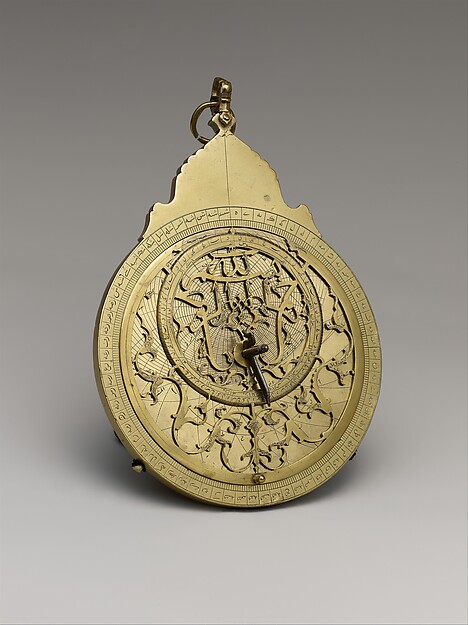
Interactive Timeline
Explore Islamic World and Indian Ocean Timeline by sequence
Beginning of Muhammad's Revelations
Islamic tradition places the first revelations to Muhammad near Mecca, beginning a religious movement that would transform Arabia and much of the wider world.
Read the full event pageNarrative Stages
Read this timeline in chapters
Opening Context
The pressures and early conditions that set this sequence in motion.
- Beginning of Muhammad's Revelationsc. 610 CE
- Hijra to Medina622 CE
- Battle of BadrMarch 624 CE
- Rashidun Conquest of Jerusalem637 CE
- Umayyad Caliphate Founded661 CE
- Battle of Karbala680 CE
- Dome of the Rock Completed691-692 CE
- Abbasid Revolution750 CE
- Battle of Talas751 CE
- Baghdad Founded in 762: Al-Mansur, Round City, and Abbasid Aftermath762 CE
Turning Points
The events where choices and consequences became harder to reverse.
- House of Wisdom Flourishesc. 830 CE
- Fatimid Cairo Founded969 CE
- Chola Raid on Srivijaya1025 CE
- Delhi Sultanate Founded1206 CE
- Mongol Sack of BaghdadFebruary 1258
- Mansa Musa's Hajj1324-1325 CE
- Ibn Battuta Begins His Travels1325 CE
- Timur Sacks Delhi1398 CE
- Malacca Sultanate Risesc. 1400 CE
- Zheng He's First Indian Ocean Voyage1405 CE
Aftermath
The outcomes and later institutions that carried the sequence forward.
- Vasco da Gama Reaches India1498 CE
- Safavid Empire Founded1501 CE
- First Battle of Panipat1526 CE
- Akbar Founds the Ibadat Khana1575 CE
- Battle of Plassey1757 CE
- Indian Rebellion of 18571857-1858 CE
- Opening of the Suez CanalNovember 17, 1869
- Salt MarchMarch-April 1930
- Indian Independence and PartitionAugust 1947
- Bangladesh Liberation War1971 CE
Map Layer
Islamic World and Indian Ocean Timeline geography
Gold pins mark the approximate locations of published event pages. This is a schematic locator map, not a historical border map.
Event location Simplified land areaClick a pin to open the event page
Coordinates are approximate and are used to help readers orient themselves before opening a full event page.
References
Where to Check the Facts
- Encyclopaedia Britannica: Islamic world, conversion and crystallizationReference for early Islamic expansion, Umayyad-Abbasid transition, conversion, and social change.
- The Metropolitan Museum of Art: Trade and Travel in the Islamic WorldReference for Islamic-world land and sea paths, travel, and exchange with China, the Near East, and Indian Ocean networks.
- The Metropolitan Museum of Art: Trade and Travel in the Islamic WorldReference for paths, travel, trade goods, and cross-regional exchange across Islamic and Indian Ocean worlds.
- UNESCO: Silk Roads ProgrammeReference for cross-regional exchange, paths, cultural contact, and movement between Eurasian and oceanic systems.
- Encyclopaedia Britannica: Delhi sultanateReference for Delhi Sultanate chronology, rulers, regional significance, and later absorption into Mughal history.
- Encyclopaedia Britannica: Mughal dynastyReference for Mughal political history, Indo-Persian culture, administration, and imperial chronology.
- The British Museum: Albukhary Foundation Gallery of the Islamic worldMuseum reference for Islamic-world material culture from the seventh century to the present across a wide regional frame.