At a Glance
The shape of the event
- Date
- c. 1400 CE
- Place
- Malacca
- Type
- Port-Polity Formation
The Malacca Sultanate rose at a strategic strait, turning commerce, Islam, diplomacy, and Malay political culture into a major port-polity.
c. 1400 CE; place the event in Malacca before comparing causes or consequences.
The sultanate connects Southeast Asian history to Indian Ocean trade, Islam, diplomacy, language, port cities, and later European expansion.
Parameswara / Malay merchants are the first names or groups to compare before widening the story.
Malacca became a key center for trade and Islamization in maritime Southeast Asia before Portuguese conquest.
Malacca became a key center for trade and Islamization in maritime Southeast Asia before Portuguese conquest.
The sultanate connects Southeast Asian history to Indian Ocean trade, Islam, diplomacy, language, port cities, and later European expansion.
Follow this moment because Malacca links familiar world history themes—trade, religion, diplomacy—to decisions made on a tidal bend.
Background
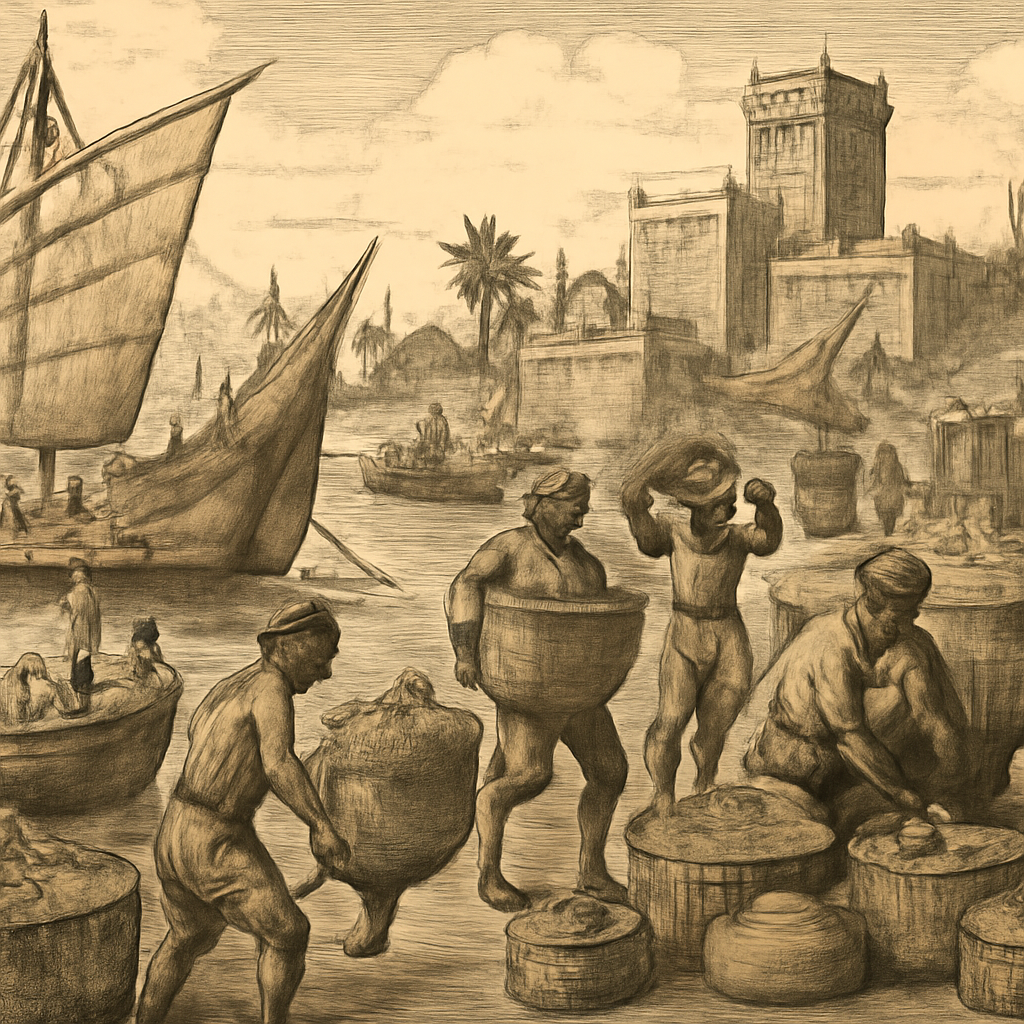
Before Malacca rose, the Malay Peninsula sat astride maritime routes that had linked East Asia to South Asia and the Middle East for centuries. Merchant vessels followed monsoon patterns; port-communities and riverine polities had long provided stops for passing ships. Local rulers, trading clans and coastal brokers already managed cargo, credit and hospitality. Into that landscape came accelerating demand for pepper, tin and other commodities, and an expanding circulation of Muslim merchants and clerics whose presence shifted religious and commercial networks. Political authority in the region tended to be flexible: coastal leaders built influence through control of trade and diplomacy rather than through fixed territorial administration.
Geography mattered: the strait by Malacca condensed several maritime routes into a single, navigable corridor, raising the value of any secure anchorage and market there. Institutions —habits of exchange, maritime custom, multilingual brokerage—pre-existed and made a port-polis possible. So too did expectations: merchants expected reliable access, rulers expected revenue and prestige. Those pressures converged around c. 1400, but attributing the rise to a single cause underestimates the ways people, place and pre-existing structures aligned. Networks of Malay merchants, and figures such as Parameswara, operated within these conditions— they made choices that took advantage of opportunity but did not create the entire context from nothing.
Understanding Malacca means tracing both the contingency of decisions and the deeper currents that made them effective. The rise of Malacca belongs to the geography of the strait. A port city could draw strength from monsoon timing, safe harbor, Malay politics, Islamic networks, Chinese diplomacy, Indian Ocean trade, and the practical need for merchants to gather, exchange, and trust local authority. Malacca's power was commercial and political at once. Rulers used law, diplomacy, conversion, alliances, port administration, and protection of merchants to make the city a hinge between maritime worlds.
The Turning Point
At c. 1400 the decisive shift was not a single battle or proclamation but a reconfiguration of authority around maritime commerce at Malacca’s strait. Parameswara, working with Malay merchants, concentrated activity at a navigable anchorage and encouraged the regular arrival of ships, markets and brokers. That concentration turned diffuse coastal exchange into a centralized port where goods, credit and information gathered. The emergent polity translated commercial advantage into political authority by making diplomacy and trade regulation the core of governance: officials and merchant-leaders negotiated safe conduct, mediated disputes, and enabled credit and storage that merchants relied upon.
Islam became more prominent in public life as Muslim traders and religious figures joined these networks, shaping legal ideas, diplomatic alignments and cultural practices without erasing older Malay modes of rule. Those combined changes—place, personnel, and practices—created a recognizable sultanate: a port-polity whose legitimacy depended on controlling access to the strait and on managing relations with regional powers and visiting merchants. Importantly, this turning point shows how intentional choices by actors sat upon pre-existing geography and institutional habits; Parameswara and his allies exploited existing expectations as much as they imposed new ones, producing a polity both innovative and rooted in older regional patterns.
Consequences
In the decades after c. 1400 the immediate consequence was unmistakable: Malacca clustered trade, attracted merchants from across the Indian Ocean and South China Sea, and became a hub where credit, goods and information flowed with unusual regularity. The sultanate amplified the reach of Islam in the Malay world as Muslim merchants and religious authorities operated within the port’s networks, contributing to religious practices and laws that spread along trading routes. Diplomatically, Malacca acted as an interlocutor between hinterlands and distant polities, negotiating patronage and safe passage rather than ruling vast inland territories. Over the longer term the Malacca model —a polity built on control of a strategic strait and on commercial-diplomatic institutions—shaped urbanization and statecraft across maritime Southeast Asia.
It linked local histories to the wider Indian Ocean economy, altered patterns of language and law in the region, and became a focal point for later external ambitions. Before the Portuguese conquest, Malacca already mattered as the principal port-polity in the area; afterward, European expansion would test and transform the commercial and diplomatic systems that had grown there. Interpreting these consequences means tracing how a single strategic place amplified older processes into lasting regional change. The consequences included the spread of Islam in the Malay world, a model of port-polity authority, and a prize that Portuguese forces later sought to capture. Malacca matters because it shows how a small place can command global routes.
Interpretation Notes
The hardest question around Malacca Sultanate Rises is causation. The event had immediate actors, but its meaning also came from institutions, geography, resources, and expectations already present in Malay Peninsula.
Why Keep Reading
Follow this moment because Malacca links familiar world history themes—trade, religion, diplomacy—to decisions made on a tidal bend. The story continues into the Portuguese arrival, the reshaping of Indian Ocean commerce, and the spread of Malay language and Islam through port-networks. If you want to understand how local choices connect to global reroutings of goods and power, read the timelines that follow: they trace ship movements, diplomatic missions, and legal customs that flowed out from Malacca to ports across Asia. Each subsequent episode shows how a single port-polity could attract empires, remake regional identities, and become a hinge between Asian and European histories.
Read Malacca with Zheng He, Portuguese capture of Malacca, Srivijaya, Islam in Southeast Asia, and Indian Ocean trade.
Reading Path
Follow the story without losing the thread
Before This
- Ayutthaya Kingdom Founded1351 CE
- Majapahit Empire Peaksc. 1350 CE
- Black Death Reaches Europe1347 CE
After This
- Songhai Empire Risesc. 1464 CE
- Columbian Exchange Begins1492 onward
- Vasco da Gama Reaches India1498 CE
Same Period
- Beginning of Muhammad's Revelationsc. 610 CE
- Hijra to Medina622 CE
- Battle of BadrMarch 624 CE
Wider Timeline
Mind Map
How to think about Malacca Sultanate Rises
Strategic strait
A narrow maritime corridor concentrated ship traffic and raised the value of a secure anchorage at Malacca.
Map Layer
Where this event sits geographically
Gold pins mark the approximate locations of published event pages. This is a schematic locator map, not a historical border map.
Coordinates are approximate and are used to help readers orient themselves before opening a full event page.
References
Where to Check the Facts
- Encyclopaedia Britannica: Malacca sultanateReference for Malacca's political role, maritime position, and trade significance.
- Encyclopaedia Britannica: Malaysia, conversion to IslamSupporting reference for Islamization and Malay world historical context.