At a Glance
The shape of the event
- Date
- August 1947
- Place
- South Asia
- Type
- Decolonization
British India became independent as India and Pakistan, while partition produced mass migration, communal violence, and unresolved border questions.
August 1947; place the event in South Asia before comparing causes or consequences.
Independence and partition reshaped South Asian politics, identity, memory, and international relations.
Mahatma Gandhi / Jawaharlal Nehru / Muhammad Ali Jinnah are the first names or groups to compare before widening the story.
Two new states emerged from the end of British colonial rule in South Asia.
Two new states emerged from the end of British colonial rule in South Asia.
Independence and partition reshaped South Asian politics, identity, memory, and international relations.
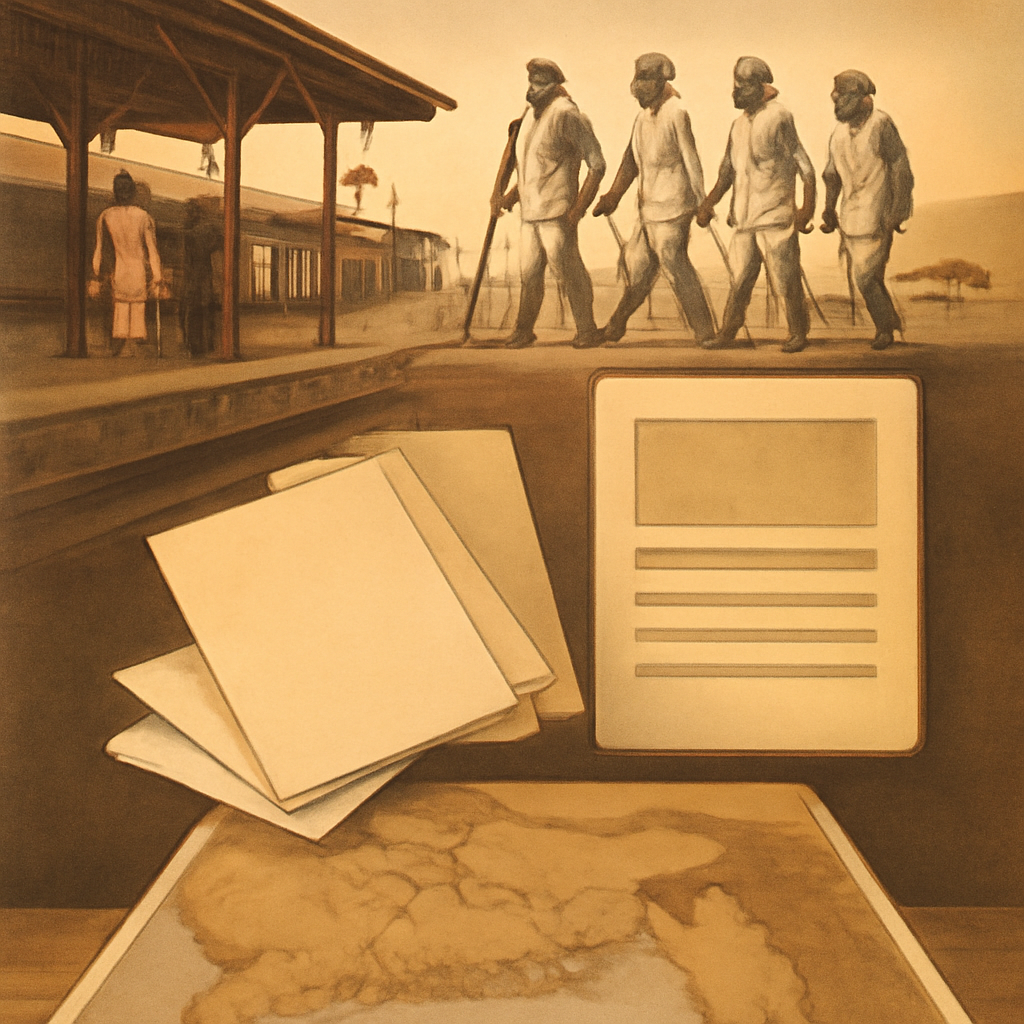
Follow the maps and timelines that show how borders were drawn, and how migration routes and local incidents translated policy into lived reality.
Background
For decades before August 1947, British India had been governed as a single colonial entity whose political institutions, social divisions and economic structures produced competing national projects. Indian nationalism, organised around parties and mass movements, pushed for self-government; in parallel, demands for separate political safeguards for Muslims developed into a call for a separate state. These pressures did not arise overnight: they grew from uneven economic development, religious and regional identities, the politics of representation, and the choices made by both colonial and indigenous elites. At the same time, the global moment of decolonisation increased the urgency of resolving Britain’s imperial commitments.
Historians disagree about how to weigh the drivers: some emphasise personalities and pivotal decisions by leaders in 1947; others point to longer-term structural forces — administrative practices, communal politics, and demographic patterns — that made partition more likely. This page keeps those disputes visible, presenting the political choices of August 1947 alongside the deeper currents that shaped them, rather than privileging a single, definitive explanation. Indian independence and partition must be read together because freedom from British rule arrived with state division, mass migration, and violence. The page should hold celebration and catastrophe in the same frame: constitutional transfer, nationalist organizing, communal politics, refugee movement, boundary-making, and the birth of India and Pakistan.
The event also needs more than leader-centered history. Gandhi, Nehru, Jinnah, Mountbatten, the Congress, the Muslim League, Sikh leaders, provincial politicians, soldiers, civil servants, women, refugees, and local communities all shaped or endured the transition in different ways.
The Turning Point
The immediate change of August 1947 was practical and political: the end of British rule produced two new, separate states where one had stood. That legal and constitutional rupture required rapid decisions about territory, sovereignty and authority. Political leaders — including Mahatma Gandhi, Jawaharlal Nehru and Muhammad Ali Jinnah — were central to public debates and to negotiations that defined new national outlines. Administrative authorities moved to implement borders and transfer powers while local officials, police and civic institutions confronted the realities of divided communities. The partition process prompted mass movement of populations and outbreaks of communal violence in many places as families, landlords, workers and religious communities confronted uncertainty and threat.
At the heart of August 1947 lay a collision between sweeping political design — the creation of two states — and the granular realities of identity, property and movement on the ground. Interpretations differ over whether the decisive moments were the product of a few leaders and their choices or the culmination of longer political and social trajectories; both levels of explanation matter for understanding how August 1947 unfolded. The turning point was the decision to transfer power through partitioned sovereignty. Independence created new states, but hurried borders and political mistrust turned decolonization into one of the largest forced migrations of the twentieth century.
Consequences
In the near term, the most visible outcome was the emergence of two sovereign states from the end of British colonial rule in South Asia. Partition produced mass migration as people moved across newly drawn borders, and it was accompanied by episodes of communal violence that displaced countless families and reshaped local demographics. Administratively, unresolved border questions and contested territories became immediate challenges for the new governments. Over the long term, independence and partition reconfigured South Asian politics: party systems, state institutions and foreign policies developed in the shadow of separation. Identity and memory were reshaped in schools, literature and public commemorations, as communities remembered loss, heroism and trauma in different ways.
International relations in the region were reoriented around new rivalries and alliances generated by partition’s legacy. The balance between individual agency and structural pressures continues to determine historical interpretations: some histories foreground pivotal decisions and personalities, while others trace how economic patterns, communal politics and colonial governance made certain outcomes more likely. The consequences of August 1947 are therefore political and personal, immediate and multi-generational. The afterlife includes India-Pakistan conflict, Kashmir, refugee memory, minority politics, citizenship debates, and postcolonial democracy. The page should make clear why 1947 is not only a date of liberation but a continuing structure in South Asian politics, because borders, archives, family histories, and school narratives still organize how people explain the end of empire.
Interpretation Notes
Indian independence was liberation and partition at once. The debate is how to honor anti-colonial achievement while confronting mass displacement, communal violence, princely-state negotiations, border-making, and the different national memories that India, Pakistan, and Bangladesh later built around 1947.
Why Keep Reading
Follow the maps and timelines that show how borders were drawn, and how migration routes and local incidents translated policy into lived reality. Explore biographies of the principal leaders to see how public decisions intersected with private commitments. Read accounts of municipal and provincial transfers of power to understand the practical difficulties of partition. Or turn to oral histories and contemporary newspapers to hear how ordinary people experienced evacuation, violence and re-rooting. Each path reveals a different scale — international diplomacy, constitutional law, neighbourhood life — and together they explain why the choices of August 1947 still matter for politics, memory and identity in South Asia.
Read this page with Gandhi, Jinnah, Bangladesh liberation, Kashmir-related routes, and modern South Asia pages to follow how decolonization became borders, citizenship, and memory.
Reading Path
Follow the story without losing the thread
Before This
- Atomic Bombing of HiroshimaAugust 6, 1945
- United Nations FoundedOctober 24, 1945
- Battle of OkinawaApril 1-June 22, 1945
After This
- Founding of the People's Republic of ChinaOctober 1, 1949
- Bangladesh Liberation War1971 CE
Same Period
- Assassination of Archduke Franz FerdinandJune 28, 1914
- Russian Revolution1917 CE
- Treaty of VersaillesJune 28, 1919
Wider Timeline
Mind Map
How to think about Indian Independence and Partition
Religious demography
Growing religiously defined electoral politics and demographic concentrations that made a territorial solution politically salient for some actors
Map Layer
Where this event sits geographically
Gold pins mark the approximate locations of published event pages. This is a schematic locator map, not a historical border map.
Coordinates are approximate and are used to help readers orient themselves before opening a full event page.
References
Where to Check the Facts
- The National Archives: Indian IndependenceArchive education reference for British withdrawal, Indian independence, partition, transfer of power, Pakistan, and immediate consequences.
- Encyclopaedia Britannica: Partition of IndiaSpecific reference for the 1947 partition, India and Pakistan, boundary-making, population movement, communal violence, and state formation.