At a Glance
The shape of the event
- Date
- 1501 CE
- Place
- Tabriz
- Type
- Dynastic foundation
Ismail I founded the Safavid dynasty in Iran, creating a major early modern Islamic empire and making Twelver Shi'ism central to state identity.
1501 CE; place the event in Tabriz before comparing causes or consequences.
The dynasty helped define Iran's later religious and political identity and gives the atlas a bridge between medieval Islamic worlds and early modern gunpowder empires.
Ismail I are the first names or groups to compare before widening the story.
The Safavids established a dynasty that ruled Iran from 1501 to 1736.
The Safavids established a dynasty that ruled Iran from 1501 to 1736.
The dynasty helped define Iran's later religious and political identity and gives the atlas a bridge between medieval Islamic worlds and early modern gunpowder empires.
Continue to the Battle of Chaldiran, Ottoman-Safavid rivalry, Abbas I, Mughal India, and early modern Islamic empires.
Background
By 1501 the Middle East and Central Asia were a mosaic of competing powers, remnants of Mongol and Timurid polities, rising Turkoman confederations, and established dynasties. The Iranian plateau in particular had long been a crossroads of languages, religious practices, and competing claims to authority. Local military leaders and religious networks could suddenly become political forces when they found sympathetic patrons or effective leaders. Ismail I emerged from one such milieu: a leader who consolidated a core following and capitalized on patterns of allegiance that linked Sufi orders, tribal groups, and urban elites.
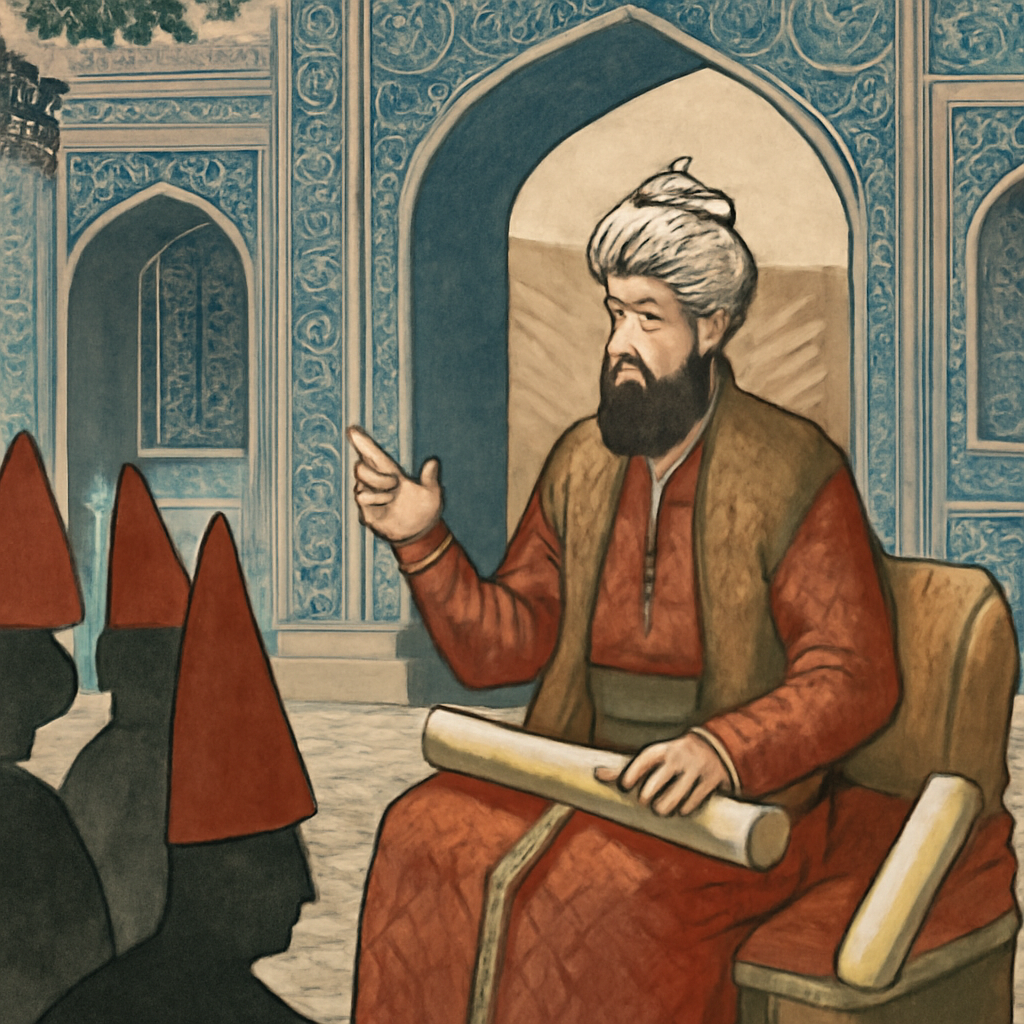
The wider world was also changing: the increasing use of gunpowder weapons, shifting caravan routes, and intensifying contacts with Ottoman, Central Asian, and European actors all created pressures and opportunities. These pressures did not determine a single outcome, but they set the stage for a new dynasty to attempt something different — to combine religious identity with centralised rule, patronage, and a military apparatus in pursuit of lasting authority. The Safavid Empire began with a militant Sufi order, Qizilbash support, and the rise of Ismail I in a region shaped by Turkmen politics, Persianate culture, and rival powers. Tabriz mattered as a symbolic and strategic capital.
Ismail's declaration of Twelver Shi'ism as central to state identity transformed the political landscape of Iran and gave the new dynasty a religious language distinct from its Sunni Ottoman and Uzbek rivals.
The Turning Point
What changed in 1501 was not instantaneous national transformation but a decisive reconfiguration of political symbols and administrative priorities centered on Tabriz and Ismail I's claim. Ismail entered history as both a charismatic leader and the head of a movement that fused Sufi lineage with political ambition. By framing his rule in religious terms — and by elevating Twelver Shi'ism as a state reference point — he gave his nascent polity a unifying language that could outflank purely tribal or regional loyalties. At the same time he assembled the instruments of rule: a court that rewarded loyalty, military forces that could contest neighbours, and bureaucratic practices that began to extract resources and adjudicate disputes.
These concrete choices mattered: they made governance possible at a scale greater than a roaming confederation and forced rival powers to adjust their strategies. Tabriz became more than a captured city; it became a focal point for administrative experiments, artistic patronage, and diplomatic engagement. The turning point lies in that conjunction — of faith, force, and the will to govern. The turning point was Ismail's seizure of Tabriz and proclamation as shah. That act joined charismatic authority, military backing, dynastic ambition, and confessional policy. The young ruler's success depended on Qizilbash warriors, but building an empire required more than battlefield devotion. Administration, taxation, urban elites, clerics, and diplomacy all had to be drawn into a stable order.
The founding moment therefore contained a tension between revolutionary charisma and institutional state-building. The 1501 moment belongs first to Ismail, the Qizilbash, and Twelver policy. Later comparisons with gunpowder empires are useful, but they can blur the founding scene in Tabriz: a militant Sufi order became a ruling dynasty, a young shah claimed kingship, and Twelver Shiism became a state project that reshaped law, patronage, ritual, and relations with Ottoman and Uzbek rivals.
Consequences
In the near term the Safavid foundation rearranged alliances and prompted immediate military and diplomatic reactions among neighbouring states, which now confronted a polity that combined religious distinctiveness with centralized authority. Over the longer span, the dynasty established patterns that would outlive individual rulers: the institutional promotion of Twelver Shi'ism as a cornerstone of state identity; the growth of court culture and artistic patronage that redefined Persianate aesthetics; and the development of military and fiscal structures to sustain a territorial state. These changes helped define what it meant to be an Iranian polity distinct from Ottoman and Central Asian rivals, even as regional diversity persisted and local identities remained complex.
The dynasty's existence from 1501 to 1736 created continuity in ruling practices, but it also underwent cycles of reform, conflict, and accommodation. The result was a political geography in which religion, war, trade, and courtly life were entangled — a bridge between medieval Islamic patterns and the emerging age of gunpowder empires. Careful study shows that sectarian identity was a central lever, not the only one; state formation, economic networks, and cultural production were equally decisive in shaping the Safavids' legacy. Safavid rule helped define Iran's early modern identity and established Twelver Shi'ism as a durable state-backed tradition. It also intensified Ottoman-Safavid rivalry, shaped frontier politics, and contributed to the broader pattern of gunpowder empires.
The founding was not a finished blueprint. Later shahs, especially Abbas I, had to reorganize military and administrative structures to reduce dependence on tribal forces. The dynasty's importance lies in how a movement became a state and how religious identity became imperial policy.
Interpretation Notes
The page avoids reducing Safavid history to sectarian identity alone; state formation, court culture, war, trade, and regional diversity also matter.
Why Keep Reading
Continue to the Battle of Chaldiran, Ottoman-Safavid rivalry, Abbas I, Mughal India, and early modern Islamic empires. The next route shows how a charismatic founding movement became a state, how sectarian policy met military pressure, and why later reforms should not be collapsed into the 1501 founding itself.
Reading Path
Follow the story without losing the thread
Before This
- Ibn Battuta Begins His Travels1325 CE
- Delhi Sultanate Founded1206 CE
- Fatimid Cairo Founded969 CE
After This
- Battle of ChaldiranAugust 23, 1514
- Ottoman Conquest of Egypt1517 CE
- First Battle of Panipat1526 CE
Same Period
- Achaemenid Empire Foundedc. 550 BCE
- Rashidun Conquest of Jerusalem637 CE
- Umayyad Caliphate Founded661 CE
Wider Timeline
Mind Map
How to think about Safavid Empire Founded
Sufi roots
Ismail's movement drew on Sufi networks that provided legitimacy and followers across the plateau.
Map Layer
Where this event sits geographically
Gold pins mark the approximate locations of published event pages. This is a schematic locator map, not a historical border map.
Coordinates are approximate and are used to help readers orient themselves before opening a full event page.
References
Where to Check the Facts
- Encyclopaedia Britannica: Safavid dynastyReference for Safavid chronology, Iran, Twelver Shi'ism, and early modern imperial formation.
- Encyclopaedia Britannica: Gunpowder empiresReference for Ottoman, Safavid, and Mughal comparison in early modern military and imperial history.