At a Glance
The shape of the event
- Date
- January 1917
- Place
- Berlin and Washington
- Type
- Diplomatic Crisis
Germany proposed a potential alliance with Mexico if the United States entered World War I, and British interception helped inflame American opinion.
January 1917; place the event in Berlin and Washington before comparing causes or consequences.
The incident showed how intelligence, submarine warfare, and public opinion could alter the diplomatic path of a global conflict.
Arthur Zimmermann / Woodrow Wilson are the first names or groups to compare before widening the story.
The telegram became one factor pushing the United States closer to war against Germany.
The telegram became one factor pushing the United States closer to war against Germany.
The incident showed how intelligence, submarine warfare, and public opinion could alter the diplomatic path of a global conflict.
Follow the threads the telegram pulled taut: the campaign over submarine warfare and how attacks on neutral shipping shifted political calculation; the evolution of intelligence work and the ethics of intercepting and...
Background
By the winter of 1917 the Atlantic world was entangled in a global conflict whose pressures reached well beyond trenches and battle plans. Germany and Britain exercised military power at sea; naval tactics and the fate of neutral shipping weighed heavily on diplomatic calculation. The United States had remained formally neutral but was enmeshed economically and politically with the combatant powers, and American public opinion was divided and easily moved by perceived threats to national honor and security. In Berlin, policymakers faced hard choices about how to sustain a war fought on multiple fronts; in Washington, officials and the president balanced neutrality with growing concern about attacks on commerce and American lives.
Intelligence-gathering—intercepts, ciphers and secret channels—had become part of statecraft, able to amplify or dampen political reaction. Historians still debate how much of the outcome rests on individual decisions versus wider structural forces; this episode sits at the intersection of deliberate statecraft and the cascading consequences of wartime technology and communication. The Zimmermann Telegram is most useful when readers see it as evidence inside a larger decision crisis. The United States had not entered World War I, but unrestricted submarine warfare, trade, loans, neutrality debates, immigrant politics, peace rhetoric, and German calculations were already narrowing the space for staying out. The telegram did not create all those pressures. It made one of them legible and explosive. The intelligence story matters.
British codebreakers intercepted and decoded a German message proposing that Mexico consider alliance if the United States entered the war, with the possible recovery of lost territories as an inducement. The challenge was not only decoding the message; it was making it public without revealing too much about British intelligence methods. That made diplomacy, secrecy, and public persuasion part of the same event. The page also needs the Mexican angle, not just American outrage. Mexico was emerging from revolution and had its own constitutional and diplomatic concerns. The German proposal was unrealistic in military terms, but it still mattered because it named the U. S. -Mexico border, older territorial loss, and hemispheric security as part of the war's imagination.
The Turning Point
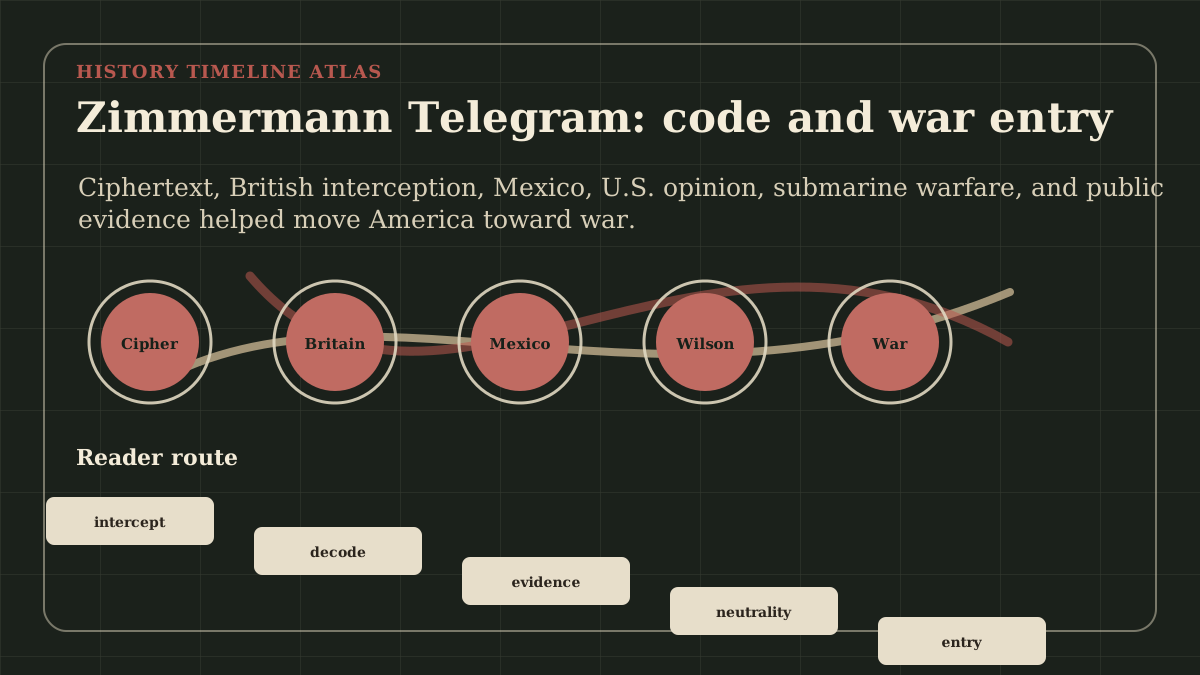
The crisis crystallised when British intelligence intercepted a diplomatic communication from the German foreign office proposing a contingency arrangement with Mexico should the United States enter the European war. Arthur Zimmermann, the German foreign secretary whose name is now attached to the incident, sent the message from Berlin; the British, having obtained the intercept, decided to make it public in a manner that would reach American audiences. Washington’s leaders, including President Woodrow Wilson, received the disclosure amid already tense debate over neutral rights and hostile naval actions. The telegram’s publication framed the German proposal not as abstract strategy but as an immediate plot against the United States’ hemisphere. That framing inflamed public sentiment and altered the calculations of policymakers.
Rather than a single mechanical trigger, the turning point combined the German decision to float a Mexican alliance, British choices about intelligence and disclosure, and the American political environment that made such a disclosure resonant and politically dangerous for Germany. The turning point was the shift from private interception to public evidence. Once the message was published and Germany acknowledged it, the telegram became harder to dismiss as rumor or propaganda. It gave President Wilson and intervention supporters a concrete example of German risk-taking near the United States. Its power came from timing. Submarine warfare threatened ships and lives; the telegram threatened territorial security and trust.
Together, they made neutrality feel less like a stable policy and more like exposure to decisions made by others.
Consequences
In the near term the Zimmermann crisis intensified anti-German sentiment in the United States and reduced the political space for a neutral posture. It became one factor—among naval confrontations and economic ties—that pushed the United States closer to opposing Germany more openly. The episode also offered a stark demonstration of how intelligence and public information could be wielded in international politics: an intercepted diplomatic message, when revealed at the right moment, could reshape narratives and influence policy choices. In the longer run the incident helped alter diplomatic practice by underscoring the risks of insecure communications and the potency of public diplomacy.
It contributed to changing expectations about accountability and intervention in the Atlantic world, and it reinforced the idea that wars now unfolded not only on battlefields but through signals, secrecy and mass opinion. Yet historians caution that the telegram did not operate alone; it interacted with broader forces—naval strategy, economic interdependence and domestic politics—so its ultimate importance must be weighed alongside those deeper currents. The immediate consequence was a sharp change in U. S. public debate before the declaration of war. The telegram did not single-handedly force entry, but it strengthened the case that German policy had crossed a line. It made the war feel closer to North America and helped turn diplomatic outrage into political momentum.
The longer consequence belongs to intelligence history and public diplomacy. Codebreaking, evidence release, credibility, propaganda, and press interpretation all shaped how democratic publics understood war. The episode reminds readers that secret messages become historical turning points only when institutions decide how to reveal them.
Interpretation Notes
The hardest question around Zimmermann Telegram is causation. The event had immediate actors, but its meaning also came from institutions, geography, resources, and expectations already present in Atlantic World.
Why Keep Reading
Follow the threads the telegram pulled taut: the campaign over submarine warfare and how attacks on neutral shipping shifted political calculation; the evolution of intelligence work and the ethics of intercepting and releasing diplomatic communications; Mexico’s own diplomatic position and the limits of third‑party responses; and how Wilson’s administration moved from public neutrality towards active engagement. Reading those linked developments clarifies how a wartime system—commanders, diplomats, intelligence services and publics—could produce rapid shifts in policy and perception. Each strand deepens the story of how a diplomatic crisis in January 1917 altered the map of decision-making across the Atlantic world. Read the Zimmermann Telegram after the July Crisis and before U. S. entry, the Russian Revolution, and the Treaty of Versailles.
That route shows how 1917 changed World War I through diplomacy, intelligence, revolution, and the arrival of American power.
Reading Path
Follow the story without losing the thread
Before This
- Russian Revolution1917 CE
- Battle of VerdunFebruary-December 1916
- Battle of the SommeJuly-November 1916
After This
- Armistice of 1918November 11, 1918
- Spanish Flu Pandemic1918-1919
- Treaty of VersaillesJune 28, 1919
Same Period
- First Battle of the MarneSeptember 1914
- Gallipoli Campaign1915-1916
- Battle of VerdunFebruary-December 1916
Wider Timeline
Mind Map
How to think about Zimmermann Telegram
Unrestricted submarine warfare
Naval strategy that increased risks to neutral shipping and intensified diplomatic tensions in the Atlantic world.
Map Layer
Where this event sits geographically
Gold pins mark the approximate locations of published event pages. This is a schematic locator map, not a historical border map.
Coordinates are approximate and are used to help readers orient themselves before opening a full event page.
References
Where to Check the Facts
- National WWI Museum and Memorial: All About WWIMuseum reference hub for World War I chronology, maps, articles, and educational context.
- U.S. National Archives: World War I CentennialArchive reference hub for World War I records, photographs, documents, and educational resources.
- Library of Congress: U.S. History Primary Source TimelinePrimary-source timeline reference for Atlantic settlement, colonial expansion, reform, and later U.S. history paths.