At a Glance
The shape of the event
- Date
- 1905-1907 CE
- Place
- German East Africa
- Type
- Anti-colonial rebellion
The Maji Maji rebellion spread across German East Africa as communities resisted forced cotton cultivation, labor demands, colonial violence, and political subordination.
1905-1907 CE; place the event in German East Africa before comparing causes or consequences.
Maji Maji shows anti-colonial resistance before formal independence movements and makes rural coercion visible inside imperial systems.
Kinjikitile Ngwale / German colonial officials are the first names or groups to compare before widening the story.
German forces crushed the rebellion with devastating violence and famine, but the uprising remained central to Tanzanian anti-colonial memory.
German forces crushed the rebellion with devastating violence and famine, but the uprising remained central to Tanzanian anti-colonial memory.
Maji Maji shows anti-colonial resistance before formal independence movements and makes rural coercion visible inside imperial systems.
Maji Maji sits at the intersection of agricultural coercion, colonial policing, and emergent national memory.
Background
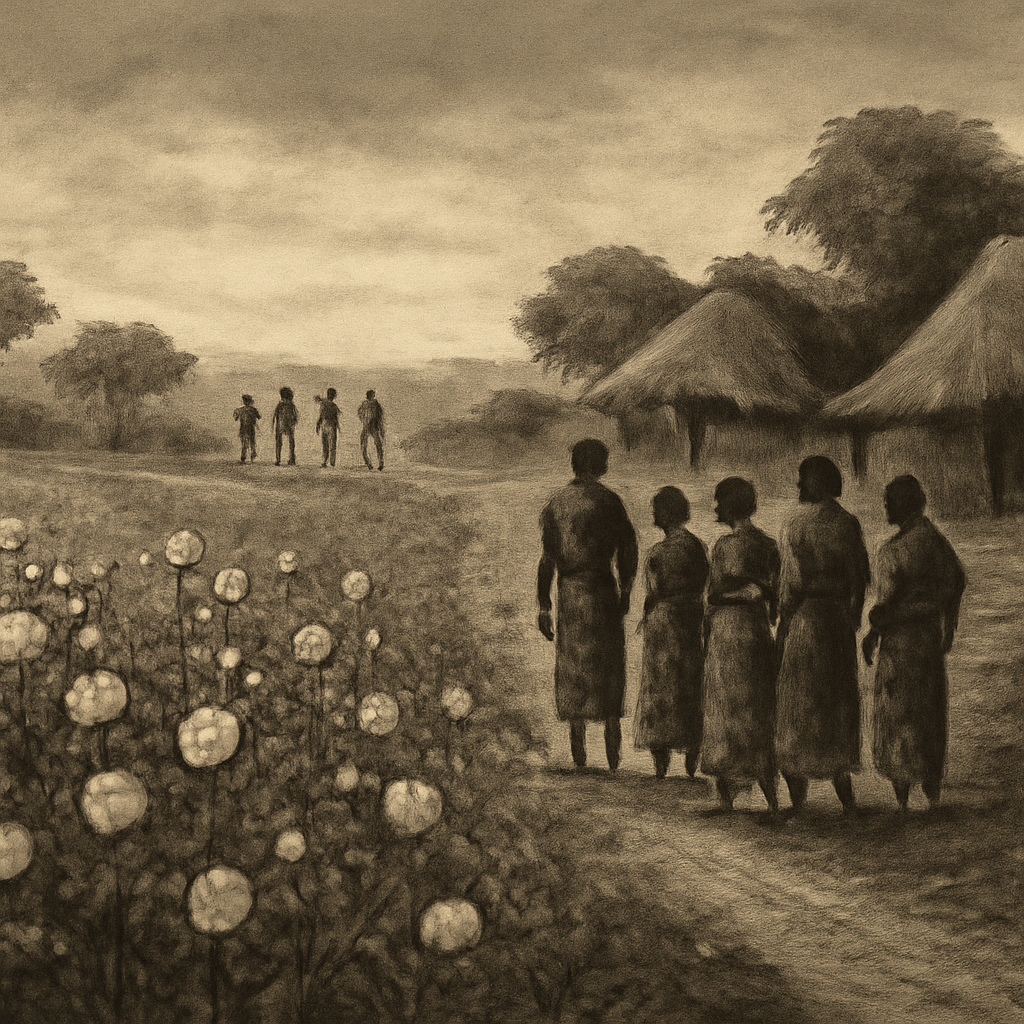
By the early twentieth century German colonial administration in East Africa had intensified demands on rural communities. Forced cotton cultivation and other plantation schemes disrupted subsistence farming and local economies; labor drafts pulled men away from households and fields. These policies were sustained by a colonial order that combined economic extraction with political controls—land alienation, new taxes, and administrative authority exercised through local intermediaries. Colonial violence was not a single shock but a recurring feature: punishments, punitive expeditions, and the capacity to mobilize troops to enforce compliance shaped daily life. Those pressures interacted with local social networks, leadership, and grievances in varied ways across the territory. The Maji Maji uprising cannot be reduced to a single cause or moment.
It emerged where coercive labor practices met political marginalization and local decisions to resist. In that sense, the rebellion exposes the mechanics of rural coercion inside an imperial system, and how ordinary burdens could become the axis of collective protest. The Maji Maji Rebellion grew from the coercive everyday realities of German colonial rule in East Africa. Forced cotton cultivation, labor demands, taxation, corporal punishment, land pressure, and disregard for local authority created anger across communities that did not all share the same politics. Kinjikitile Ngwale's prophetic message and the maji medicine gave different groups a language of protection and unity, but the rebellion was not only spiritual. It was also a material revolt against colonial extraction and humiliation.
The Turning Point
The period from 1905 into 1907 marked a sustained shift from localized grievances to coordinated resistance across a broad swathe of German East Africa. What changed was not only scale but the choices taken by communities and by colonial officials. Local groups, facing repeated demands to grow cotton and to supply labor, refused compliance in multiple districts; their refusals linked into a wider pattern of opposition. Individuals identified by contemporaries and later historians—among them Kinjikitile Ngwale—served as focal points around which this opposition gathered, helping to translate diffuse discontent into a movement that could travel beyond single villages. German colonial officials faced these challenges with a choice: negotiate and reform, or deploy overwhelming force. They chose the latter.
Military campaigns, punitive expeditions, and coercive measures were used to suppress the uprising. That decision converted a political crisis over labor, taxation, and authority into a campaign of repression whose human costs included both immediate violence and the breakdown of food supplies. The turning point is therefore double: the moment ordinary grievances became organized resistance, and the moment colonial authorities escalated to a strategy of crushing force. The turning point was the spread of rebellion across a wide region, turning scattered grievances into a major anti-colonial war. The maji belief mattered because it helped people imagine collective action against a militarily stronger colonial state. German forces responded with brutal counterinsurgency, scorched-earth tactics, executions, and destruction of food supplies.
That response transformed rebellion into famine and mass suffering. The military imbalance was severe, but the rebellion revealed that colonial rule rested on coercion, not consent.
Consequences
In the near term the rebellion was crushed by German forces with devastating violence and famine. The suppression involved military campaigns against communities that had resisted, and the resulting disruptions to cultivation and food supplies produced widespread suffering. Long-term, the Maji Maji Rebellion shaped how resistance to colonial rule would be remembered and mobilized. It became a potent element in Tanzanian national memory as later movements and the postcolonial state looked back for precedents of anti-colonial courage and sacrifice. The episode also forced a historiographical shift: scholars and citizens alike began to see rural coercion—not only urban politics or elite negotiations—as central to how imperial power operated.
Maji Maji thus complicates neat periodizations of anti-colonial struggle by showing that organized resistance predated formal independence movements and was rooted in everyday confrontations over labor, land, and authority. At the same time, the rebellion reminds us of the human cost of imperial responses—the violence and famine that followed are part of its legacy and require sober attention rather than heroic mythmaking. The rebellion was crushed, but its memory endured in Tanzanian nationalism and in debates over colonial violence. German authorities later adjusted some policies, but reform did not undo the devastation. The event reads as both resistance and tragedy: communities asserted dignity and autonomy, yet paid an enormous price.
For readers, Maji Maji also raises the question of how spiritual language can be political without being dismissed as irrational.
Interpretation Notes
Maji Maji Rebellion is easy to flatten into one dramatic date. A stronger reading separates immediate action from deeper causes, affected communities, and the memory later states or movements built around the event.
Why Keep Reading
Maji Maji sits at the intersection of agricultural coercion, colonial policing, and emergent national memory. Reading further takes you into two linked threads: how empires organized rural labor across Africa, and how communities converted local grievances into political action. It also opens questions about how later generations remember and repurpose such episodes in the service of nation-building. Follow related entries on German colonial policy, forced labor systems, and Tanzanian memory to see how this rebellion connects to broader patterns of rule, resistance, and the long road to independence. Read next through African decolonization, German empire, forced labor, and later Tanzanian independence. Maji Maji helps connect early anti-colonial resistance to twentieth-century liberation memory.
Reading Path
Follow the story without losing the thread
Before This
- Battle of AdwaMarch 1, 1896
- German East Africa Established1885 CE
- Potosi Silver Boom Begins1545
After This
No direct path yet.
Same Period
- Battle of AdwaMarch 1, 1896
- Swahili Coast City-States Risec. 900 CE
- Kilwa Sultanate Flourishesc. 1200 CE
Wider Timeline
Mind Map
How to think about Maji Maji Rebellion
Forced cotton
Colonial mandates to grow cotton that disrupted subsistence farming and increased economic pressure on villages
Map Layer
Where this event sits geographically
Gold pins mark the approximate locations of published event pages. This is a schematic locator map, not a historical border map.
Coordinates are approximate and are used to help readers orient themselves before opening a full event page.
References
Where to Check the Facts
- Encyclopaedia Britannica: Maji MajiReference for the 1905-1907 uprising against German colonial rule in East Africa.
- Encyclopaedia Britannica: German East AfricaReference for the colonial setting, geography, and German rule behind the Maji Maji rebellion.