Central Question
How does world history change when African kingdoms, trade routes, intellectual life, colonial violence, and independence movements are treated as central rather than peripheral?
Start With These Dates
- c. 1070 BCEKingdom of Kush Rises
Kushite power emerged in Nubia after Egypt's New Kingdom influence weakened, creating an African kingdom that linked Nile trade, local kingship, and later rule from Napata and Meroe.
- c. 330 CEAksum Adopts Christianity, c. 330: Ezana and the Red Sea Context
Aksum adopted Christianity around 330 under King Ezana, making royal Christian language part of Red Sea diplomacy and imperial identity. The key is not instant conversion by every subject, but a public shift in how Aksum represented power.
- c. 800 CEGhana Empire Flourishes
The Ghana Empire grew wealthy by managing power near trans-Saharan gold and salt routes, turning Sahelian geography into political leverage.
- c. 1100 CEGreat Zimbabwe Rises
Great Zimbabwe developed into a major stone-built center connected to cattle wealth, gold routes, local authority, and Indian Ocean trade.
- 1483 CEPortuguese-Kongo Contact
Portuguese contact with the Kingdom of Kongo opened a relationship of diplomacy, Christianity, trade, and later coercive Atlantic pressures.
- February 11, 1990Nelson Mandela Released
Nelson Mandela was released from prison after twenty-seven years, signaling a new phase in negotiations to end apartheid in South Africa.
- 1994Fall of Apartheid
South Africa held its first fully democratic elections, ending apartheid rule and bringing Nelson Mandela to the presidency.
Sources Used Here
- UNESCO: General History of Africa
Institutional reference for the General History of Africa project, African-centered historical interpretation, and expert-authored continental synthesis.
- Cambridge University Press: The Cambridge History of Africa
Specialist scholarly synthesis for African prehistory, kingdoms, trade systems, colonialism, and postcolonial historical debates.
- Oxford Research Encyclopedia of African History
Peer-reviewed reference for African history themes, communities, methods, and contested interpretations across regions.
- Africa Online Digital Library
Digital primary-source collection reference for photographs, interviews, documents, maps, and community-facing African history materials.
- The Metropolitan Museum of Art: Great Zimbabwe
Museum reference for Great Zimbabwe, dry-stone architecture, political authority, and southern African trade connections.
Sub-Saharan Africa is designed as a route, not a folder. It gathers events that answer related reader questions about power, belief, conflict, exchange, institutions, and memory. The strongest way to read the page is to move from the earliest events toward the later ones, watching how one kind of pressure changes form across different places.
The route currently runs from c. 1070 BCE to 1994. That span lets readers compare immediate turning points with slower consequences: the founding of institutions, the spread of ideas, the shock of war or disease, and the way later societies reused earlier events as warnings, models, or symbols.
Start with Kingdom of Kush Rises, Aksum Adopts Christianity, c. 330: Ezana and the Red Sea Context, Ghana Empire Flourishes, Great Zimbabwe Rises, Mali Empire Founded and then follow the internal links into people, timelines, years, maps, and source lists. The route structure stays visible when each event explains why it belongs with the others and where the next useful page is.
Compare the events by scale. Some are concentrated moments, such as a battle, proclamation, trial, or publication. Others are long processes, such as a reform movement, pandemic, trade route, or diplomatic order. Reading both types together helps prevent the page from becoming a list of dates.
A useful route keeps uncertainty visible. Historical change rarely has one cause or one clean ending, so the reader can separate background pressure, immediate trigger, turning point, result, and later memory. That pattern is what makes the atlas expandable without making the reader start over each time.
This route is also a comparison tool. After reading one event, compare it with a later event on the same page and ask what changed in scale, language, geography, technology, authority, or public memory. The comparison is often more useful than the individual summary because it reveals the pattern the topic page is built to expose. When a claim feels too neat, open the full event page and check whether the evidence supports one cause, several causes, or a contested interpretation before moving on.
A serious Sub-Saharan Africa route cannot begin with European arrival. It has to start with African landscapes, states, routes, languages, religious worlds, and political choices that already had long histories. Kush, Aksum, Ghana, Great Zimbabwe, Mali, Songhai, Kongo, Ethiopia, Ghanaian independence, and South African democracy are not scattered examples. They are anchor points for seeing how African societies built authority, traded across distance, absorbed religious change, resisted imperial pressure, and argued about sovereignty.
The first pattern is geography as possibility. Nile corridors shaped Kush and Aksum differently from Sahelian grasslands, forest margins, highland Ethiopia, Central African river systems, and the southern African plateau. The map matters because African history is often flattened into a single region. This hub asks readers to notice rivers, deserts, savannas, highlands, ports, caravan towns, goldfields, cattle zones, and Atlantic coasts as historical actors that made some forms of power easier and others harder.
The second pattern is state formation before colonialism. Kush and Aksum show kingdoms interacting with Egypt, the Red Sea, inscriptions, coinage, trade, and Christianity. Ghana, Mali, and Songhai show Sahelian rulers turning gold, salt, cavalry, Islamic scholarship, taxation, and city networks into durable authority. Great Zimbabwe shows that archaeology, architecture, cattle wealth, and Indian Ocean exchange can explain southern African power without borrowing legitimacy from outside observers.
The third pattern is connection without dependency. African history in this route is deeply connected to the Mediterranean, the Red Sea, the Indian Ocean, the Sahara, the Atlantic, and the Islamic world, but connection does not mean passivity. Aksumite rulers, Sahelian merchants, Kongo elites, Ethiopian armies, Pan-African organizers, and nationalist movements all made choices inside unequal systems. The route keeps agency visible even when the wider setting includes coercion, violence, and empire.
The Atlantic slave trade marks a rupture because it made forced migration, racial slavery, plantation capitalism, coastal warfare, and diaspora formation central to the modern world. The page treats that history as a system, not a footnote. It asks who profited, who was coerced, how African political economies were changed, how captives carried memory and culture across the Atlantic, and why the afterlife of slavery reaches far beyond the formal end of the trade.
Colonial partition enters late in the route on purpose. The Berlin Conference matters, but it is not the beginning of African history. It becomes more legible after the reader has already seen older African states and networks. That order changes the interpretation: European colonial claims were imposed on societies with existing institutions, cities, routes, memories, and political strategies. Colonialism disrupted, exploited, and reclassified; it did not create Africa's historical depth.
Resistance and independence are not treated as one simple liberation arc. Adwa shows military sovereignty under imperial pressure. The Fifth Pan-African Congress shows diaspora politics, labor activism, wartime language, and future leaders turning anti-colonial claims into organized demands. Ghana's independence shows how national sovereignty could also become a Pan-African symbol. Mandela's release and the fall of apartheid show negotiated transition, mass struggle, memory, and the limits of symbolic endings.
The reader payoff is a better world-history map. Africa belongs inside ancient, medieval, early modern, imperial, Cold War, rights, trade, religion, and memory routes. The hub helps readers move outward: from Kush to Nile worlds, Aksum to Christianity and Red Sea exchange, Mali to Islamic scholarship and gold, Kongo to Atlantic contact, Adwa to anti-colonial resistance, and Ghana to decolonization across the twentieth century.
The evidence layer is part of the story. African history is reconstructed through archaeology, oral tradition, Arabic geographical writing, inscriptions, coins, architecture, travel accounts, colonial archives, databases of forced migration, newspapers, speeches, and living public memory. Some sources preserve rulers and traders more clearly than farmers, captives, women, artisans, and ordinary soldiers. A good hub tells readers what kind of evidence is doing the work instead of pretending every period leaves the same record.
The source trail now makes that evidence mix visible. UNESCO's General History of Africa keeps African-centered interpretation in the foreground. Cambridge and Oxford scholarship add specialist synthesis for regional variety, methods, and contested debates. The Met's Great Zimbabwe essay anchors southern African statecraft in archaeology and architecture. Slave Voyages ties Atlantic violence to archival voyage data and its limits. Africa Online Digital Library points toward digitized documents, images, interviews, and community-facing materials. South African History Online gives anti-apartheid and liberation memory a specialist public-history base. Britannica and World History Encyclopedia remain supporting references, not the only frame.
Sensitive topics need source and language discipline. Atlantic slavery, colonial violence, apartheid, genocide, forced migration, and liberation war cannot be treated as dramatic plot points. Event pages should name affected communities, explain what records can and cannot show, and avoid turning suffering into a single number or moral slogan. The hub keeps agency and constraint together, but the detailed pages must carry the sharper evidence trail for disputed causes, survivor memory, and later political uses of the past.
This route also guards against two lazy stories. One says Africa was isolated until outsiders arrived. The other says Africa only matters through victimization. Both miss the harder truth: African societies made states, cities, religious worlds, intellectual networks, trade systems, resistance movements, and modern political visions while also enduring conquest, enslavement, extraction, and racial rule. Holding achievement and violence together gives the page the friction that keeps readers going.
Language and culture add another spine. Bantu-language expansion, Arabic writing, Ge'ez manuscripts, Swahili, Mande and Soninke networks, praise poetry, griot traditions, Christian liturgy, Islamic scholarship, and later nationalist newspapers all carried memory and authority. These forms do not sit outside politics. They explain how people remembered ancestry, legitimated rulers, taught law, debated reform, and connected local worlds to long-distance systems.
Women belong in the route's structure, not only in a final note. Market women, royal mothers, farmers, religious patrons, potters, textile workers, enslaved women, anti-colonial organizers, nurses, teachers, and migrant workers shaped economies and political life in ways that state-centered sources often hide. Reading for gender makes African history less abstract and reveals how households and markets carried historical change.
The Indian Ocean and Sahara keep the route from becoming Atlantic-only. Swahili ports, Red Sea commerce, pilgrimage routes, gold-salt exchange, scholarly travel, and caravan towns connected African societies to Arabia, Persia, India, and the Mediterranean. These routes produced wealth and religious exchange before Atlantic slavery, and they continued alongside Atlantic systems. Multiple oceans and deserts shaped African history at once.
Colonial rule changed knowledge as well as power. Surveys, ethnographic labels, censuses, labor passes, maps, mission schools, and administrative districts turned flexible identities into categories that states could tax, recruit, segregate, or rule through chiefs. Anti-colonial leaders later used newspapers, unions, churches, schools, and international conferences to answer that classification with their own political language.
The modern sovereignty layer extends beyond flag independence. Ghana's independence, Congo crisis, apartheid, Rwanda, debt, structural adjustment, oil politics, migration, urban growth, and regional organizations all show that decolonization opened arguments over citizenship, violence, development, and repair. Future pages need to hold triumph and crisis together without making crisis the region's only modern story.
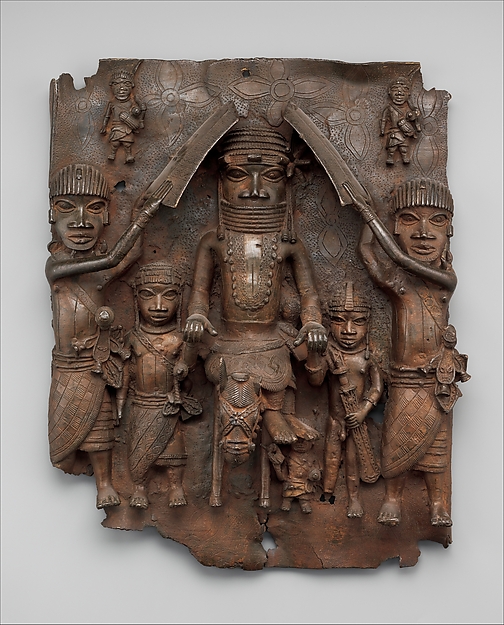
The visual route can be richer than a single image of court power. Benin brass, Akan gold weights, Ethiopian manuscripts, Great Zimbabwe walls, Swahili architecture, maps of caravan routes, photographs of independence rallies, and testimony archives each show a different kind of evidence. The page becomes more inviting when readers can see African statecraft, commerce, religion, art, and political memory as material realities.
Ecology gives the route additional depth. Cattle zones, tsetse belts, savanna agriculture, forest kingdoms, highland farming, river floodplains, desert margins, and coastal monsoon systems shaped where states formed and how trade moved. Climate variation, drought, disease environments, and soil conditions did not determine history, but they changed what kinds of labor, authority, and exchange became practical.
Urban history also belongs here. Meroe, Aksum, Jenne, Timbuktu, Kilwa, Great Zimbabwe, Benin City, Gondar, Accra, Lagos, Johannesburg, Nairobi, Kinshasa, and Dakar show cities as markets, ritual centers, ports, mining towns, colonial capitals, and modern megacities. Urban routes make African history visible through streets, walls, schools, churches, mosques, workshops, newspapers, and neighborhoods.
The closing reader path moves from African initiative to outside pressure and back to African initiative. It begins with kingdoms, routes, manuscripts, art, and trade; passes through enslavement, partition, colonial knowledge, and racial rule; then follows Pan-Africanism, independence, rights movements, and public memory. That shape keeps the route from ending in victimhood or triumphalism. It ends with unfinished arguments over repair, citizenship, development, and historical voice.
The route's final promise is comparison without erasure. Kush is not Mali, Mali is not Kongo, Kongo is not Ethiopia, Ethiopia is not Ghana, and Ghana is not South Africa. The page gains depth by holding regional difference while tracing shared questions about sovereignty, exchange, faith, labor, violence, and memory across a vast historical field. That balance lets future event pages expand region by region while the hub remains coherent. It also tells readers why one more card matters: each place tests a different answer to power, survival, and repair, and each source type reveals a different layer of that answer across ancient, medieval, colonial, and modern settings, including voices that archives only partly preserve.
Read the events in order first; the page is built to reveal change over time.
Ask which pressures existed before the visible turning point and which actors had room to choose.
Follow what changed afterward in institutions, borders, law, belief, or everyday life.
Notice which events became symbols and why later generations kept returning to them.
Read Kush, Aksum, Ghana, Mali, Songhai, and Great Zimbabwe before colonial partition so Africa appears as a historical center, not a late reaction.
Track Nile, Red Sea, Sahara, Sahel, Atlantic, and Indian Ocean routes. They explain trade, religion, diplomacy, forced migration, and political leverage.
Ask whether a page depends on archaeology, oral tradition, Arabic writing, inscriptions, travel accounts, archives, or modern public memory.
African actors made choices, but those choices often unfolded inside unequal systems of empire, slavery, colonial rule, and global markets.
Use manuscripts, oral tradition, praise poetry, architecture, metalwork, music, and newspapers as sources of authority and memory.
Look for women, farmers, market workers, artisans, enslaved people, teachers, nurses, and migrants inside state and trade histories.
Choose a Reading Path
Start With the Timeline
Use the related timeline first when you want a chronological route through the topic.
Start with c. 1070 BCE: Kingdom of Kush RisesOpen a Person Page
Use people pages when the topic is easier to understand through leadership, resistance, reform, or memory.
Start with c. 330 CE: Aksum Adopts Christianity, c. 330: Ezana and the Red Sea ContextUse Year Pages
Use year pages when you need a fast answer to what changed in a specific year.
Start with c. 800 CE: Ghana Empire FlourishesReturn to the Map
Use the map to keep geography visible while moving between events and regions.
Start with c. 1100 CE: Great Zimbabwe RisesKingdom Route
Begin with Kush, Aksum, Ghana, Mali, Songhai, Kongo, and Great Zimbabwe to see state formation across different African landscapes.
Start with 1483 CE: Portuguese-Kongo ContactTrade Route
Follow gold, salt, cattle, pilgrimage, caravan towns, Indian Ocean connections, and Atlantic routes to see how economies changed political scale.
Start with February 11, 1990: Nelson Mandela ReleasedResistance Route
Move from Adwa to Pan-African organizing, Ghanaian independence, Mandela's release, and apartheid's end to compare anti-colonial strategies.
Start with 1994: Fall of ApartheidSource Route
Use the references to compare archaeology, encyclopedia synthesis, UNESCO sites, databases, and public-history accounts.
Ocean and Desert Route
Move through Sahara, Red Sea, Swahili, Indian Ocean, and Atlantic links to see Africa as connected by several route systems.
How the Story Builds
Begin with Kingdom of Kush Rises. The opening event usually shows the pressure that made the route necessary: a crisis of authority, an expanding exchange system, a new technology, a contested idea, or a conflict that older institutions could no longer contain.
Portuguese-Kongo Contact works as a checkpoint because it lets readers ask what had become irreversible, which actors still had choices, and how the route changed scale between the opening event and the later consequences.
The later edge of the route includes Ghana Independence, Nelson Mandela Released, and Fall of Apartheid. These pages help readers see what survived beyond the first shock: institutions, borders, laws, memories, technologies, movements, or arguments that kept shaping later history.
The route is easier to remember through people and places. Watch figures such as Kushite rulers, King Ezana, Ghana rulers, Trans-Saharan merchants, Shona builders and traders, and Sundiata Keita move through settings such as Nubia, Aksum, Sahelian West Africa, Great Zimbabwe, and Kangaba and Niani Region; that is where large structures become visible as choices, risks, costs, and memories.
Kush and Aksum show African kingdoms in conversation with Egypt, the Red Sea, inscriptions, trade, coinage, Christianity, and royal memory.
Ghana, Mali, Mansa Musa, and Songhai connect gold, salt, Islam, scholarship, taxation, cavalry, and caravan routes across West Africa.
Great Zimbabwe and Kongo make architecture, cattle wealth, diplomacy, Atlantic contact, Christianity, and local political authority visible.
The slave trade and Berlin Conference show how external demand and imperial rules transformed African societies through coercion and extraction.
Adwa, Pan-Africanism, Ghana's independence, and apartheid's end show sovereignty as military, intellectual, legal, electoral, and symbolic work.
Postcolonial politics connect citizenship, debt, development, memory, migration, resource extraction, and demands for historical repair.
- Which event in Sub-Saharan Africa feels like the true point of no return, and why might another reader choose a different event?
- What changes if the route is read from the perspective of ordinary people rather than rulers, armies, inventors, reformers, or institutions?
- Which consequence was immediate, and which consequence only became clear decades later?
- Where does the map change the interpretation by showing distance, borders, routes, ports, capitals, or frontiers?
- How does the route change when African kingdoms are read before colonial partition rather than after it?
- Which forms of evidence make African agency visible, and which sources still leave major silences?
- Where did trade create power, and where did trade become coercion?
- How should readers connect ancient African states, Atlantic slavery, colonial rule, independence, and modern rights movements without flattening them into one story?
- Which African event in this route most changes a standard world-history timeline?
- How do oral tradition, archaeology, manuscripts, and colonial archives create different pictures of African power?
- What changes when the route follows gender, labor, language, and culture as carefully as kingdoms and wars?
Interactive Timeline
Follow Sub-Saharan Africa by sequence
Kingdom of Kush Rises
Kushite power emerged in Nubia after Egypt's New Kingdom influence weakened, creating an African kingdom that linked Nile trade, local kingship, and later rule from Napata and Meroe.
Read the full event pageMap Layer
Sub-Saharan Africa geography
Gold pins mark the approximate locations of published event pages. This is a schematic locator map, not a historical border map.
Coordinates are approximate and are used to help readers orient themselves before opening a full event page.
Route Events
Events in This Topic
Kingdom of Kush Rises
Kushite power emerged in Nubia after Egypt's New Kingdom influence weakened, creating an African kingdom that linked Nile trade, local kingship, and later rule from Napata and Meroe.
Aksum Adopts Christianity, c. 330: Ezana and the Red Sea Context
Aksum adopted Christianity around 330 under King Ezana, making royal Christian language part of Red Sea diplomacy and imperial identity. The key is not instant conversion by every subject, but a public shift in how Aksum represented power.
Ghana Empire Flourishes
The Ghana Empire grew wealthy by managing power near trans-Saharan gold and salt paths, turning Sahelian geography into political leverage.
Great Zimbabwe Rises
Great Zimbabwe developed into a major stone-built center connected to cattle wealth, gold paths, local authority, and Indian Ocean trade.
Mali Empire Founded
Sundiata Keita's victory and consolidation helped found the Mali Empire, linking Mande political traditions with gold trade, cavalry power, and regional alliances.
Mansa Musa's Hajj
Mansa Musa's pilgrimage to Mecca displayed Mali's wealth, Islamic connections, and diplomatic visibility across North Africa and the wider Muslim world.
Songhai Empire Rises
Songhai expanded from Gao into a powerful Sahelian empire, controlling strategic cities and paths after Mali's authority weakened.
Portuguese-Kongo Contact
Portuguese contact with the Kingdom of Kongo opened a relationship of diplomacy, Christianity, trade, and later coercive Atlantic pressures.
Atlantic Slave Trade Expands
The Atlantic slave trade expanded as European colonial demand, coastal trade networks, African political conflicts, and plantation economies became violently connected.
Berlin Conference
European powers met in Berlin to regulate colonial claims in Africa without African political representation.
Battle of Adwa
Ethiopian forces defeated Italy at Adwa, preserving Ethiopian sovereignty during the age of European imperial partition.
Fifth Pan-African Congress
The Fifth Pan-African Congress brought activists and future leaders together in Manchester, sharpening demands for African independence and anti-colonial solidarity.
Ghana Independence
Ghana became independent from British colonial rule, with Kwame Nkrumah framing the new state as part of a broader African liberation project.
Nelson Mandela Released
Nelson Mandela was released from prison after twenty-seven years, signaling a new phase in negotiations to end apartheid in South Africa.
Fall of Apartheid
South Africa held its first fully democratic elections, ending apartheid rule and bringing Nelson Mandela to the presidency.
References
Where to Check the Facts
- UNESCO: General History of AfricaInstitutional reference for the General History of Africa project, African-centered historical interpretation, and expert-authored continental synthesis.
- Cambridge University Press: The Cambridge History of AfricaSpecialist scholarly synthesis for African prehistory, kingdoms, trade systems, colonialism, and postcolonial historical debates.
- Oxford Research Encyclopedia of African HistoryPeer-reviewed reference for African history themes, communities, methods, and contested interpretations across regions.
- Africa Online Digital LibraryDigital primary-source collection reference for photographs, interviews, documents, maps, and community-facing African history materials.
- The Metropolitan Museum of Art: Great ZimbabweMuseum reference for Great Zimbabwe, dry-stone architecture, political authority, and southern African trade connections.
- Slave Voyages: Trans-Atlantic Slave Trade DatabaseDatabase reference for archival voyage records, forced migration scale, ship paths, and the evidentiary limits of Atlantic slavery history.
- South African History OnlineSpecialist public-history reference for anti-apartheid resistance, African nationalism, liberation politics, and public memory.
- Encyclopaedia Britannica: History of AfricaReference for the broad regional frame across African state formation, trade, colonialism, and independence.
- World History Encyclopedia: African HistorySupporting reference for Africa as a multi-period world-history path rather than a single colonial topic.