At a Glance
The shape of the event
- Date
- 1483 CE
- Place
- Kingdom of Kongo
- Type
- Diplomatic Contact
Portuguese contact with the Kingdom of Kongo opened a relationship of diplomacy, Christianity, trade, and later coercive Atlantic pressures.
1483 CE; place the event in Kingdom of Kongo before comparing causes or consequences.
The encounter shows African diplomacy before the Atlantic system hardened into deeper slaving violence and colonial imbalance.
Kongo rulers / Portuguese envoys are the first names or groups to compare before widening the story.
Kongo elites engaged with Portuguese envoys and Christianity while trying to protect local authority.
Kongo elites engaged with Portuguese envoys and Christianity while trying to protect local authority.
The encounter shows African diplomacy before the Atlantic system hardened into deeper slaving violence and colonial imbalance.
Follow the subsequent threads to see how an early diplomatic choice generated unforeseen consequences.
Background
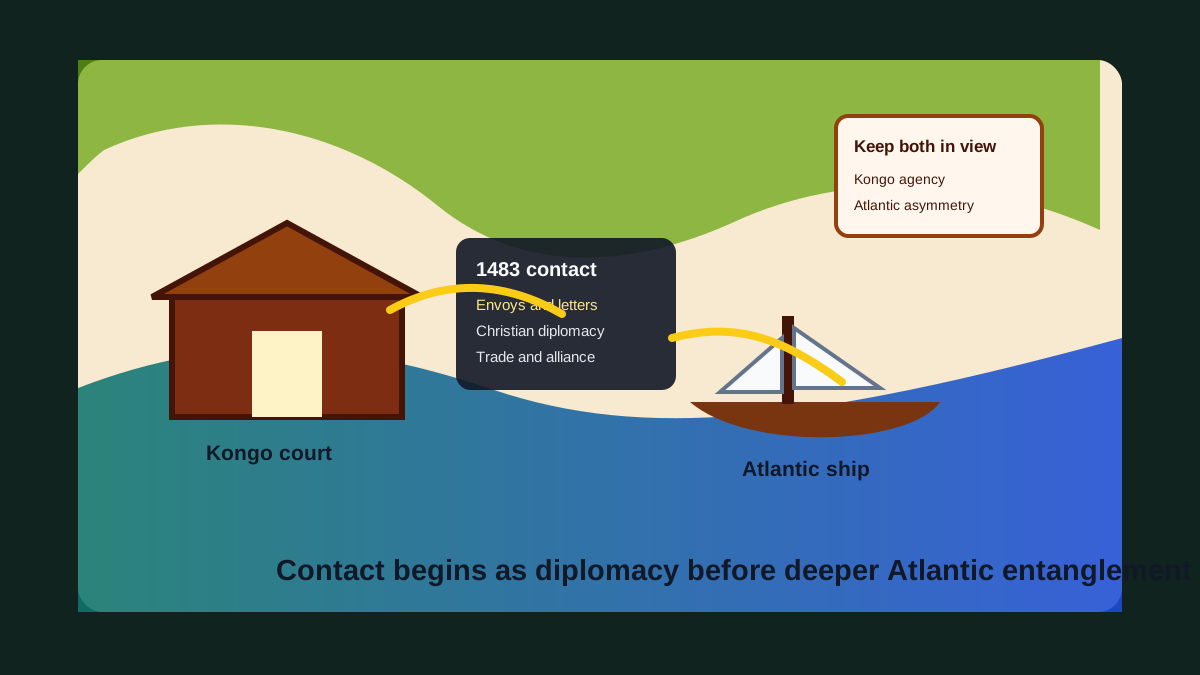
The late fifteenth century saw maritime powers from Iberia pushing along Africa’s Atlantic coast while inland polities like the Kingdom of Kongo sustained complex systems of governance, ritual, and long-distance exchange. Kongo was a political entity with its own diplomatic habits: rulers received foreign visitors, negotiated alliances, and incorporated new ideas when those suited local ends. Portuguese sailors and missionaries approached such courts with multiple aims—commercial contacts, diplomatic tie-ups, and the spread of Christianity—driven by a mixture of curiosity, competition, and claims to spiritual duty. None of these pressures operated alone. Kongo elites evaluated the Portuguese not as irresistible outsiders but as actors who might be incorporated into existing networks of tribute, marriage ties, and authority.
At the same time, the coastline was becoming an arena of sustained contact, where simple encounters could be repeated and intensified. That factual setting helps explain why 1483 looks decisive: it was a doorway into an unfolding relationship that combined mutual advantage and, eventually, unequal power. Portuguese-Kongo contact should not be framed as Europeans discovering a passive African kingdom. Kongo was a powerful Central African polity with rulers, provinces, trade routes, ritual authority, and diplomatic interests. The first contacts opened possibilities for exchange, Christianity, titles, military goods, literacy, and alliance, but also new dangers. The relationship changed over time.
Early diplomacy could look mutually useful, while later trade in enslaved people, coastal brokers, Portuguese ambitions, and internal succession politics made the connection more destructive. A good page keeps agency and asymmetry together.
The Turning Point
What changed in 1483 was not that one side suddenly dominated the other but that both parties chose to formalize contact in ways that would be durable. Portuguese envoys brought proposals—trade links, diplomatic exchange, and the offer of Christianity—that Kongo rulers did not automatically accept or reject. Instead, they engaged selectively: inviting the religion into the court, allowing new trade routes, and creating space for Portuguese representatives while seeking to preserve indigenous authority structures. Those choices mattered. By receiving envoys and adopting Christian rites at elite levels, Kongo leaders opened channels that allowed missionaries, merchants, and further emissaries to arrive with less friction.
The decisions were strategic: rulers calculated how conversion and commerce might legitimize their reigns, connect them to new goods and technologies, and place Kongo within Atlantic circuits of exchange. The turning point, then, was the mutual decision to shift from episodic contact to ongoing diplomacy—an institutional change in how each side handled the other, even as future pressures would subject that relationship to forces neither side fully controlled. The turning point was the creation of a diplomatic channel across the Atlantic world. Envoys, letters, missionaries, trade goods, and royal conversion made Kongo part of a new political and religious network.
Consequences
In the near term, the 1483 contact produced visible changes at Kongo’s court: an influx of Portuguese gifts and ideas, the presence of Christian rites among elites, and new diplomatic habits that included regular exchanges with European envoys. These developments altered symbols of authority and introduced goods and practices that could be marshaled by rulers to reinforce their rule. Over the longer arc, however, the relationship opened pathways that would be reworked by broader Atlantic dynamics. What began as diplomacy and religious exchange became entangled with trade networks that, in later decades and centuries, carried coercive pressures tied to the slave trade and colonial ambitions.
Importantly, the evidence shows Kongo elites did not passively submit; they negotiated, adopted, and adapted elements of Christianity and European interaction in ways that sought to protect local sovereignty. Yet those strategies had limits: the initial diplomatic choices made in 1483 created durable institutions and ties that other actors—commercial interests, missionary orders, and expanding imperial systems—could exploit or transform. The encounter thus stands as an example of African agency exercised inside a widening Atlantic field that eventually hardened into deeper inequalities and violence. The afterlife leads to Afonso I, Christian kingship, Atlantic slavery, contested sovereignty, and the long entanglement of Central Africa with Portuguese and Brazilian worlds. Contact was the beginning of negotiation, not a single outcome.
That longer view helps readers see why early diplomatic exchange could later become bound to coercive Atlantic labor systems and contested sovereignty.
Interpretation Notes
Portuguese-Kongo contact should be read as diplomacy before it became deeper Atlantic entanglement. Kongo rulers pursued trade, Christianity, titles, and alliance, but the relationship later became tied to slavery, succession conflict, and unequal coastal power.
Why Keep Reading
Follow the subsequent threads to see how an early diplomatic choice generated unforeseen consequences. Read on to track how Christian symbols were used in Kongo politics, how trade relations shifted when Atlantic slaving intensified, and how later leaders tried to defend authority within a system that grew more coercive. Understanding 1483 as a starting point helps explain later crises and accommodations: it was not inevitable that diplomacy would yield exploitation, yet the institutional openings of that year made such outcomes possible. The next entries trace those tensions across decades of negotiation, resistance, and adaptation. Read Kongo contact with Atlantic slave trade expansion, Brazil, abolition, and African kingdom pages to follow how diplomacy became entangled with forced migration and empire.
Reading Path
Follow the story without losing the thread
Before This
- Songhai Empire Risesc. 1464 CE
- Mansa Musa's Hajj1324-1325 CE
- Mali Empire Foundedc. 1235 CE
After This
- Columbus's First Atlantic Voyage1492 CE
- Treaty of Tordesillas1494 CE
- Atlantic Slave Trade Expands16th century
Same Period
Wider Timeline
Mind Map
How to think about Portuguese-Kongo Contact
maritime outreach
Portuguese attempts to establish direct contacts along the African coast as part of widening Atlantic navigation and commerce
Map Layer
Where this event sits geographically
Gold pins mark the approximate locations of published event pages. This is a schematic locator map, not a historical border map.
Coordinates are approximate and are used to help readers orient themselves before opening a full event page.
References
Where to Check the Facts
- Encyclopaedia Britannica: KongoReference for the Kingdom of Kongo, Portuguese contact, and Central African political history.
- World History Encyclopedia: Kingdom of KongoSupporting reference for Kongo diplomacy, Christianity, and Atlantic connections.
- Library of Congress: U.S. History Primary Source TimelinePrimary-source timeline reference for Atlantic settlement, colonial expansion, reform, and later U.S. history paths.