At a Glance
The shape of the event
- Date
- c. 1100 CE
- Place
- Great Zimbabwe
- Type
- Urban and Trade Growth
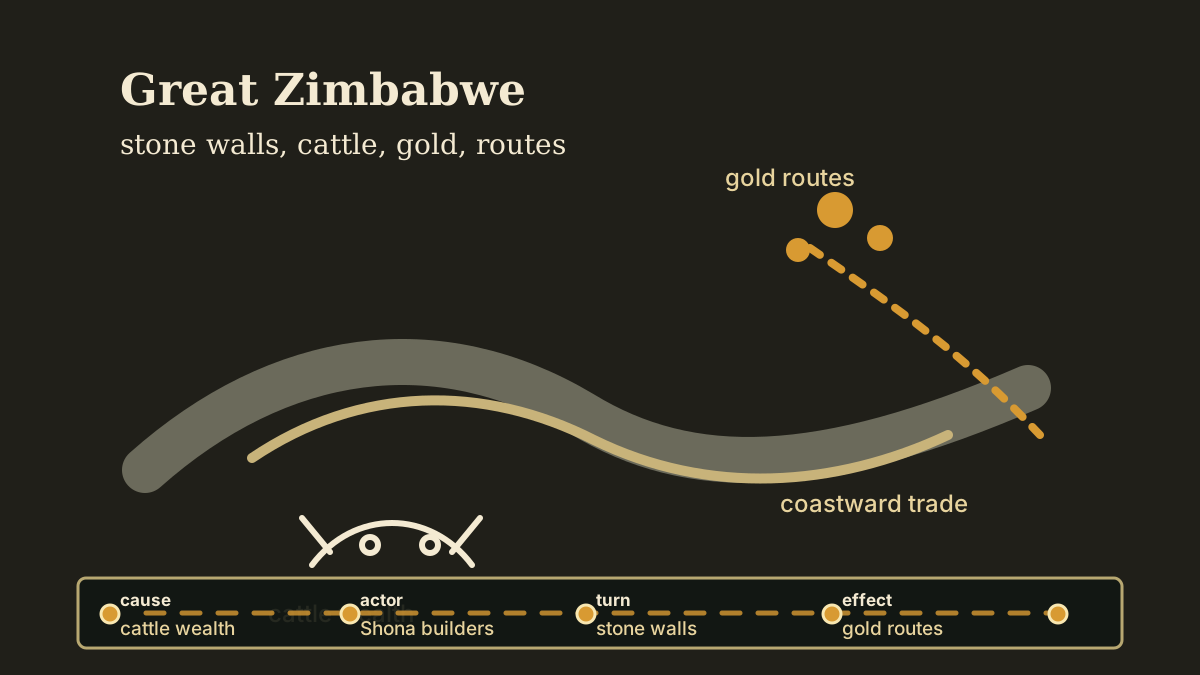
Great Zimbabwe developed into a major stone-built center connected to cattle wealth, gold routes, local authority, and Indian Ocean trade.
c. 1100 CE; place the event in Great Zimbabwe before comparing causes or consequences.
Great Zimbabwe challenges older myths that denied African architectural and political complexity, making archaeology central to public memory.
Shona builders and traders are the first names or groups to compare before widening the story.
The site became a powerful urban and political center in southern Africa.
The site became a powerful urban and political center in southern Africa.
Great Zimbabwe challenges older myths that denied African architectural and political complexity, making archaeology central to public memory.
Read next through Swahili Coast, Indian Ocean trade, Mapungubwe, Mutapa, and African urban history pages to follow how inland wealth and coastal commerce interacted.
Background
The rise of Great Zimbabwe depended on a combination of ecology, skill, and exchange. Cattle wealth supported social standing and food security; nearby gold routes connected inland producers to coastal Swahili traders; imported glass beads, ceramics, and other goods show participation in wider commercial circuits. But trade alone does not explain the city. Building in stone required labor organization, technical knowledge, social authority, and a landscape of ritual and political meaning. Ancestors of Shona-speaking communities shaped the site through local institutions, not through an outside civilizing force. That point matters because early European interpreters often tried to attribute the ruins to Phoenicians, Arabs, or other outsiders. Archaeology has made those claims untenable.
Great Zimbabwe grew within a regional history that included earlier centers such as Mapungubwe and later formations such as Mutapa. That continuity matters because it places the site inside African processes of state formation rather than inside a myth of sudden foreign arrival. Archaeologists read the site through wall styles, settlement layers, imported objects, local pottery, animal remains, and the spatial organization of elite and common areas. Soapstone birds, stone passages, and enclosure patterns do not translate automatically into simple political titles, but they show a world where authority, ritual, and material display were closely linked. The evidence points to complex local development connected to, but not created by, long-distance trade.
The Turning Point
The turning point was the concentration of settlement, building, and authority at a scale that made Great Zimbabwe a regional center. The Hill Complex, Great Enclosure, and Valley Ruins speak to changing patterns of residence, hierarchy, and ceremony. Stone walls did more than impress visitors. They organized movement, separated spaces, communicated rank, and made political order durable in the built environment. Leaders could draw on cattle, gold, trade connections, and religious authority to maintain followers and host exchange. The site's growth shows how inland African polities could shape oceanic trade from far from the coast by controlling production, routes, and legitimacy. The rise around c. 1100 was likely gradual rather than one founding act.
Families, herders, miners, ritual specialists, builders, and traders contributed to a settlement pattern that became denser and more hierarchical. Control over cattle and gold did not automatically produce urban life. Leaders had to organize labor, manage relationships with surrounding communities, and turn wealth into recognized authority. The stone walls were part of that process. They created controlled spaces, marked elite residence, and made social order visible without needing written proclamation. Great Zimbabwe therefore asks readers to treat architecture as a political document.
Consequences
Great Zimbabwe's rise reshaped the politics of the plateau and connected local authority to wider commercial systems reaching the Swahili Coast and the Indian Ocean. Its influence helped set patterns for later states in the region, including forms of elite residence, trade mediation, and symbolic architecture. The site also has a powerful modern afterlife. It became central to Zimbabwean national identity and to debates over archaeology, racism, and historical ownership. The most important correction is clear: Great Zimbabwe was not a mystery left by outsiders. It was an African urban and political achievement whose material remains demand careful reading. The site's consequences include both medieval influence and modern historical repair.
Medieval Great Zimbabwe helped shape trade flows and political authority across the plateau, but its ruins also became a battleground over historical interpretation. Colonial writers who denied African authorship were not making harmless mistakes; they were using false history to support racial hierarchy. Modern archaeology, African scholarship, and national memory have made the site's African origins clear. That does not mean every detail is settled. It means the right debate begins from evidence of local achievement, not from racist assumptions about who was capable of building complexity. Readers should also notice what is absent from the evidence. There is no need for a written royal archive to prove complexity.
Walls, imported objects, animal remains, settlement density, and landscape relationships are historical sources. They let historians ask who organized labor, who controlled cattle, who mediated exchange, and how sacred or elite spaces were separated from ordinary ones. This matters because many students are trained to privilege written records from literate empires. Great Zimbabwe widens that habit: material culture can speak powerfully when read with method, comparison, and respect for local context.
Interpretation Notes
Great Zimbabwe Rises can look simple when reduced to one date, but the evidence usually points to a wider setting. The useful debate is which part mattered most: leadership, logistics, belief, social pressure, or the institutions that survived afterward.
Why Keep Reading
Read next through Swahili Coast, Indian Ocean trade, Mapungubwe, Mutapa, and African urban history pages to follow how inland wealth and coastal commerce interacted. Great Zimbabwe is a key bridge between local social systems and global exchange, and it helps readers see African history through architecture, landscape, cattle, mining, and memory rather than through external contact alone. Pair this page with Ghana, Mali, Swahili Coast, Mapungubwe, and Indian Ocean trade. The route helps readers see African urbanism and commerce through multiple ecologies: Sahel caravans, savanna cattle, coastal ports, inland gold, and built environments that preserved authority in stone. Evidence note: Great Zimbabwe is especially good for teaching how history works without a single royal chronicle.
Dated layers, wall construction, imported beads, ceramics, cattle remains, gold-working evidence, and settlement patterns all carry historical meaning. The page should make that method visible because it improves trust. Readers see that the conclusion of African authorship is not a modern slogan but the result of archaeological evidence, regional comparison, and the rejection of older claims built on racial ideology rather than proof.
Reading Path
Follow the story without losing the thread
Before This
- Fatimid Cairo Founded969 CE
- Swahili Coast City-States Risec. 900 CE
- Ghana Empire Flourishesc. 800 CE
After This
- Mali Empire Foundedc. 1235 CE
- Great Zimbabwe Flourishesc. 1250 CE
- Mansa Musa's Hajj1324-1325 CE
Same Period
- Ghana Empire Flourishesc. 800 CE
- Mali Empire Foundedc. 1235 CE
- Mansa Musa's Hajj1324-1325 CE
Wider Timeline
Mind Map
How to think about Great Zimbabwe Rises
Cattle wealth
Herds supported social status, food security, exchange, and the authority of local elites.
Map Layer
Where this event sits geographically
Gold pins mark the approximate locations of published event pages. This is a schematic locator map, not a historical border map.
Coordinates are approximate and are used to help readers orient themselves before opening a full event page.
References
Where to Check the Facts
- Official UNESCO World Heritage Centre: Great Zimbabwe National MonumentInstitutional reference for the site's chronology, architecture, and World Heritage significance.
- World History Encyclopedia: Great ZimbabweSupporting reference for Great Zimbabwe's trade links, construction, and historical interpretation.