At a Glance
The shape of the event
- Date
- 16th century
- Place
- Atlantic Africa
- Type
- Forced Migration System
The Atlantic slave trade expanded as European colonial demand, coastal trade networks, African political conflicts, and plantation economies became violently connected.
16th century; place the event in Atlantic Africa before comparing causes or consequences.
The trade reshaped African societies, Atlantic economies, racial slavery, diaspora formation, and the modern world.
African captives / European traders / African political elites are the first names or groups to compare before widening the story.
Millions of Africans were forcibly transported across the Atlantic over the following centuries.
Millions of Africans were forcibly transported across the Atlantic over the following centuries.
The trade reshaped African societies, Atlantic economies, racial slavery, diaspora formation, and the modern world.
Follow this thread to see how those early choices became institutions: trace coastal forts and merchant networks into the mechanics of the Middle Passage, watch how plantation demand hardens into legal regimes, and le...
Background
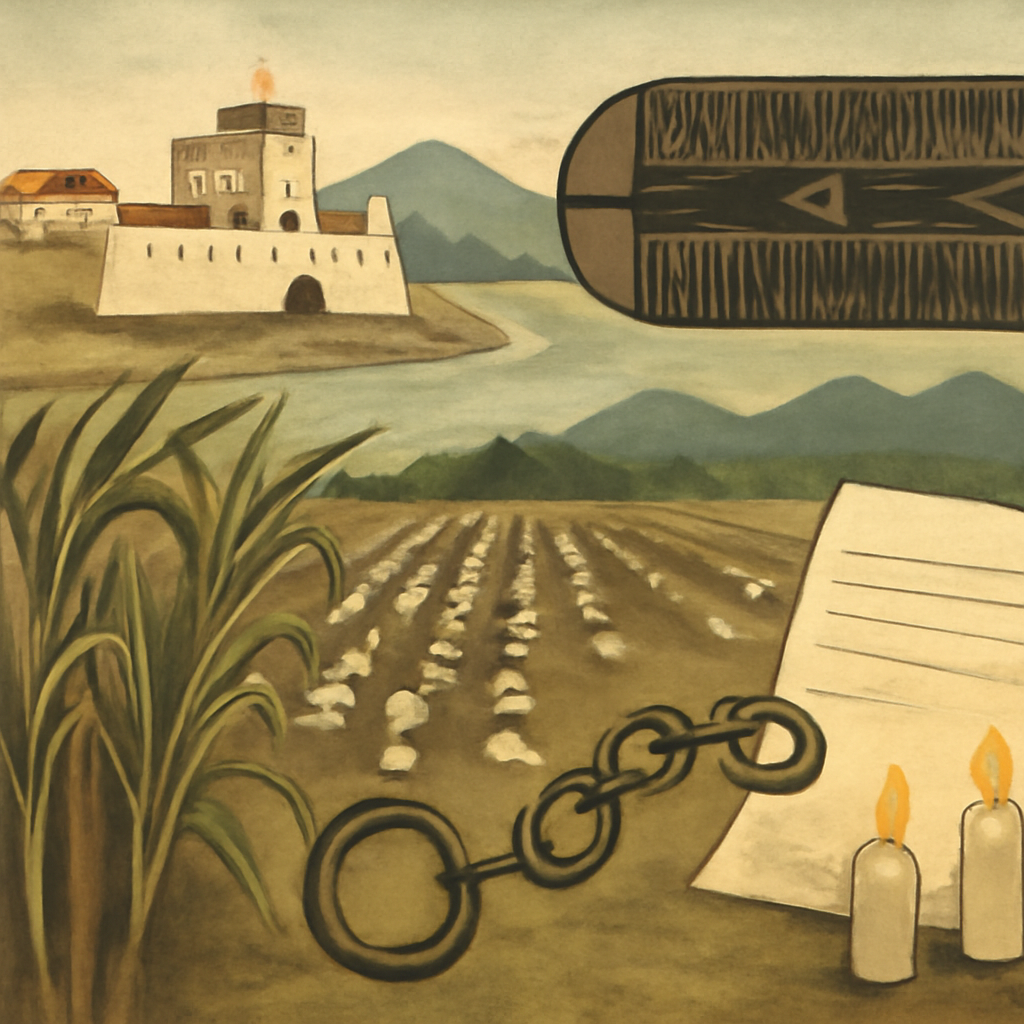
By the start of the sixteenth century, contacts across the Atlantic had already altered many shores. European maritime states sought labor for sugar and other cash crops; coastal trade networks in Atlantic Africa had grown more tightly connected to European goods and credit; and African political life had been reshaped by competition for trade advantages and military technologies. None of these pressures alone explains the later expansion, but together they narrowed options for many people. African elites sometimes engaged in raiding, diplomacy, and sale of captives to secure firearms, coastal allies, or access to European markets. European traders pushed for supplies of labor to feed nascent plantation systems.
Local violence, long-standing slavery practices of varying forms, and new market incentives layered on top of one another. The result was a tense landscape in which personal survival, political advantage, and commercial profit increasingly intersected with the emerging systems of forced migration across the Atlantic. The expansion of the Atlantic slave trade should not read like a switch flipped in 1500. It grew from earlier Atlantic experiments: Portuguese voyages down the African coast, sugar production on Atlantic islands, commercial forts, royal monopolies, maritime credit, and changing relations with African coastal polities. Those pieces created a route by which violence inland could be converted into cargo at the coast and plantation labor across the ocean.
African political agency belongs in the center, but it has to be handled without false balance. Some rulers, brokers, and military leaders profited from selling captives or controlling routes; many communities were attacked, destabilized, or forced into defensive choices. European demand, ships, guns, credit, and plantation markets intensified local conflicts and made captivity more profitable. The trade was built through collaboration, coercion, and unequal power at once.
The Turning Point
The decisive shift in this period was not a single law or voyage but a widening integration of actors and institutions that turned coastal traffic into a sustained forced-migration system. European traders consolidated routes, financing, and coastal footholds; merchants and shipowners began to prioritize human cargo for Atlantic plantations. African political elites made consequential choices—sometimes negotiating, sometimes warring—to supply captives or to control trade corridors. For captives themselves the change was catastrophic: capture, sale, and transport became more routinized, with chains of custody that reached from hinterland raids and punitive wars to fortified coastal factories and then across the ocean. Plantation economies in the Americas provided the consistent demand that made these networks profitable and persistent.
Together these actors converted episodic enslavement and local servitude into an industrial-scale, transoceanic market. This phase did not erase earlier pressures within Africa, but it intensified them and redirected their outcomes; what had been regional violence and commerce now fueled a system designed to supply labor across continents. The turning point was routinization. Captivity moved through repeatable stages: raid or war, sale through intermediaries, confinement at coastal factories, branding or inspection, shipment through the Middle Passage, and sale into American labor regimes. Once merchants, insurers, ship captains, planters, and officials could price those steps, atrocity became a business process. Plantation demand hardened the system. Sugar, and later other plantation crops, rewarded scale, discipline, and replacement labor.
That demand encouraged larger voyages and more regular shipping schedules, while colonial law increasingly defined enslaved Africans and their descendants as inheritable property.
Consequences
In the near term, the expansion meant the forced removal of growing numbers of people from African societies—men, women, and children taken into unfamiliar, brutal conditions. Coastal polities that benefited could gain wealth, weapons, or political advantage, while others were weakened or depopulated. Over the longer term, the Atlantic slave trade reshaped economies on both sides of the ocean: it underpinned plantation wealth in the Americas, influenced the rise and fall of African polities, and helped create racialized systems of chattel slavery that would endure and evolve. It also forged new diasporic communities whose cultural, linguistic, and religious traces persist.
Historians debate how decisive the visible forced-migration machinery was compared with earlier, slower pressures within Africa that had already limited choices. What is clear is that the trade remade demographic patterns, political power, economic relations, and social identities across the Atlantic world—effects that helped shape the contours of the modern era. The consequences were demographic, political, and cultural. Millions were removed from African societies; some regions experienced warfare, population loss, and militarized politics, while others saw new elites grow powerful through trade. In the Americas, racialized chattel slavery became a foundation for wealth, settlement, law, and everyday violence. The page also needs a route into survival, not only victimization.
Captives carried languages, religious practices, agricultural knowledge, music, kinship strategies, and resistance into new worlds. Diasporic cultures formed under extreme coercion, and revolts, maroon communities, shipboard resistance, petitions, and later abolition campaigns show that enslaved people were historical actors, not only historical evidence.
Interpretation Notes
Atlantic Slave Trade Expands raises a debate about scale: did the decisive change come from the visible forced migration system, or from older pressures around Africa and Atlantic Slave Trade that had already narrowed what people could do?
Why Keep Reading
Follow this thread to see how those early choices became institutions: trace coastal forts and merchant networks into the mechanics of the Middle Passage, watch how plantation demand hardens into legal regimes, and learn how African societies adapted, resisted, and sometimes colluded. Understanding this expansion explains later debates about abolition, empire, and diaspora, and it makes visible the human decisions that turned commerce into a routinized system of forced migration. Each next account illuminates who gained, who lost, and how memory and power were redistributed across oceans. Read this page with the Middle Passage, plantation slavery, the Haitian Revolution, abolition, African coastal states, and modern diaspora memory.
That path turns a trade statistic into a history of systems, choices, and people who fought to remain human inside a machine built to deny it.
Reading Path
Follow the story without losing the thread
Before This
- Treaty of Tordesillas1494 CE
- Portuguese-Kongo Contact1483 CE
- Songhai Empire Risesc. 1464 CE
After This
- Dutch East India Company Founded1602 CE
- Meiji Restoration1868 CE
- Opening of the Suez CanalNovember 17, 1869
Same Period
- Qin Unification of China221 BCE
- Meiji Restoration1868 CE
- Opening of the Suez CanalNovember 17, 1869
Wider Timeline
Mind Map
How to think about Atlantic Slave Trade Expands
coastal trade
European goods and credit intensified coastal commerce and made captives a marketable commodity
Map Layer
Where this event sits geographically
Gold pins mark the approximate locations of published event pages. This is a schematic locator map, not a historical border map.
Coordinates are approximate and are used to help readers orient themselves before opening a full event page.
References
Where to Check the Facts
- Encyclopaedia Britannica: Transatlantic Slave TradeReference for the broad chronology, forced migration system, and Atlantic economic context.
- SlaveVoyages: Trans-Atlantic Slave Trade DatabaseDatabase reference for the scale, paths, and evidentiary basis of the Atlantic slave trade.
- Library of Congress: U.S. History Primary Source TimelinePrimary-source timeline reference for Atlantic settlement, colonial expansion, reform, and later U.S. history paths.