At a Glance
The shape of the event
- Date
- April-May 1943
- Place
- Warsaw
- Type
- Resistance Uprising
Jewish resistance fighters in the Warsaw Ghetto rose against German deportation and destruction policies despite overwhelming military odds.
April-May 1943; place the event in Warsaw before comparing causes or consequences.
The uprising became a central symbol of resistance during the Holocaust and of human agency under extreme persecution.
Jewish Combat Organization are the first names or groups to compare before widening the story.
German forces crushed the uprising and destroyed much of the ghetto.
German forces crushed the uprising and destroyed much of the ghetto.
The uprising became a central symbol of resistance during the Holocaust and of human agency under extreme persecution.
Follow this episode to trace how resistance and repression interacted across wartime Eastern Europe.
Background
By 1943, the Warsaw Ghetto had been a sealed enclave for several years, a confined area where overcrowding, hunger and disease were daily realities. German occupation policies had already produced mass deportations to extermination sites and the systematic stripping away of rights and resources. The Jewish Combat Organization emerged from networks of youth groups, former soldiers, political activists and ordinary citizens who had faced incremental steps toward eradication. Their access to weapons, food and safe shelters was severely limited. At the same time, the German plan to liquidate the ghetto and erase its physical presence was intensifying: the operation combined deportation convoys with efforts to dismantle buildings and stamp out organized dissent.
Scholars and survivors stress that no single cause fully explains the uprising: some see an immediate response to a fresh round of deportations; others emphasize deeper currents—political affiliations, prewar experiences, or a desire to create a public record of resistance. This page keeps those tensions visible: the uprising arose from both immediate provocation and longer-term choices by people who knew they faced almost certain death. The Warsaw Ghetto Uprising should not be reduced to a tragic last stand. It began inside a world of German occupation, starvation, confinement, deportation, forced labor, smuggling, underground schools, secret archives, family loss, and rumors about killing centers. By April 1943, many residents understood that deportation meant death. That knowledge changed the meaning of resistance.
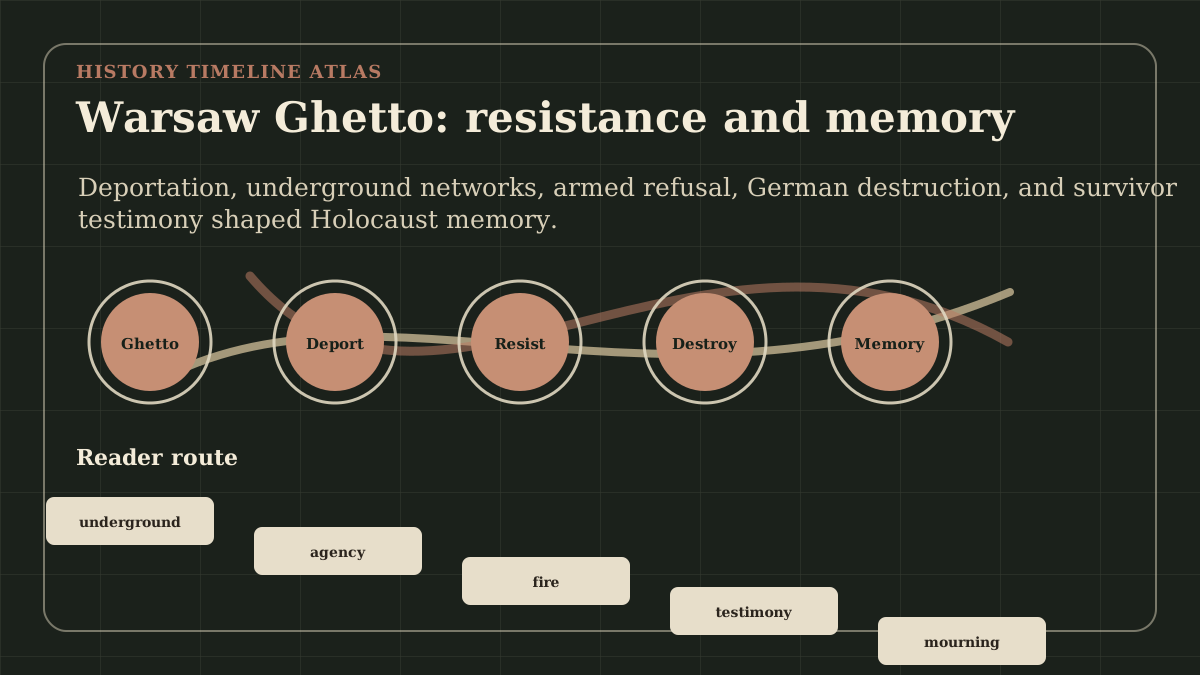
The page needs to keep agency visible without romanticizing impossible odds. Jewish fighters gathered weapons, built bunkers, organized couriers, coordinated through underground groups, and chose armed refusal in a situation designed to remove choice. Civilians, children, couriers, smugglers, religious figures, diarists, and archive workers also shaped the story. Resistance was not only shooting; it was hiding evidence, carrying messages, preserving names, feeding people, and refusing Nazi control over memory. The visual should therefore be about ghetto space, deportation pressure, underground routes, fire, testimony, and memory rather than a generic D-Day photograph. The uprising belonged to Holocaust history and urban resistance. Its importance comes from what people tried to preserve when military victory was nearly impossible.
The Turning Point
The critical change came when fighters chose to resist the new round of German liquidation with arms rather than comply with deportation orders. The Jewish Combat Organization shifted from clandestine preparation to open action: barricades were raised in courtyards, workshops turned into firing positions, and small units staged ambushes against rounding-up operations. Individual decisions mattered—combatants decided to fight in basements, to hide non-combatants, to preserve documents and to try to smuggle the wounded out—but those choices were made inside a structure of near-total control by occupying forces and an extreme scarcity of resources. German tactics evolved in reaction, bringing heavier weapons, systematic house-to-house clearing and the use of incendiary methods to destroy buildings.
The turning point was not a single battle but this mutual escalation: when resistance converted covert defiance into armed urban struggle, the character of the entire ghetto changed. The uprising transformed deportation from a bureaucratic procedure into a contested, visible confrontation that forced witnesses—within and beyond Warsaw—to confront the reality of Jewish agency amid persecution. The turning point was the German attempt to liquidate the remaining ghetto and the decision of Jewish resistance groups to fight. Armed resistance could not defeat the German state, but it could change the terms of the final assault. It forced the occupiers to fight for streets, bunkers, and buildings instead of simply organizing another deportation.
The destruction of the ghetto became part of the event. Fire, smoke, bunker searches, executions, capture, and the razing of buildings were not background details. They show how occupation power tried to erase a community physically and symbolically. The uprising's memory survived because witnesses, records, survivors, and later commemorations refused that erasure.
Consequences
In immediate terms, German forces suppressed the uprising and carried out the destruction of much of the ghetto. Buildings were razed, survivors were removed or killed, and the physical landscape of that neighborhood was fundamentally altered. Yet the consequences extended beyond material devastation. The uprising became a powerful symbol—of resistance inside the Holocaust, of the choice to struggle when the choices available were annihilation or defiance. That symbolism influenced survivors’ memories, postwar commemorations, and the ways later generations understood Jewish resistance and moral agency under extreme persecution.
Historians continue to debate how much weight to give to individual decisions versus the shaping force of structural violence: some emphasize the tactical limits and tragic outcomes, others emphasize the meaning created by an act of communal refusal. The event also affected wartime and postwar discourse about resistance more broadly, prompting contemporaries and later audiences to reassess assumptions about victimhood, action and testimony. Whatever the balance one assigns between personal choice and coercive structures, the uprising left a lasting imprint on collective memory and on how societies consider resistance under genocidal regimes. The immediate consequence was devastating: the uprising was crushed, and the ghetto was destroyed. Yet the event became a central symbol because it revealed agency under extreme persecution.
It challenged later readers to ask what resistance means when survival itself has been made almost impossible. The longer consequence belongs to Holocaust memory, Jewish history, Polish history, and the ethics of testimony. The uprising is remembered through survivor accounts, underground archives, memorials, scholarship, and public ritual. A careful page keeps mourning and resistance together, so readers do not turn courage into a way of avoiding grief.
Interpretation Notes
The hardest question around Warsaw Ghetto Uprising is causation. The event had immediate actors, but its meaning also came from institutions, geography, resources, and expectations already present in Eastern Europe.
Why Keep Reading
Follow this episode to trace how resistance and repression interacted across wartime Eastern Europe. Read next to see how contemporaneous uprisings, partisan activity and civilian coping strategies compared to Warsaw’s urban struggle, and to explore how surviving records, testimonies and contested interpretations shape our understanding today. That sequence helps explain why one episode can become a central symbol, while revealing the limits and possibilities of studying resistance under conditions designed to destroy both people and evidence. Read the Warsaw Ghetto Uprising beside Wannsee, the Holocaust, Nuremberg, and human-rights pages. That route moves from policy and bureaucracy to lived persecution, armed refusal, survivor testimony, and the later legal effort to name crimes.
Reading Path
Follow the story without losing the thread
Before This
- Battle of KurskJuly 5-August 23, 1943
- Tehran ConferenceNovember 28-December 1, 1943
- Battle of MidwayJune 1942
After This
- D-Day LandingsJune 6, 1944
- Liberation of ParisAugust 25, 1944
- Battle of the BulgeDecember 16, 1944-January 25, 1945
Same Period
- Battle of BritainJuly-October 1940
- Operation BarbarossaJune 22, 1941
- Battle of MidwayJune 1942
Wider Timeline
Mind Map
How to think about Warsaw Ghetto Uprising
deportation policy
German orders to remove inhabitants and destroy the ghetto prompted immediate resistance
Map Layer
Where this event sits geographically
Gold pins mark the approximate locations of published event pages. This is a schematic locator map, not a historical border map.
Coordinates are approximate and are used to help readers orient themselves before opening a full event page.
References
Where to Check the Facts
- National WWI Museum and Memorial: All About WWIMuseum reference hub for World War I chronology, maps, articles, and educational context.
- U.S. National Archives: World War I CentennialArchive reference hub for World War I records, photographs, documents, and educational resources.
- The National WWII Museum: Explore By TopicMuseum reference hub for World War II theaters, battles, home fronts, aftermath, and memory.
- Imperial War Museums: What You Need to Know About the Second World WarMuseum reference for the global war, civilian experience, military fronts, and consequences.