At a Glance
The shape of the event
- Date
- June 6, 1944
- Place
- Normandy
- Type
- Amphibious Invasion
Allied forces landed in Normandy in the largest amphibious operation of the war, opening a western front against Nazi Germany.
June 6, 1944; place the event in Normandy before comparing causes or consequences.
D-Day accelerated Germany's military collapse and became one of the central memory sites of the war.
Dwight D. Eisenhower / Winston Churchill are the first names or groups to compare before widening the story.
The Allies established a beachhead and began the liberation of western Europe.
The Allies established a beachhead and began the liberation of western Europe.
D-Day accelerated Germany's military collapse and became one of the central memory sites of the war.
Read on to trace the campaign D-Day began: the Battle of Normandy, the breakout into France and the slow march toward Germany.
Background
By mid-1944 the Allies faced a clear strategic imperative: to relieve the Soviet Union by forcing Germany to fight on a second major land front and to begin reclaiming territory occupied since 1940. For years planners, politicians and soldiers had wrestled with how to execute a cross-Channel assault—balancing limited landing craft, air cover, logistics and the need for surprise. Political leaders, including Winston Churchill, pressed for operations that married military feasibility with political urgency; liberation of France would also reshape postwar bargaining. Technological advances in amphibious warfare, air transport and logistics made large-scale landings plausible at last, but German defenses along the Normandy coast and inland remained formidable.
Allied commanders trained troops, rehearsed landings and coordinated naval, air and ground forces; commanders such as Dwight D. Eisenhower would soon shoulder the responsibility of timing and execution. Historians have long argued over causes: some emphasize bold, consequential decisions by commanders on the day, others point to deeper structural advantages—industrial output, convoy escort systems, and air superiority—that made invasion likely to succeed. This page refuses a single verdict. D-Day must be read as an operation where individual choices mattered inside a wider context of resources, politics, and contingency, and where civilian lives on occupied soil waited for the result.
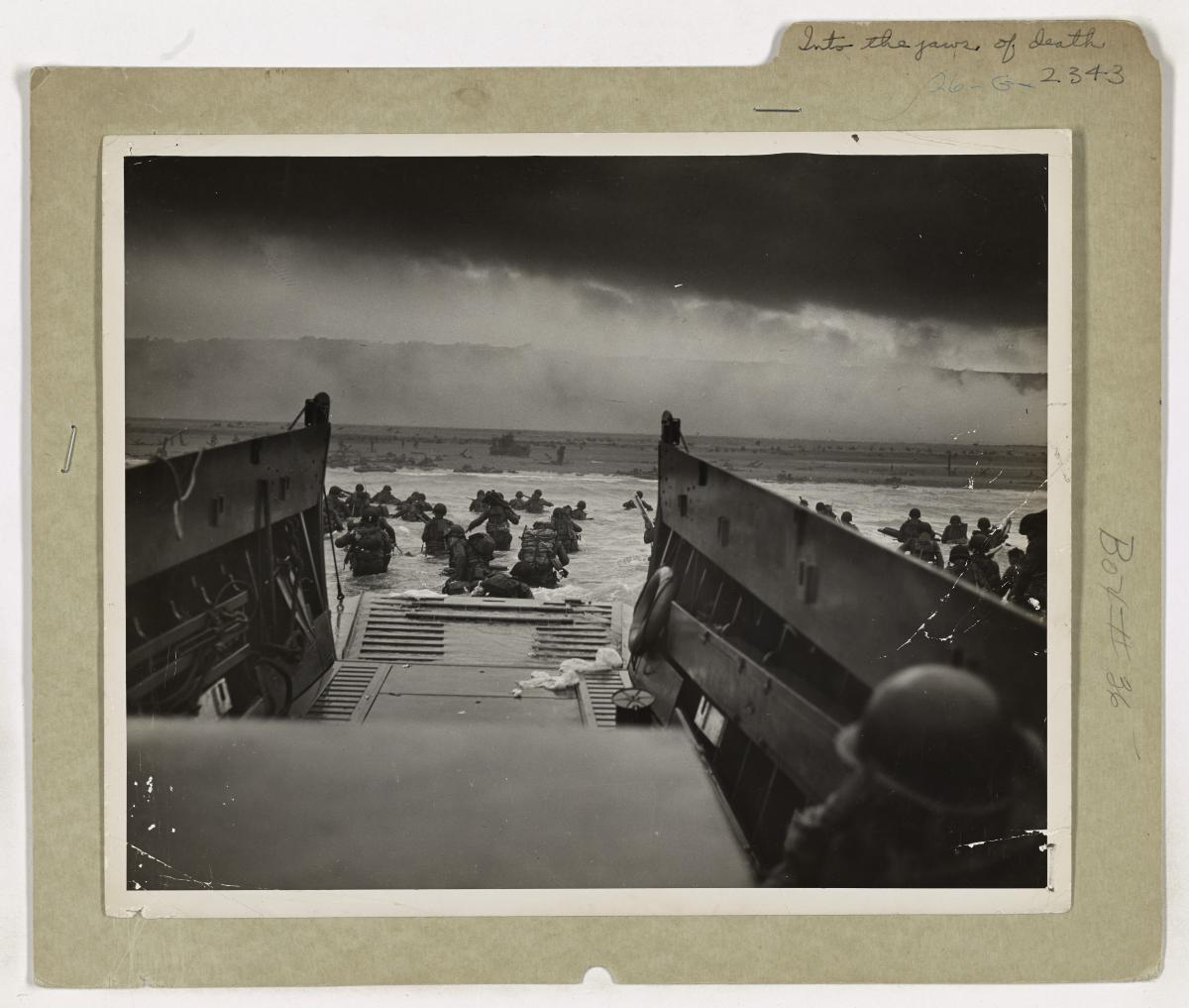
D-Day is compelling because it joined planning, deception, weather, naval power, airborne drops, beach assaults, logistics, and resistance networks into one operation. Normandy was not only a heroic morning; it was the opening of a supply chain and a campaign to push into occupied Europe. The landings also depended on people far beyond the famous beaches. Engineers, medics, codebreakers, sailors, pilots, French civilians, resistance contacts, and commanders all shaped whether the invasion could survive its first hours and then expand inland.
The Turning Point
June 6, 1944 changed the strategic map because the Allies moved from planning to possession. At dawn, Allied forces launched the largest amphibious operation of the war along the Normandy coast. The operation required synchronized actions: naval bombardment, air-support missions, thousands of assault craft carrying infantry and equipment, and airborne troops securing approaches inland. Commanders on all levels faced immediate, consequential choices under fire—whether to press assaults amid heavy resistance, to commit reserves, or to consolidate gains on the beaches. Dwight D. Eisenhower, as the senior Allied commander, bore responsibility for launching the invasion when weather and intelligence permitted; his decision to proceed, and to accept the operation’s inherent risks, marked a pivotal act of command.
Political leaders, including Winston Churchill, watched the opening with urgent stakes for both military success and postwar influence. The landings achieved their central operational goal: to establish a viable beachhead on which follow-on forces could be assembled. That foothold converted a directional strategy into a tangible front: supplies could be brought ashore, armored units moved inland, and the Allies could begin sustained operations on western soil. Yet the day did not end the campaign; it inaugurated a brutal, attritional struggle across France that would test logistics, command, and endurance.
Consequences
The immediate consequence of D-Day was operational: Allied forces established beachheads that allowed men, materiel and vehicles to flow ashore and to form the nucleus of sustained offensive operations in western Europe. From that foothold the Allies pushed inland, beginning the campaign that would liberate France and much of western Europe. Politically and strategically, opening a western front forced Germany to fight on multiple axes, stretching its resources and command flexibility. Many historians argue that this pressure accelerated the German military collapse, even as debates continue over how much of that outcome rested on single-day decisions versus cumulative material and logistical superiority.
For French civilians and resistance networks, Normandy’s invasion signaled the end of occupation’s darkest phase and the start of painful, complex liberation, with its own local conflicts and reconstruction challenges. In memory and national culture, D-Day has become one of the central sites for commemoration of World War II—its beaches and airborne drops remembered in ceremonies, museums and memoirs. That remembrance shapes how nations interpret wartime sacrifice, leadership and the moral claims of liberation. Yet the operational gains of June 6 were only the opening of a costly campaign; the broader collapse of Nazi Germany unfolded over months, determined by combined military pressures, economic limits, internal strains and the continuing decisions of leaders and soldiers on many fronts.
The consequences included the liberation of Paris, pressure on Germany from west and east, enormous casualties, and a lasting memory of coalition warfare. D-Day matters because it shows how industrial-scale planning still came down to exposed bodies crossing sand, water, hedgerows, and fire.
Interpretation Notes
The hardest question around D-Day Landings is causation. The event had immediate actors, but its meaning also came from institutions, geography, resources, and expectations already present in Western Europe.
Why Keep Reading
Read on to trace the campaign D-Day began: the Battle of Normandy, the breakout into France and the slow march toward Germany. Follow the timelines of logistics, airborne operations and political diplomacy to see how battlefield choices interacted with factory output and alliance politics. If you want to understand leadership under strain, compare Eisenhower’s command decisions with the political pressures Churchill and other leaders faced. If memory interests you, explore how Normandy entered national commemorations and how veterans’ testimonies have shaped public understanding. Each thread—military, political, civilian and commemorative—reveals different truths about why June 6 mattered and why historians still debate what mattered most.
Read D-Day with Stalingrad, the Holocaust, Yalta, Normandy, and 1945 to follow the endgame of World War II.
Reading Path
Follow the story without losing the thread
Before This
- Liberation of ParisAugust 25, 1944
- Battle of the BulgeDecember 16, 1944-January 25, 1945
- Warsaw Ghetto UprisingApril-May 1943
After This
- Atomic Bombing of HiroshimaAugust 6, 1945
- Yalta ConferenceFebruary 1945
- End of World War II1945
Same Period
- Assassination of Archduke Franz FerdinandJune 28, 1914
- Russian Revolution1917 CE
- Treaty of VersaillesJune 28, 1919
Wider Timeline
Mind Map
How to think about D-Day Landings
Need for a Western Front
Allied strategic aim to force Germany onto multiple fronts and relieve pressure on the Soviet Union
Map Layer
Where this event sits geographically
Gold pins mark the approximate locations of published event pages. This is a schematic locator map, not a historical border map.
Coordinates are approximate and are used to help readers orient themselves before opening a full event page.
References
Where to Check the Facts
- National WWI Museum and Memorial: All About WWIMuseum reference hub for World War I chronology, maps, articles, and educational context.
- U.S. National Archives: World War I CentennialArchive reference hub for World War I records, photographs, documents, and educational resources.
- The National WWII Museum: Explore By TopicMuseum reference hub for World War II theaters, battles, home fronts, aftermath, and memory.
- Imperial War Museums: What You Need to Know About the Second World WarMuseum reference for the global war, civilian experience, military fronts, and consequences.