At a Glance
The shape of the event
- Date
- November 28-December 1, 1943
- Place
- Tehran
- Type
- Diplomatic Conference
Roosevelt, Churchill, and Stalin met in Tehran to coordinate Allied strategy, including plans for a western front and discussions that foreshadowed postwar political settlements.
November 28-December 1, 1943; place the event in Tehran before comparing causes or consequences.
Tehran helped turn coalition warfare into concrete planning while revealing tensions that later shaped Yalta, occupation zones, and the Cold War.
Franklin D. Roosevelt / Winston Churchill / Joseph Stalin are the first names or groups to compare before widening the story.
Allied leaders confirmed commitment to a western invasion and deepened high-level coalition coordination.
Allied leaders confirmed commitment to a western invasion and deepened high-level coalition coordination.
Tehran helped turn coalition warfare into concrete planning while revealing tensions that later shaped Yalta, occupation zones, and the Cold War.
The next useful step is to follow the linked events, people, topic routes, and timelines.
Background
By late 1943 the Allies had gained momentum, but coalition victory required agreement among governments with different military priorities, political systems, and postwar ambitions. Before Tehran Conference, the surrounding world already contained unresolved tensions over authority, resources, belief, strategy, or legitimacy. Those pressures mattered because they shaped what different actors thought was possible. Single-cause explanations flatten the background, which was usually a mix of long-running structures and immediate decisions. The location in Middle East also matters, because events there connected local choices to wider routes of diplomacy, war, trade, reform, or memory. This context prepares the reader to see the event as part of a sequence rather than as an isolated headline. Tehran turns strategy into face-to-face coalition politics.
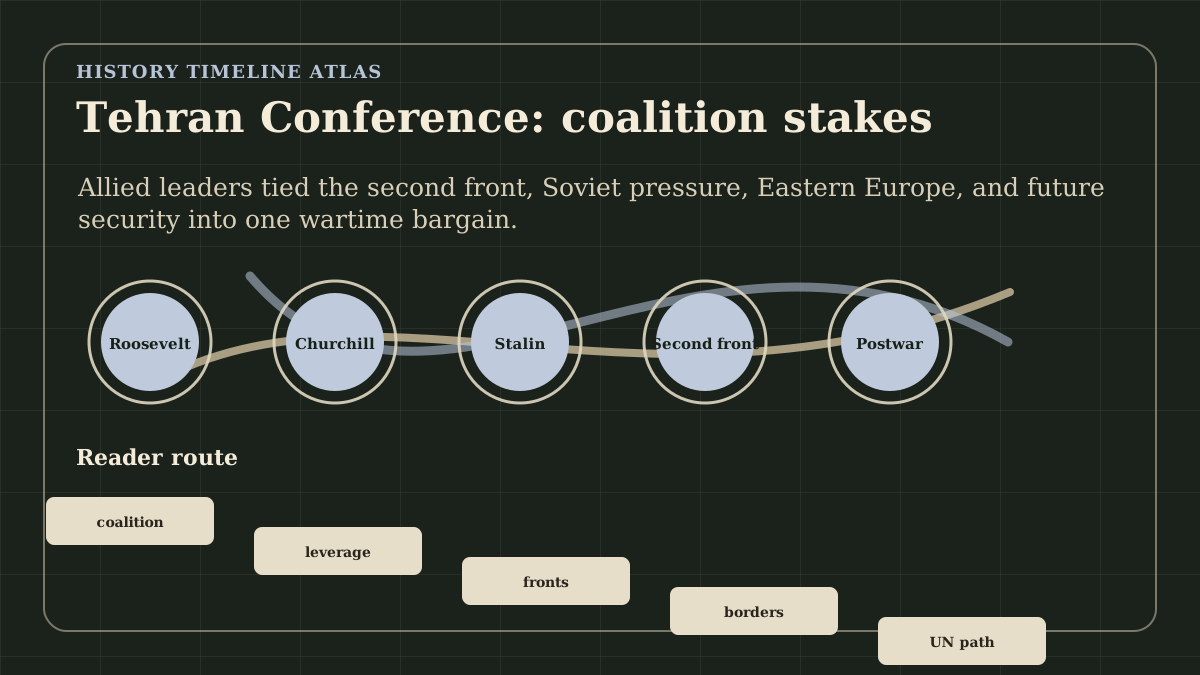
Roosevelt, Churchill, and Stalin shared an enemy, but not identical priorities. The Soviet Union wanted relief in the west, Britain weighed Mediterranean and imperial concerns, and the United States pushed toward a cross-Channel invasion and long-term security planning. The conference matters because military timing and postwar bargaining became inseparable. The meeting is easier to read if the battlefield is kept in the room. Stalin arrived with the Soviet Union carrying a vast share of the ground war against Germany. Churchill brought a Mediterranean and imperial map shaped by Britain's position, its shipping routes, and its fears about a premature cross-Channel gamble. Roosevelt wanted victory, but he also wanted a postwar security architecture that would not repeat the failures after 1919.
None of those aims existed in isolation. Tehran also exposes who was absent from high strategy. Poles, Iranians, colonized peoples, occupied Europeans, soldiers at the front, and civilians under bombardment did not sit at the table, yet their futures were affected by decisions about borders, fronts, and influence. That absence does not make the conference irrelevant. It makes it a useful page for asking how great-power bargaining turns other people's geography into diplomatic language.
The Turning Point
The conference brought the Big Three together for the first time. They discussed the timing of a cross-Channel invasion, operations against Germany, support for the Soviet front, and the shape of security after the war. The turning point was not simply that the event occurred, but that it changed the range of options available afterward. People connected to Franklin D. Roosevelt, Winston Churchill, Joseph Stalin acted inside constraints created by earlier conflicts, institutions, and expectations. Some choices were deliberate; others were responses to pressure, fear, opportunity, or failed compromise. The event's form as diplomatic conference also shaped how consequences unfolded.
It made certain outcomes easier to imagine, gave later actors new evidence or symbols to use, and forced communities to adapt to a situation that could no longer be treated as temporary. The crucial change was the firmer Allied commitment to a western front in France. A second front was not just a calendar item. It was a promise about who would bear risk, how Germany would be stretched, and how much trust the Soviet Union could place in its partners. Once Overlord became central to coalition planning, military cooperation and political leverage moved together. At the same time, Tehran did not settle every postwar question. It narrowed later choices.
Ideas about Germany, Poland, the United Nations, and spheres of influence would be argued again at Yalta and Potsdam, but Tehran made clear that battlefield position would shape bargaining power. The summit is therefore a hinge: still wartime, already postwar.
Consequences
Allied leaders confirmed commitment to a western invasion and deepened high-level coalition coordination. Tehran helped turn coalition warfare into concrete planning while revealing tensions that later shaped Yalta, occupation zones, and the Cold War. The immediate result mattered, but the longer effect came from how later people interpreted and reused the event. Some consequences were institutional: laws, borders, offices, alliances, or systems of rule changed. Others were social or cultural: public memory, political language, religious identity, or expectations about power shifted. Read the event on two clocks at once. One clock follows the immediate aftermath; the other follows the slower movement of influence into later crises, reforms, debates, and historical comparisons. The conference also prepares readers for Yalta and Potsdam.
Decisions about fronts, Germany, Eastern Europe, and future security did not arrive suddenly in 1945. They developed through wartime meetings where trust, leverage, casualties, ideology, and battlefield position shaped what leaders could demand. Tehran is therefore a bridge between coalition victory and postwar tension. Its longer consequence is interpretive. Tehran helps readers avoid a simple story in which Allied unity suddenly breaks after victory. The strains were visible while cooperation was still necessary. That makes the event valuable for SEO readers searching for a World War II timeline, because it explains why military turning points, summit diplomacy, and the origins of the Cold War belong on the same route.
Interpretation Notes
The conference can be read as pragmatic cooperation or as an early sign that wartime necessity was already producing postwar bargaining over Europe and influence.
Why Keep Reading
The next useful step is to follow the linked events, people, topic routes, and timelines. Tehran Conference becomes clearer when it is compared with what came before and after it, especially events in Twentieth Century and related pages about World War II and Allied Powers. The map helps locate the event, the mind map separates causes from effects, and the source list gives readers a way to check the factual spine. Keep reading to see whether this event was a beginning, a turning point, an ending, or a symbol that later generations kept reworking. Follow Tehran into D-Day, Yalta, Potsdam, and the Berlin Blockade.
That path shows how a promise about opening a front became part of a wider settlement over Germany, Eastern Europe, occupation, and postwar security.
Reading Path
Follow the story without losing the thread
Before This
- Warsaw Ghetto UprisingApril-May 1943
- Battle of KurskJuly 5-August 23, 1943
- Battle of MidwayJune 1942
After This
- D-Day LandingsJune 6, 1944
- Liberation of ParisAugust 25, 1944
- Battle of the BulgeDecember 16, 1944-January 25, 1945
Same Period
- Assassination of Archduke Franz FerdinandJune 28, 1914
- Russian Revolution1917 CE
- Treaty of VersaillesJune 28, 1919
Wider Timeline
Mind Map
How to think about Tehran Conference
Pressure
By late 1943 the Allies had gained momentum, but coalition victory required agreement among governments with different military priorities, political systems, and postwar ambitions.
Map Layer
Where this event sits geographically
Gold pins mark the approximate locations of published event pages. This is a schematic locator map, not a historical border map.
Coordinates are approximate and are used to help readers orient themselves before opening a full event page.
References
Where to Check the Facts
- Encyclopaedia Britannica: Tehran ConferenceReference for participants, dates, and decisions.
- Office of the Historian: The Tehran Conference, 1943Official history reference for wartime diplomacy at Tehran.
- National WWI Museum and Memorial: All About WWIMuseum reference hub for World War I chronology, maps, articles, and educational context.
- U.S. National Archives: World War I CentennialArchive reference hub for World War I records, photographs, documents, and educational resources.
- The National WWII Museum: Explore By TopicMuseum reference hub for World War II theaters, battles, home fronts, aftermath, and memory.
- Imperial War Museums: What You Need to Know About the Second World WarMuseum reference for the global war, civilian experience, military fronts, and consequences.
- United Nations: History of the United NationsOfficial institutional reference for United Nations founding, charter drafting, and postwar aims.