At a Glance
The shape of the event
- Date
- May 25, 1963
- Place
- Addis Ababa
- Type
- Institution founding
Independent African states founded the Organization of African Unity to support sovereignty, anti-colonial struggle, cooperation, and continental diplomacy.
May 25, 1963; place the event in Addis Ababa before comparing causes or consequences.
The event shows that decolonization also created institutions, norms, and debates over borders, unity, liberation, and state sovereignty.
Haile Selassie / Julius Nyerere / Kwame Nkrumah are the first names or groups to compare before widening the story.
The OAU became a major institution for African state diplomacy and later gave way to the African Union.
The OAU became a major institution for African state diplomacy and later gave way to the African Union.
The event shows that decolonization also created institutions, norms, and debates over borders, unity, liberation, and state sovereignty.
Follow the threads from this founding to see how continental diplomacy was practiced and tested: how the OAU handled specific liberation struggles, how it responded to interstate crises, and how member governments use...
Background
The early 1960s were years of rapid change. Colonial empires were retreating across Africa, nationalist movements had pushed hard for independence, and newly sovereign governments faced immediate practical challenges: building administrations, securing recognition, and managing borders that colonial rule had drawn. At the same time, ideas of Pan-Africanism circulated among elites and activists, offering visions that ranged from cultural solidarity to political federation. Cold War rivalries added urgency: African states wanted a collective voice that could lobby in global forums and resist external meddling. Host cities and prominent leaders mattered. Ethiopia, under Haile Selassie, offered a symbolic setting — an ancient polity that had resisted full colonization in the modern era.
Leaders like Kwame Nkrumah of Ghana championed rapid unity and continental institutions; Julius Nyerere of Tanganyika (later Tanzania) balanced support for liberation struggles with cautious respect for state sovereignty. These pressures — practical governance, anti-colonial struggle, competing visions of unity, and international geopolitics — created the conditions that made a continental organization both desirable and contentious. The Organization of African Unity grew from decolonization, Pan-African aspiration, and disagreement over how far unity should go. Newly independent states wanted cooperation against colonialism and apartheid, but many leaders also guarded borders and sovereignty because state-building was fragile. A richer account keeps Addis Ababa in view as a diplomatic stage.
Haile Selassie, Nkrumah, Nyerere, and other leaders represented different visions: continental federation, practical coordination, liberation support, nonalignment, and respect for inherited borders.
The Turning Point
On 25 May 1963, representatives of independent African states convened in Addis Ababa and agreed to found the Organization of African Unity. The moment changed the character of continental politics by converting a set of shared concerns into a standing institution. That institutional choice mattered: it created a formal arena where governments could present common positions, coordinate diplomatic efforts, and support anti-colonial causes without dissolving into a single political entity. Key actors shaped those choices. Haile Selassie offered the capital and international stature to host the founding; Kwame Nkrumah pressed for a bold, integrationist agenda rooted in Pan‑African conviction; Julius Nyerere articulated a posture that combined support for liberation movements with commitments to newly established state sovereignty.
The delegates had to make deliberate trade-offs. Rather than creating a supranational government, they opted for a structure grounded in intergovernmental cooperation — an arrangement that preserved each state’s independence while committing them to mutual assistance and continental diplomacy. That compromise established both the OAU’s capacity to speak with authority and the limits of what it would attempt to do. The turning point was the creation of a permanent continental organization that made anti-colonial solidarity institutional. The OAU turned liberation, sovereignty, and diplomacy into standing agendas rather than isolated speeches.
Consequences
In the near term, the Organization of African Unity provided a platform for member states to coordinate positions in international forums, to lend diplomatic weight to anti‑colonial struggles that remained active in parts of the continent, and to manage disputes between states through negotiation rather than recurrent armed conflict. Over time, the OAU grew into a central institution of African state diplomacy: a forum for regular summits, collective statements, and a place where leaders negotiated the balance between non‑interference and support for liberation movements. Yet the OAU’s intergovernmental character also meant persistent tensions. Debates over colonial-era borders, the pace and form of continental integration, and the relationship between supporting liberation movements and respecting sovereignty continued to animate African politics.
Decades later, those debates informed the decision to transform the OAU into the African Union, reflecting a reassessment of institutional design and political priorities. The founding thus stands as evidence that decolonization produced not only new states but also new norms, bureaucratic practices, and long-term debates about unity, borders, and what collective action could legitimately aim to achieve. The afterlife includes support for liberation movements, debates over noninterference, responses to apartheid, border disputes, the African Union, and the continuing question of how continental institutions balance state sovereignty with collective responsibility. Those tensions remain central to African regional politics and diplomacy, from peacekeeping to constitutional crises and border mediation today across Africa.
Interpretation Notes
Organization of African Unity Founded is easy to flatten into one dramatic date. A stronger reading separates immediate action from deeper causes, affected communities, and the memory later states or movements built around the event.
Why Keep Reading
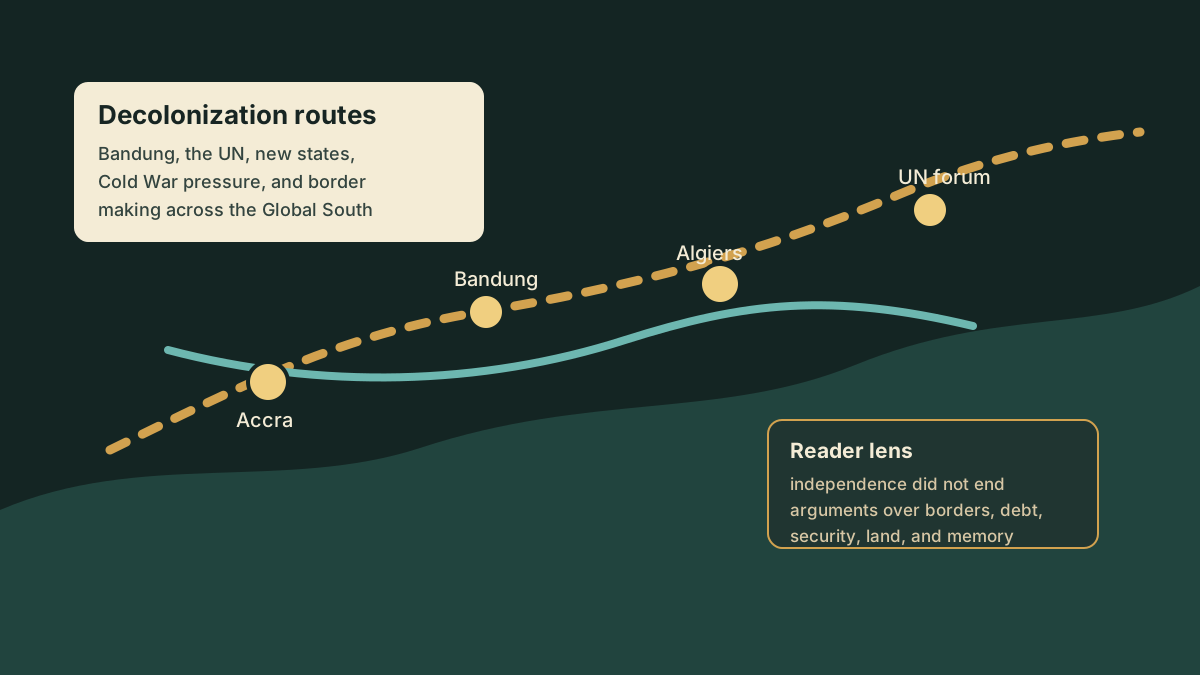
Follow the threads from this founding to see how continental diplomacy was practiced and tested: how the OAU handled specific liberation struggles, how it responded to interstate crises, and how member governments used the institution to advance different visions of Africa’s future. Tracing that arc helps explain why, decades later, African leaders reorganized the institution into the African Union, and why arguments about borders, intervention, and integration remain central today. If you want to understand the legacy of decolonization beyond independence days, this is where those operational and ethical debates take shape. Read OAU with Bandung, Ghana independence, Algerian War, apartheid, African Union, and Global South pages to follow how decolonization became diplomacy.
Reading Path
Follow the story without losing the thread
Before This
- Partial Nuclear Test Ban TreatyAugust 5, 1963
- Tanganyika Gains IndependenceDecember 9, 1961
- Congo Independence and Crisis1960 CE
After This
- Vietnam War Escalation1965
- Arusha Declaration1967 CE
- Nigerian Civil War Begins1967 CE
Same Period
- Arusha Declaration1967 CE
- Nigerian Civil War Begins1967 CE
- Eritrea Becomes IndependentMay 24, 1993
Wider Timeline
Mind Map
How to think about Organization of African Unity Founded
Decolonization pressures
Rapid independence across African territories created urgent needs for diplomatic coordination and mutual recognition among new states.
Map Layer
Where this event sits geographically
Gold pins mark the approximate locations of published event pages. This is a schematic locator map, not a historical border map.
Coordinates are approximate and are used to help readers orient themselves before opening a full event page.
References
Where to Check the Facts
- Encyclopaedia Britannica: African UnionReference for the Organization of African Unity, its 1963 founding, and the later African Union.
- Official African Union: OAU CharterOfficial reference for the 1963 OAU Charter and the continental institution's founding framework.
- UNESCO: General History of AfricaAfrican-history reference project for reading decolonization through African scholarship, regional diversity, culture, and postcolonial memory.
- United Nations Treaty Series: Charter of the Organization of African UnityOfficial treaty-series reference for OAU member states, founding charter text, and registration of the organization.