At a Glance
The shape of the event
- Date
- 1066 CE
- Place
- Hastings
- Type
- Conquest
William of Normandy defeated Harold Godwinson and imposed a new ruling elite on England, tying the kingdom more closely to continental politics.
1066 CE; place the event in Hastings before comparing causes or consequences.
The conquest reshaped English language, governance, and relations with France for generations.
William the Conqueror / Harold Godwinson are the first names or groups to compare before widening the story.
Norman rule reorganized landholding, castles, law, and aristocratic culture in England.
Norman rule reorganized landholding, castles, law, and aristocratic culture in England.
The conquest reshaped English language, governance, and relations with France for generations.
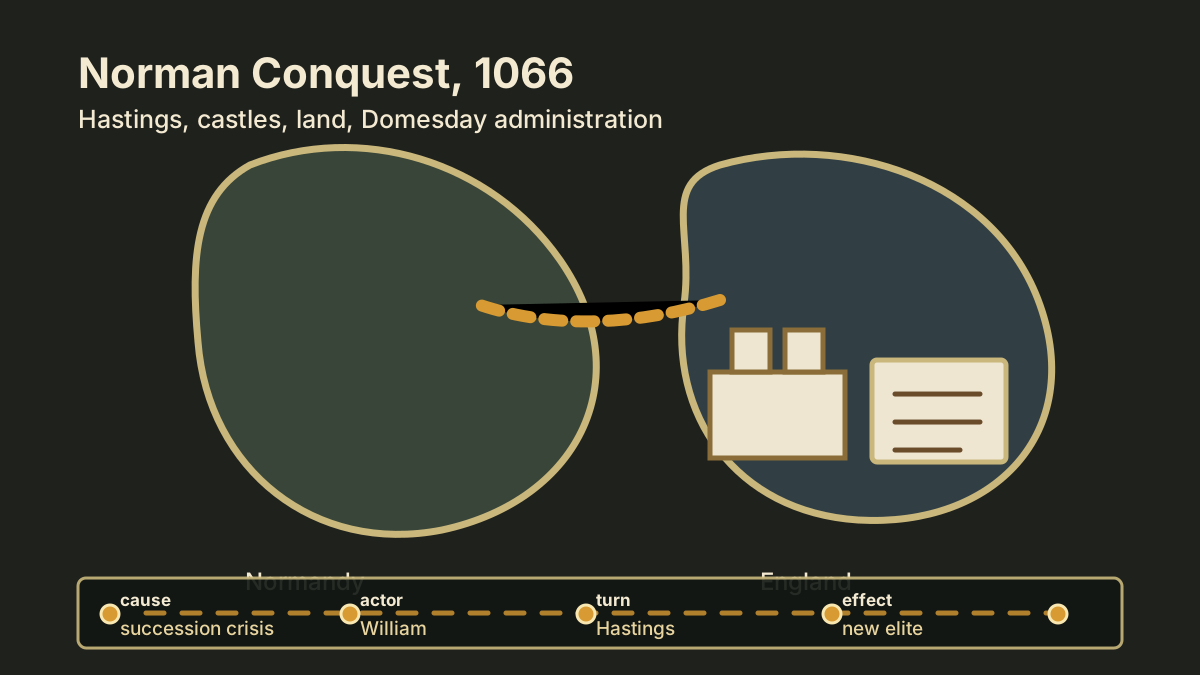
Follow the sequence of events that turns conquest into governance: the campaigns and castle-building that secured the realm; the Domesday survey that mapped new ownership; and the legal and cultural shifts that ordina...
Background
England in 1066 was a realm of contested claims and fragile certainties. Harold Godwinson had been chosen by the English elite and accepted by many, but his kingship followed a period of rapid turnover and factional rivalry. Across the Channel, Duke William of Normandy had reasons—personal, legal, and political—to assert a claim. Normandy itself was a potent, organized polity whose rulers participated in the same dynastic and feudal networks that shaped much of northern Europe. Meanwhile, the English church and aristocracy possessed their own interests: landholding patterns, local authority, and expectations about succession. External pressures—raids, rival claimants, and the lure of continental alliances—compounded internal tensions.
Historians still debate how much the conquest was the product of individual decisions versus structural forces such as patterns of inheritance, military organisation, and cross-Channel ties. This account keeps those disputes visible: personal ambition met institutional realities, and both mattered in determining what unfolded at Hastings and in its aftermath. The Norman Conquest began with a succession crisis but became a transformation of landholding, language, law, church leadership, and England's place in Europe. Edward the Confessor's death, Harold Godwinson's coronation, William of Normandy's claim, Harald Hardrada's invasion, and the rapid movement from Stamford Bridge to Hastings created a compressed crisis. The conquest was not won only on one battlefield.
It continued through castles, confiscations, rebellions, surveys, and the replacement of elites.
The Turning Point
The decisive change occurred when William of Normandy succeeded in defeating Harold Godwinson at Hastings and then moved to secure the kingdom. Hastings itself was not merely a clash of arms but the culmination of choices: William’s decision to assemble ships and a disciplined force; Harold’s rapid response to threats from multiple directions; and the willingness of regional magnates to accept, resist, or negotiate with a new claimant after the battlefield outcome. With the victory came the imposition of a new ruling elite—Norman lords who received English lands and titles.
William’s policy was not simply punitive seizure; it reorganised authority by replacing or subordinating existing magnates, introducing continental forms of lordship, and building fortifications that symbolised and enforced the new order. These moves tied England into Norman political networks and shifted loyalty structures away from some older, local arrangements. At the same time, continuity survived in local administration and in institutions like the church, which William used and reshaped rather than wholly dismantling. The turning point, in short, combined the force of battlefield success with targeted institutional remaking by a victorious ruler who sought to make conquest durable. The turning point at Hastings was Harold's death and the collapse of effective English resistance in the field.
William's victory opened the road to coronation, but holding England required years of coercion. Castle building imposed physical control; the Harrying of the North showed the violence behind conquest; and the redistribution of land created a new aristocracy tied to Normandy and the continent. The Domesday survey later made that transformation legible in administrative form.
Consequences
In the near term, Norman rule brought a systematic reallocation of land and the rapid construction of castles to control territory and deter uprisings. New lords held estates by tenure that emphasised service and military obligation in ways that altered everyday relationships between magnates and tenants. Administrative practices changed as well: record-keeping and legal customs gradually incorporated continental models, and royal authority became more centralized under a ruler who expected fealty from a network of vassals. Over the longer term, the conquest reshaped language, governance, and international relations.
The English court and aristocracy adopted Norman French and continental cultural habits; English law absorbed Norman influences while retaining older Anglo-Saxon elements; and England’s foreign policy became entangled with the politics of France and Normandy for generations. These outcomes were neither instant nor uniform: adaptation, resistance, and accommodation varied by region and social group. The historiographical debate—whether the conquest was driven chiefly by individual initiative or broader structural change—remains relevant because both operate in the aftermath: personal decisions by rulers and magnates produced policies, and deeper social and economic patterns shaped how those policies took root. The consequences reached into language, governance, and identity.
French-speaking elites reshaped court culture and vocabulary; Norman lords connected England to continental politics; royal administration drew on both Anglo-Saxon institutions and new feudal relationships. The conquest also produced deep memory, from Bayeux Tapestry imagery to later English arguments about law and liberty. A richer reading treats 1066 as the start of a long settlement, not just the date of a battle.
Interpretation Notes
The hardest question around Norman Conquest of England is causation. The event had immediate actors, but its meaning also came from institutions, geography, resources, and expectations already present in Western Europe.
Why Keep Reading
Follow the sequence of events that turns conquest into governance: the campaigns and castle-building that secured the realm; the Domesday survey that mapped new ownership; and the legal and cultural shifts that ordinary people experienced over decades. Each stage reveals how a battlefield victory translated into administrative practice, social reorganisation, and evolving identity. If you want to see how a single year reoriented a kingdom’s ties to continental Europe, explore the subsequent episodes—land surveys, uprisings, and royal reforms—that made Norman rule durable and reshaped England’s place in the medieval world. Read next through medieval monarchy, Magna Carta, Crusades, and English law. Norman England is a strong comparison for other conquests that succeed only when battlefield victory becomes administrative control.
Reading Path
Follow the story without losing the thread
Before This
- Great Schism of 10541054 CE
- Coronation of CharlemagneDecember 25, 800
- Battle of Talas751 CE
After This
- First Crusade Begins1095 CE
- Magna CartaJune 15, 1215
- Mongol Sack of BaghdadFebruary 1258
Same Period
- Battle of Talas751 CE
- Coronation of CharlemagneDecember 25, 800
- Magna CartaJune 15, 1215
Wider Timeline
Mind Map
How to think about Norman Conquest of England
Succession dispute
Competing claims to the English crown after Edward the Confessor created a context for invasion and contested legitimacy
Map Layer
Where this event sits geographically
Gold pins mark the approximate locations of published event pages. This is a schematic locator map, not a historical border map.
Coordinates are approximate and are used to help readers orient themselves before opening a full event page.
References
Where to Check the Facts
- English Heritage: 1066 and the Norman ConquestInstitutional reference for the 1066 succession crisis, Hastings, and the conquest's effects.
- British Library: Battle of Hastings and Norman Conquest SourcesSource-context reference for early accounts of Hastings and the conquest's memory.