At a Glance
The shape of the event
- Date
- 1833
- Place
- British Empire
- Type
- Legislation
The Slavery Abolition Act ended slavery in most British colonies, though apprenticeship and compensation structures limited immediate freedom.
1833; place the event in British Empire before comparing causes or consequences.
The event shows how emancipation could combine freedom, compensation for enslavers, and new coercive labor systems.
Enslaved people in British colonies / British abolitionists are the first names or groups to compare before widening the story.
Legal slavery ended across much of the British Empire while formerly enslaved people faced new labor controls.
Legal slavery ended across much of the British Empire while formerly enslaved people faced new labor controls.
The event shows how emancipation could combine freedom, compensation for enslavers, and new coercive labor systems.
Follow the aftermath of the 1833 Act to understand how law, labour, and memory shaped post-emancipation societies.
Background
By 1833 the question of slavery in the British Empire had become a central and contested problem in metropolitan politics and in colonial life. In Britain, abolitionist campaigns had changed public conversation and pressured legislators; in the colonies, the lives and labours of enslaved people were the daily reality against which any law would be judged. Economic interests tied to plantation production, imperial governance, and colonial labour needs weighed against moral and political arguments for emancipation. Officials, planters, missionaries, and free people in Britain and the colonies each brought competing evidence and priorities. There was no single cause or unanimous consensus: the Act emerged where moral agitation, parliamentary calculation, economic concern, and imperial administration intersected.
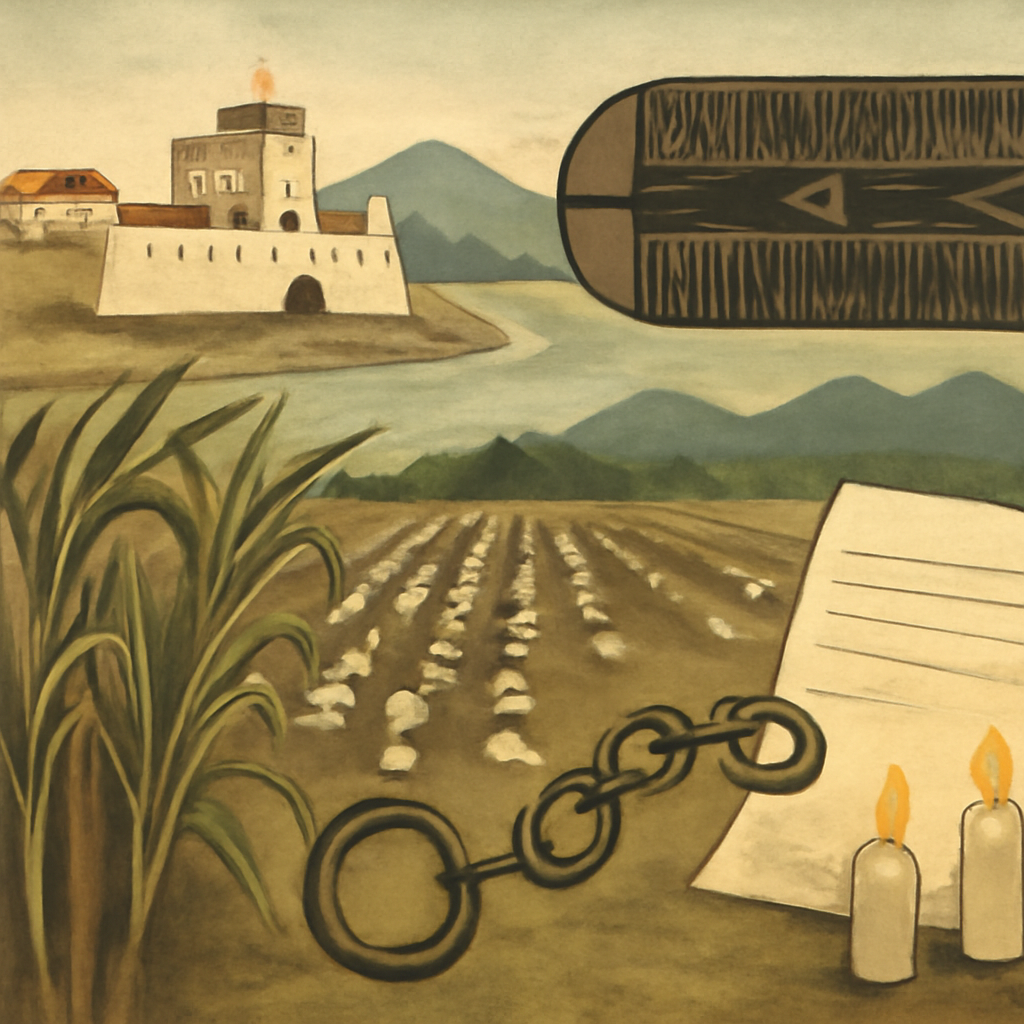
Crucially, the text of the law reflected compromise. It sought to end slavery legally across much of the empire, but it also introduced transitional mechanisms designed to manage labour and to compensate those with legal claims to enslaved people. Those choices ensured the law would be read differently depending on whether one leaned toward official papers, community memory, or the material traces of everyday life after 1833. The Slavery Abolition Act was a major legal break, but it was not a simple gift of freedom. Enslaved people resisted slavery long before Parliament acted, abolitionists organized politically, planters demanded compensation, and the apprenticeship system tried to preserve coerced labor after formal emancipation.
A richer page should keep British law beside Caribbean and imperial realities. The act's exclusions, compensation to enslavers, delayed implementation, colonial enforcement, and struggles by formerly enslaved people all matter.
The Turning Point
The Slavery Abolition Act converted an intensely debated question into statute: it declared that, where it applied, slavery would no longer exist as a lawful condition. That legal change was the central pivot. But the Act did not deliver unconditional, immediate freedom for all. Lawmakers inserted apprenticeship schemes for formerly enslaved people in many colonies, which prescribed continued labour under regulated terms for a set period. At the same time, the Act authorized compensation to those who claimed legal ownership, transferring public money to former enslavers rather than to the people who had been enslaved. British abolitionists celebrated the formal ending of slavery; enslaved people and their communities greeted the change with relief, skepticism, or resistance depending on local circumstances.
Colonial administrators and planters framed the legislation as necessary to protect labour supplies and imperial order. In short, the turning point was not a single act of liberation but a set of legislative choices that ended slavery in law while embedding new controls on labour and delivering material redress to previous owners. Those choices shaped how freedom could be lived, enforced, and remembered. The turning point was the conversion of abolitionist pressure and enslaved resistance into imperial legislation. The law made slavery illegal in most British colonies while also revealing how deeply property claims shaped emancipation.
Consequences
In the near term the Act ended the legal institution of slavery in much of the British Empire, shifting the formal status of hundreds of thousands of people. Yet legal abolition coexisted with apprenticeship regulations that constrained movement, work, and daily life for the formerly enslaved; these systems varied by colony but commonly maintained employer authority and disciplinary regimes. At the same time, compensation payments transferred public resources to those who had held enslaved people, a decision that signalled which losses the state would recognize and which claims it would not. Over the longer run, these layered outcomes left a mixed inheritance.
The abolition of legal slavery opened space for new social and political claims by formerly enslaved people and their descendants even as coercive labour arrangements persisted in different guises. Public records, legal documents, and parliamentary debates emphasize the legislative and administrative side of the story; oral memory, material culture, and local archives often tell different versions about everyday freedom and constraint. The Act therefore stands as an example of how emancipation can combine genuine legal change with policies that preserve elements of control and inequality, and how historical interpretation shifts depending on whose evidence is placed at the centre.
The afterlife includes apprenticeship conflict, full emancipation in 1838, compensation records, labor struggles, racial inequality, abolition memory, and comparisons with emancipation elsewhere in the Atlantic world. The records also expose who the state treated as injured property holders, and who it did not, after slavery.
Interpretation Notes
Interpretations of British Slavery Abolition Act depend on whose evidence is centered: rulers and official records, affected communities, oral memory, archaeology, law, diplomacy, labor, and later public memory do not always tell the same story.
Why Keep Reading
Follow the aftermath of the 1833 Act to understand how law, labour, and memory shaped post-emancipation societies. Look next at apprenticeship regulations and colonial labour policies to see how they worked in particular islands and colonies. Trace the records of compensation to learn how public money redistributed the costs of emancipation. And compare legal documents with local testimonies and archaeological traces to see conflicting stories about what freedom actually meant on the ground. These threads explain why the end of legal slavery did not end struggle, and why the politics of remembrance remains contested. Read this page with Zong, the 1807 slave trade abolition, Haiti, U. S. emancipation, Brazil's Golden Law, and Elmina to follow legal abolition and its limits.
Reading Path
Follow the story without losing the thread
Before This
After This
- First Opium War Begins1839 CE
- Amistad Case1841
- Treaty of Nanjing1842
Same Period
- Britain Abolishes the Slave Trade1807
- First Opium War Begins1839 CE
- Battle of Plassey1757 CE
Wider Timeline
Mind Map
How to think about British Slavery Abolition Act
moral & political pressure
Abolitionist campaigning and parliamentary debates in Britain pushed slavery onto the legislative agenda without determining every outcome.
Map Layer
Where this event sits geographically
Gold pins mark the approximate locations of published event pages. This is a schematic locator map, not a historical border map.
Coordinates are approximate and are used to help readers orient themselves before opening a full event page.
References
Where to Check the Facts
- The National Archives: British transatlantic slave trade recordsOfficial research guide reference for British slave-trade records and digitised legislation including the Abolition of the Slave Trade Act 1807 and Slavery Abolition Act 1833.
- Encyclopaedia Britannica: William WilberforceBiographical reference for Wilberforce, parliamentary abolitionism, the 1807 slave-trade abolition, and the 1833 slavery abolition act.
- Encyclopaedia Britannica: Slavery Abolition ActReference for British abolition of slavery in much of the empire.
- The National Archives: 1833 Abolition of Slavery Act and Compensation ClaimsArchive reference for the Slavery Abolition Act 1833, apprenticeship, compensation claims, and British colonial records.
- Legislation.gov.uk: Slavery Abolition Act 1833Official legislation text for the Slavery Abolition Act 1833 and abolition throughout most British colonies.
- Encyclopaedia Britannica: Slavery Abolition ActSpecific reference for the act's passage, Royal Assent, effective date, compensation, apprenticeship, and emancipated people.