At a Glance
The shape of the event
- Date
- October 7, 1571
- Place
- Gulf of Patras
- Type
- Naval Battle
A Holy League fleet defeated Ottoman naval forces at Lepanto, one of the largest galley battles in Mediterranean history.
October 7, 1571; place the event in Gulf of Patras before comparing causes or consequences.
Lepanto had immense symbolic value in Christian Europe and showed how Mediterranean power still depended on coalitions and sea lanes.
Don John of Austria / Ali Pasha are the first names or groups to compare before widening the story.
The Ottoman fleet suffered heavy losses, though Ottoman naval power recovered in following years.
The Ottoman fleet suffered heavy losses, though Ottoman naval power recovered in following years.
Lepanto had immense symbolic value in Christian Europe and showed how Mediterranean power still depended on coalitions and sea lanes.
If Lepanto arrested attention in 1571, the larger story unfolds in the years before and after the clash: how fleets were raised, how coalitions were brokered, and how navies rebuilt.
Background
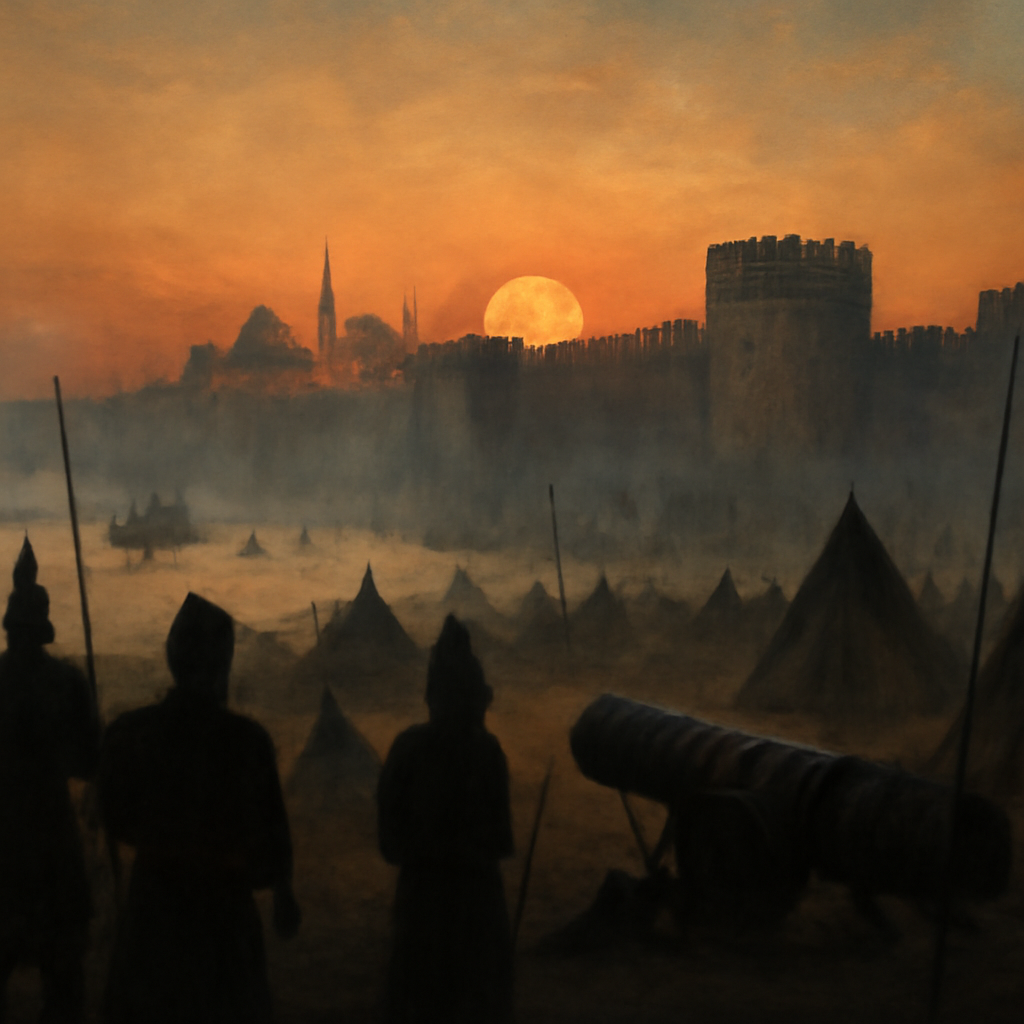
By 1571 the Mediterranean was a contested space where maritime lines of communication mattered to merchants, states and armies alike. The Ottoman Empire had built a powerful regional presence through coastal holdings and a navy that projected influence across the eastern and central sea. European polities, threatened and alarmed by Ottoman expansion at sea and on land, responded not as a single state but in shifting coalitions: fleets, money and men gathered from multiple courts and city-states. Naval warfare around this period was dominated by oared warships—galleys—that required coordination, experienced seamen and complex logistics for provisions, crews and artillery.
The Holy League assembled a combined fleet to meet an Ottoman squadron in the western Greek waters; the Gulf of Patras, off the western heel of Greece, became the chosen theatre. Historians still debate how much the battle was the outcome of immediate choices—commanders’ timing, formation, morale—and how much it was shaped by broader structural forces such as supply lines, shipbuilding capacity and political will. This account keeps those tensions visible: Lepanto was decisive in one encounter, but its causes and meanings sit at the intersection of individual decisions and long-running maritime pressures. Lepanto was a naval battle where coalition politics, Mediterranean logistics, galley warfare, religion, and imperial rivalry converged.
The Holy League brought together powers with shared fears but not identical interests, while the Ottoman fleet represented a maritime empire with deep resources and continuing reach. The battle's memory can be larger than its strategic effect. A Christian victory mattered for morale and propaganda, but Ottoman power did not disappear from the Mediterranean. The event is most useful when triumphal memory is separated from long-term naval balance.
The Turning Point
The battle’s decisive moment unfolded when formation, leadership and direct contact converted strategic preparation into tactical consequence. Don John of Austria, commanding the Holy League, brought together ships and crews from several Christian states and positioned them to confront the Ottoman centre and wings. Opposite him Ali Pasha commanded the Ottoman line, seeking to use familiar tactics of oared maneuver and boarding. The clash was not a single instant but a series of sharp engagements: galleys closed, oared propulsion drove ships into contact, and small-unit fighting—boardings, close artillery and hand-to-hand struggles—decided control of individual vessels.
What changed the immediate course was the combination of coordinated command on the League’s side and the fragmentation of Ottoman cohesion once several key ships were taken or driven off. The visual and moral impact of captured flags and seized decks radiated beyond the deck lines: sailors who had risked their lives now carried proof of victory. Yet the turning point was not solely a matter of heroic leadership or singular blunders; it was also about how a multi-state fleet managed to act with sufficient unity at the crucial moment, and how the Ottoman formation, despite its experience, suffered the compounding effects of damage and loss of morale.
The outcome on October 7, 1571, was therefore a product of both immediate choices in battle and the preparedness that preceded them.
Consequences
In the days after Lepanto the Holy League could claim a clear and emotionally charged victory: the Ottoman fleet suffered heavy losses and large numbers of ships were rendered unfit for immediate action. For Christian Europe the battle carried immense symbolic weight; it was presented as a decisive pushback against Ottoman maritime threat and used to rally political and religious sentiment. Yet the military and strategic consequences were more ambiguous. The Ottoman state retained the resources and shipbuilding capacity to rebuild and reconstitute naval forces in the following years, so the victory did not translate into enduring naval supremacy for the League.
The battle did, however, demonstrate an important lesson about Mediterranean power: control of sea lanes and regional influence still depended on coalitions, logistics and the ability to sustain fleets over time—not just on one dramatic victory. In intellectual and cultural terms Lepanto entered European memory as a moment that crystallized hopes and anxieties about empire and faith, while in geopolitical terms it left unanswered questions about supply, diplomacy and long-term balance. Scholars continue to weigh how much Lepanto’s immediate tactical dynamics mattered against underlying structural capacities—the shipyards, fiscal systems and manpower—that would ultimately determine future naval strengths.
The consequences included prestige for the Holy League, Ottoman rebuilding, intensified symbolic storytelling, and a reminder that Mediterranean power rested on ships, ports, captives, sailors, and supply lines. Lepanto matters as both battle and memory machine.
Interpretation Notes
The memory of Battle of Lepanto often depends on who tells the story. A court, army, religious community, merchant network, or later nation can emphasize different causes and make Gulf of Patras stand for different lessons.
Why Keep Reading
If Lepanto arrested attention in 1571, the larger story unfolds in the years before and after the clash: how fleets were raised, how coalitions were brokered, and how navies rebuilt. Read on to trace the lives of the commanders, the logistics of galley warfare, and the diplomatic maneuvering that followed a dramatic victory with limited strategic permanence. Explore how this battle shaped maritime law, coastal defenses, and popular memory, and follow the restoration of Ottoman seapower that complicates any simple narrative of decline or triumph. Each thread—command decisions, naval technology, allied politics—sheds light on why the Mediterranean remained a contested highway of empires. Read Lepanto with Ottoman expansion, Habsburg rivalry, 1529 Vienna, 1683 Vienna, and Mediterranean trade routes.
Reading Path
Follow the story without losing the thread
Before This
- Council of Trent1545-1563
- Scientific Revolution Begins1543 CE
- Siege of Vienna1529 CE
After This
- Dutch East India Company Founded1602 CE
- Treaty of Zuhab1639 CE
- English Civil War Begins1642 CE
Same Period
Wider Timeline
Mind Map
How to think about Battle of Lepanto
sea lanes
Control of Mediterranean sea lanes drove the strategic urgency behind assembling a fleet to meet Ottoman forces
Map Layer
Where this event sits geographically
Gold pins mark the approximate locations of published event pages. This is a schematic locator map, not a historical border map.
Coordinates are approximate and are used to help readers orient themselves before opening a full event page.
References
Where to Check the Facts
- Encyclopaedia Britannica: Battle of LepantoSpecific reference for the 1571 naval battle, belligerents, Ottoman-Venetian context, and outcome.
- Encyclopaedia BritannicaBackground reference for chronology, names, and historical context.
- WikidataStructured reference for dates, places, alternate names, and entity links.