At a Glance
The shape of the event
- Date
- 1545-1563
- Place
- Trent
- Type
- Church Council
The Council of Trent clarified Catholic doctrine and reform measures in response to Protestant challenges and internal pressures.
1545-1563; place the event in Trent before comparing causes or consequences.
Trent shaped early modern Christianity, confessional politics, education, art, and church authority for centuries.
Catholic bishops are the first names or groups to compare before widening the story.
The council strengthened Catholic teaching, discipline, and institutional response to the Reformation.
The council strengthened Catholic teaching, discipline, and institutional response to the Reformation.
Trent shaped early modern Christianity, confessional politics, education, art, and church authority for centuries.
If you want to follow how those doctrinal choices played out on the ground, read next about the Reformations across German-speaking lands, France, and England — where Trent’s definitions met local politics and popular...
Background
Mid-16th-century Western Europe arrived at Trent amid overlapping pressures: a Protestant Reformation that questioned core doctrines and sacramental practice, widespread calls inside the Catholic world for moral and administrative reform, and the sense among church leaders that a coherent reply was urgently required. The Council of Trent was convened as a Church Council to address both doctrine and discipline. It drew Catholic bishops who carried local experience of conflict, pastoral need, and political constraint into a transnational debate. The council’s work cannot be reduced to a single cause. Some accounts emphasize immediate responses to Protestant critique; others point to long-term institutional demands for clearer teaching and more enforceable standards.
Local bishops arrived with competing priorities—some wanted doctrinal clarity, others procedural reform or stronger pastoral training. Those tensions mattered: they shaped which questions were debated first, which compromises held, and which reforms were enforced. This page keeps those differences visible rather than presenting one sealed explanation. The Council of Trent becomes more readable when it is framed as a long institutional answer to crisis. Protestant challenges had exposed arguments about scripture, tradition, sacraments, clerical conduct, church authority, education, and salvation. Catholic leaders also knew that internal reform could not be postponed if the church wanted credibility. The council did not meet in a vacuum.
Its sessions unfolded amid imperial politics, papal authority, war, local reform movements, printing, universities, bishops, religious orders, and rulers who cared deeply about confessional order. Doctrine and politics moved together because religious settlement shaped subjects, schools, marriages, art, courts, and state loyalty. For readers, Trent is a good page because it shows reform from inside an institution. Reform was not only rebellion against authority. It could also mean clarifying teaching, disciplining clergy, training priests, regulating worship, and giving Catholics a more coherent public identity in a divided Europe.
The Turning Point
Across intermittent sessions from 1545 to 1563, the Council of Trent transformed disputed questions into settled Catholic positions and concrete reforms. Catholic bishops met in a sequence of debates that moved from diagnosing problems to issuing definitions and measures. They codified answers to contested doctrinal points—insisting on the Church’s authority to interpret Scripture and specifying teachings about sacraments and salvation in ways meant to leave less room for Protestant reinterpretation. Alongside doctrine, they debated standards for clergy, liturgical practice, and institutional oversight, pressing for clearer rules that could be implemented in dioceses. These were not inevitable outcomes: individual bishops, cardinals, and advisers argued over phrasing and enforcement, and political circumstances shaped what could be enacted at particular moments.
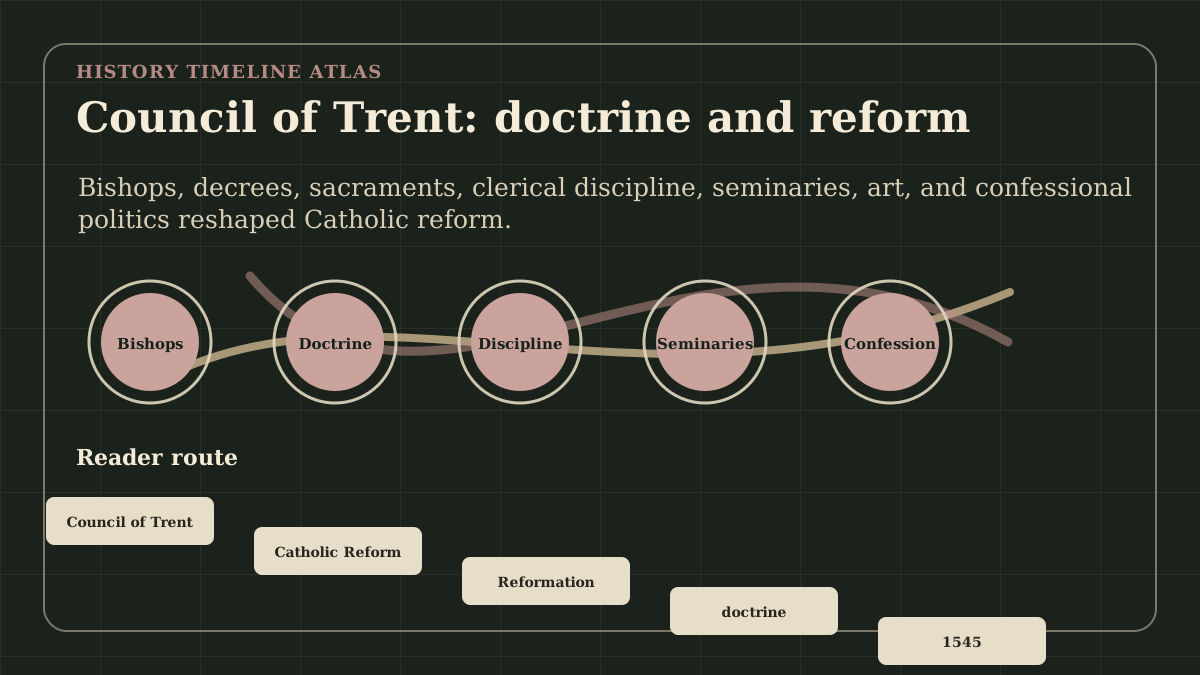
The council’s choices were concrete and deliberate—to define, to discipline, and to organize—and they converted a diffuse sense of crisis into a coordinated program of Catholic reform. That program intentionally reinforced the Church’s internal authority while providing a consistent message for the faithful, giving the Catholic world a renewed administrative and doctrinal backbone. The turning point was the council's ability to pair definition with discipline. Its decrees answered Protestant claims while also addressing abuses that had made criticism persuasive. Sacraments, justification, scripture and tradition, episcopal responsibility, seminaries, and clerical life became part of one reform package. Trent also turned religious conflict into a program for everyday institutions.
Seminaries trained clergy, catechisms instructed believers, bishops gained clearer responsibilities, and art and worship became tools of persuasion. The council's influence spread because it entered routines, not because decrees stayed on paper.
Consequences
In the near term, the Council of Trent produced a firmer Catholic response to Protestantism: clearer doctrinal statements and a set of disciplinary measures that bishops and church institutions were expected to apply. Those measures aimed to restore clerical standards, regularize sacramental life, and make Catholic teaching harder to contest. Over the longer term, Trent helped shape early modern Christianity and European confessional identities. Its decisions influenced confessional politics as rulers and communities aligned with either Catholic or Protestant frameworks. The council’s emphasis on instruction and discipline affected education and pastoral practice, while its liturgical and visual directives influenced art and worship.
Institutional authority within the Catholic Church was strengthened: a more systematic approach to teaching and governance made the Church a more coherent actor in subsequent centuries. At the same time, historians continue to debate how to weight individual choices at Trent against broader structural forces—economic change, regional politics, and popular religious life—in producing these outcomes. This account preserves that dispute: Trent mattered because of what bishops decided there, and because those decisions were shaped and constrained by larger currents beyond the council chamber. The result was a more defined Catholic Reformation. Trent did not reunite western Christianity, but it gave Catholic communities shared language, institutional discipline, and reform energy.
It helped shape schools, missions, art, parish life, and confessional politics for centuries. Its afterlife also has limits. Local implementation varied, political rulers negotiated church reform differently, and confessional boundaries could sharpen violence as well as identity. A strong page keeps doctrine, discipline, devotion, coercion, and culture in the same frame.
Interpretation Notes
Council of Trent can look simple when reduced to one date, but the evidence usually points to a wider setting. The useful debate is which part mattered most: leadership, logistics, belief, social pressure, or the institutions that survived afterward.
Why Keep Reading
If you want to follow how those doctrinal choices played out on the ground, read next about the Reformations across German-speaking lands, France, and England — where Trent’s definitions met local politics and popular religion. Look also at how diocesan reform was implemented in the decades after 1563: local bishops, seminary formation, and parish practice tell a different side of the story. Tracking those follow-up events shows whether Trent’s resolutions were immediately effective or slow to shape everyday faith. Read Trent after the Protestant Reformation and before Westphalia, then continue to religious wars, missionary expansion, and religion-and-empire pages. The route shows how theological dispute became law, education, art, and political order.
Reading Path
Follow the story without losing the thread
Before This
After This
- Battle of LepantoOctober 7, 1571
- Dutch East India Company Founded1602 CE
- English Civil War Begins1642 CE
Same Period
Wider Timeline
Mind Map
How to think about Council of Trent
Protestant challenge
A primary pressure prompting the council to clarify doctrine and defend Church authority
Map Layer
Where this event sits geographically
Gold pins mark the approximate locations of published event pages. This is a schematic locator map, not a historical border map.
Coordinates are approximate and are used to help readers orient themselves before opening a full event page.
References
Where to Check the Facts
- Encyclopaedia Britannica: Council of TrentSpecific reference for the council's sessions, Catholic doctrine, reform decrees, and Counter-Reformation context.
- Fordham Internet History Sourcebooks: Council of TrentPrimary-source teaching excerpts from the Council of Trent decrees and canons.
- The Met: Art and the Counter-ReformationMuseum reference for the Catholic Reformation's visual culture, patronage, and public religious communication.
- Encyclopaedia Britannica: ReformationReference for Protestant Reformation background, figures, religious division, and social effects.