At a Glance
The shape of the event
- Date
- 1774 CE
- Place
- Kucuk Kaynarca
- Type
- Treaty
The Treaty of Kucuk Kaynarca ended a Russo-Ottoman war and gave Russia new leverage around the Black Sea, Crimea, and claims involving Orthodox Christians.
1774 CE; place the event in Kucuk Kaynarca before comparing causes or consequences.
The treaty helps explain the long nineteenth-century Eastern Question and the pressure that later reformers faced inside the Ottoman Empire.
Catherine the Great / Ottoman negotiators are the first names or groups to compare before widening the story.
Ottoman control around the Black Sea weakened, and Russian diplomatic influence expanded.
Ottoman control around the Black Sea weakened, and Russian diplomatic influence expanded.
The treaty helps explain the long nineteenth-century Eastern Question and the pressure that later reformers faced inside the Ottoman Empire.
Follow the threads that lead from Kucuk Kaynarca to later crises: how did Russian claims about Orthodox Christians evolve into fuller diplomatic interventions?
Background
By the mid-1770s, the Ottoman and Russian empires confronted overlapping strains: military clashes at sea and on land, shifting alliances, and the slow erosion of Ottoman authority around the Black Sea. Russia under Catherine the Great had grown more assertive, projecting naval and diplomatic power into waters long dominated by Ottoman fleets. The Black Sea mattered for commerce, military access and the security of coastal communities; Crimea occupied a particular place in all these calculations. Within the Ottoman frontiers, a mosaic of faiths and communities — including Orthodox Christians — lived under imperial rule, and their status could be invoked as a diplomatic claim by outside powers.
At the same time, Ottoman negotiators faced the immediate reality of a war they could not prolong without greater cost. These complex pressures — strategic, religious, local and imperial — converged at Kucuk Kaynarca. The treaty that emerged was not an isolated stroke of fate but the product of long-term Russian ambitions, Ottoman vulnerability, and the entangled lives of people who would feel the treaty’s effects on shore and in church. The Treaty of Kucuk Kaynarca is more interesting when it is read as diplomacy after military defeat rather than as a simple Ottoman decline marker.
Russia gained territory, access, prestige, and claims that could be used later, while the Ottoman Empire had to manage frontier loss, Black Sea pressure, Crimean uncertainty, and the political meaning of protecting Muslim and Orthodox communities. The treaty also shows how legal language can outlive the war that produced it. Clauses about navigation, Crimea, diplomacy, and religious protection became tools for later Russian influence and Ottoman anxiety. Readers need that legal afterlife to understand why a treaty signed in 1774 mattered far beyond one battlefield settlement.
The Turning Point
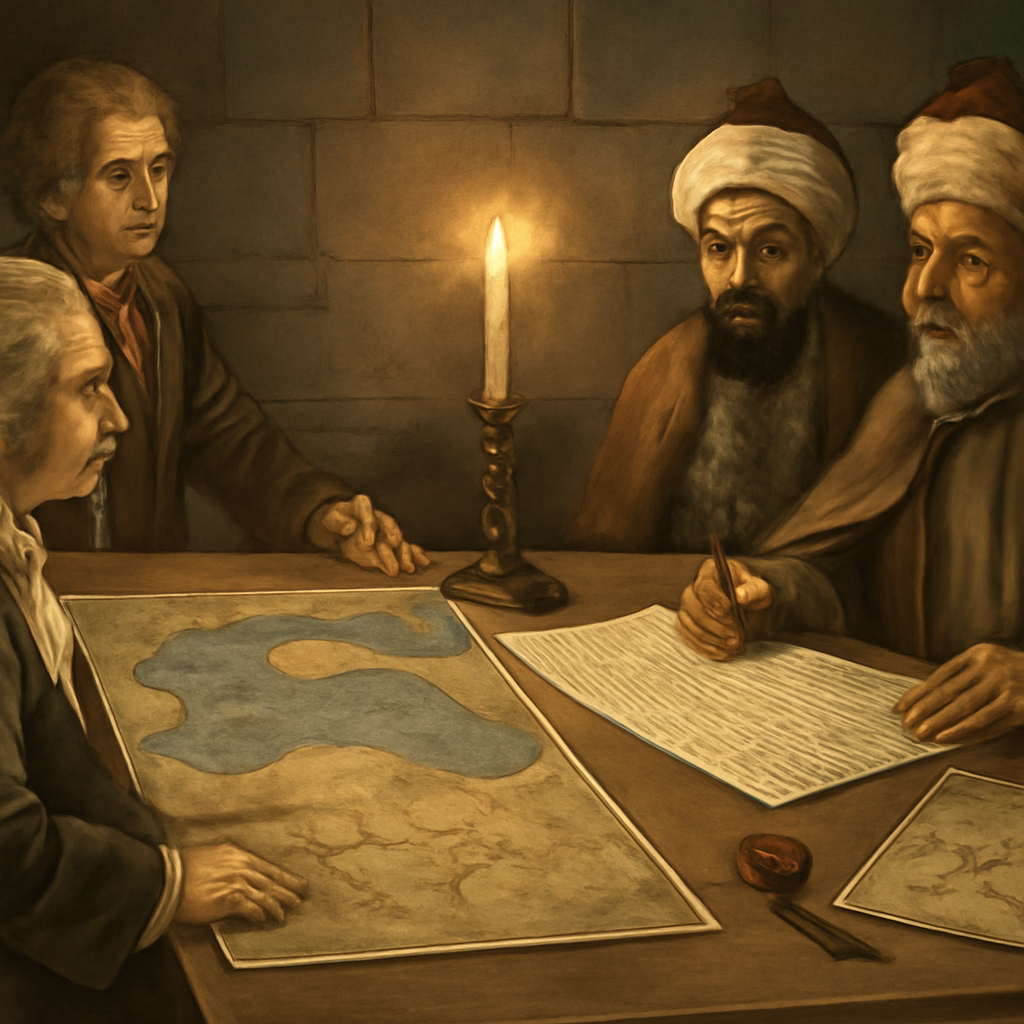
The Treaty of Kucuk Kaynarca formalized an end to the Russo-Ottoman war and, in doing so, reconfigured diplomatic standing across the Black Sea region. Negotiated between Ottoman representatives and envoys acting in the name of Catherine the Great, the agreement transferred leverage rather than simply drawing a new boundary line. Russia acquired new diplomatic footholds around the Black Sea and a heightened role regarding Crimea; it also secured specific claims related to Orthodox Christians living under Ottoman rule. Those claims, asserted in the name of religion and protection, allowed Russia to press its influence into Ottoman internal affairs in ways that treaties and gunboats alone could not achieve.
For Ottoman negotiators the choice was grim: accept terms that limited their control around the Black Sea and conceded Russian intervention in matters touching Orthodox communities, or face continued conflict with an increasingly capable neighbor. The treaty crystallized a shift from battlefield gains to sustained diplomatic advantage for Russia and marked a moment when legal language became an instrument of long-term influence. The turning point was the shift in the Black Sea balance. Russian power no longer sat outside the Ottoman frontier system; it gained durable openings that made Crimea, Balkan Christians, naval access, and diplomatic pressure central issues in later imperial politics.
Consequences
In the immediate aftermath, Ottoman control around the Black Sea weakened in practical and symbolic terms. Ports, trade routes and coastal jurisdictions that had been under Ottoman sway became arenas where Russian influence could expand without further open warfare. For communities in Crimea and along the coast, the treaty altered who could claim protection and patronage, and it intensified political competition over religious affiliation and legal standing. Over the longer nineteenth century, historians and statesmen pointed to Kucuk Kaynarca as an early episode in the ‘Eastern Question’ — the diplomatic problem of how to manage the decline of Ottoman power and the ambitions of neighboring empires.
The treaty’s clauses and the precedents it set contributed to pressures on Ottoman reformers, who found themselves balancing internal modernization with external demands and interventions. Equally important is how later states and movements remembered the 1774 treaty: it became a reference point for claims of state responsibility, for appeals to religious solidarity, and for arguments about the legitimacy of foreign involvement. Seen this way, the treaty explains not one abrupt rupture but a cascade of diplomatic, social and political recalibrations that shaped the region for generations. The consequences ran through Crimea's annexation, later Russo-Ottoman wars, reform pressure, Balkan politics, and competing claims over religion and sovereignty.
The treaty is a route into how empires weaken through negotiated clauses, not only through lost battles.
Interpretation Notes
Treaty of Kucuk Kaynarca is easy to flatten into one dramatic date. A stronger reading separates immediate action from deeper causes, affected communities, and the memory later states or movements built around the event.
Why Keep Reading
Follow the threads that lead from Kucuk Kaynarca to later crises: how did Russian claims about Orthodox Christians evolve into fuller diplomatic interventions? What role did Crimea play in subsequent conflicts and alignments? How did Ottoman reformers respond to foreign pressure while trying to preserve imperial unity? Tracing these questions clarifies how a single treaty became part of a longer story about empire, identity and diplomacy around the Black Sea. If you want a clearer line from 1774 to the mid-nineteenth-century struggles over Ottoman survival and European balance-of-power politics, the next pages lay out the treaties, wars and reforms that turned legal claims into enduring leverage.
Follow Kucuk Kaynarca with Ottoman reform, Crimea, 1683, the Eastern Question, and World War I routes. That path shows how frontier treaties became long-term diplomatic structures.
Reading Path
Follow the story without losing the thread
Before This
- Second Siege of Vienna1683 CE
- Peace of Westphalia1648 CE
- Treaty of Zuhab1639 CE
After This
- Tanzimat Reforms Begin1839 CE
- Berlin Conference1884-1885
- Young Turk RevolutionJuly 1908
Same Period
- Fall of Constantinople, 1453: Siege Timeline, Causes, AftermathMay 29, 1453
- Battle of LepantoOctober 7, 1571
- Berlin Conference1884-1885
Wider Timeline
Mind Map
How to think about Treaty of Kucuk Kaynarca
Black Sea control
Treaty weakened Ottoman control over coastal jurisdictions and maritime influence in the Black Sea.
Map Layer
Where this event sits geographically
Gold pins mark the approximate locations of published event pages. This is a schematic locator map, not a historical border map.
Coordinates are approximate and are used to help readers orient themselves before opening a full event page.
References
Where to Check the Facts
- Encyclopaedia Britannica: Treaty of Kucuk KaynarcaReference for the 1774 treaty and its Russo-Ottoman consequences.
- Encyclopaedia Britannica: Ottoman EmpireReference for Ottoman imperial chronology, institutions, reform, war, and decline.
- Encyclopaedia Britannica: TanzimatReference for the nineteenth-century Ottoman reform program and its administrative setting.