At a Glance
The shape of the event
- Date
- 960
- Place
- Kaifeng
- Type
- Dynastic Foundation
The Song dynasty reunified much of China after the Five Dynasties period and built a highly developed civil, commercial, and technological order.
960; place the event in Kaifeng before comparing causes or consequences.
The event makes East Asia's economic and technological history visible before modern industrialization.
Emperor Taizu of Song / Song officials are the first names or groups to compare before widening the story.
Song government strengthened civil administration while the economy and cities expanded.
Song government strengthened civil administration while the economy and cities expanded.
The event makes East Asia's economic and technological history visible before modern industrialization.
Follow the next entries to see how the administrative choices made in Kaifeng translated into everyday practices—how markets and ports responded, how examination systems shaped elite careers, and how technological cha...
Background
The year 960 arrived after the Five Dynasties period, a time of rapid dynastic turnover and regional fragmentation that left many parts of China governed by military strongmen, local circuits, and shifting alliances. Towns and long-distance trade had not disappeared during those decades; if anything, commercial networks and urban life continued to mature alongside local military power. Intellectual life persisted in schools and examination halls; skilled makers, navigators and workshop owners kept producing and trading. Those overlapping pressures—political instability, administrative improvisation, and sustained economic activity—set the stage for a different kind of reunification.
When new rulers gathered in Kaifeng, they encountered a landscape where markets mattered as much as armies, where civil records, law codes, and officials could reorganize daily life if given backing. Interpretations of the moment vary depending on where historians look: court chronicles emphasize legal and bureaucratic reforms, while archaeology, local records, and material culture illuminate commerce, labor, and the lived cities that made the Song transformation visible. The founding of the Song dynasty followed the violent fragmentation of the Five Dynasties and Ten Kingdoms period. Zhao Kuangyin, later Emperor Taizu, came from a military world in which generals could make and unmake regimes. His challenge was to build a state that could survive the ambitions of its own commanders.
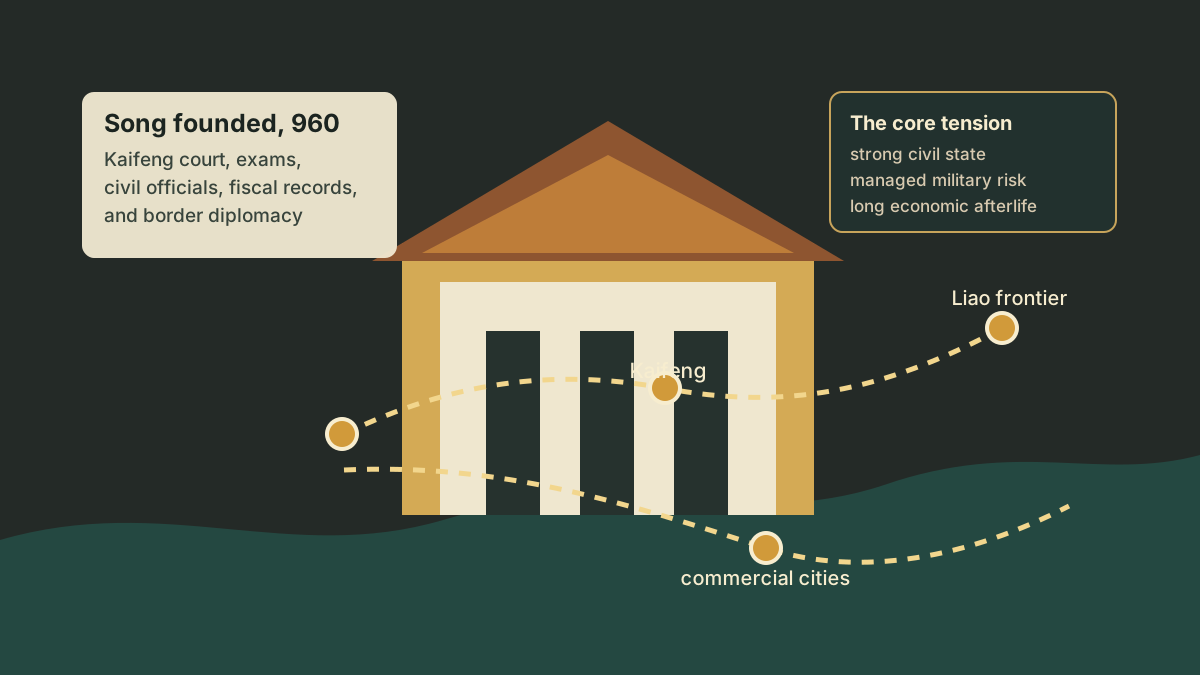
Kaifeng became the center of a new political order that prized civil administration, fiscal management, examinations, and bureaucratic discipline. The Song did not simply restore earlier empire; it redesigned the balance between military force and civilian authority. That decision shaped Chinese history for centuries.
The Turning Point
What changed in 960 was not simply a change of name at court but a reorientation of political energies. Emperor Taizu of Song, supported by Song officials, established a court in Kaifeng that placed renewed weight on civil administration as the foundation of legitimate rule. That choice mattered because administrative priorities shape incentives: investing authority in recruited officials rather than in martial patronage altered how decisions reached counties and markets. Bureaucratic routines—record keeping, examinations, law codes and fiscal oversight—gained visibility and enforcement. At the same time, officials tolerated and sometimes cultivated commercial activity and urban life, so towns and markets could expand under a more predictable regulatory framework.
These were concrete decisions by named actors: a claimant to the throne in Kaifeng and the officials who staffed his administration. The turn toward civil governance did not erase military power or local variation, but it did create new pathways for petitions, taxation, and commerce to interact with state institutions. That reorientation is the central pivot of the Song foundation: an effort to bind political authority and everyday economic practice together in ways that made large-scale administration more plausible. The Chenqiao mutiny and Zhao's elevation to emperor became a founding story about controlled military transition. Whether later accounts polished the details or not, the political meaning is clear: the new ruler had to neutralize the cycle of warlord replacement.
Song statecraft worked through appointments, revenue systems, rotating commands, examination recruitment, and the deliberate prestige of civil officials. The turning point was therefore institutional. Victory over rivals mattered, but the deeper change was making government less dependent on autonomous military strongmen. This choice brought stability and administrative sophistication, while also raising questions about border defense against Liao, Western Xia, and later Jin pressure.
Consequences
In the near term, the Song government strengthened civil administration while the economy and cities expanded. Markets found a more consistent administrative context in which contracts, taxes and urban regulation could be enforced; city life became more legible to official recorders; and officials developed practices that shaped daily life across regions overseen from Kaifeng. Over the longer term, the significance of 960 lies in the visibility it gives to East Asia’s economic and technological capacities before modern industrialization. The Song era is an example—seen in surviving material culture, commercial networks and bureaucratic archives—of how sophisticated production, credit, and urban organization could exist well before nineteenth-century industrial change.
These outcomes are not uncontested: historical accounts that center rulers and official records emphasize legal and institutional consolidation, while archaeology, oral memory, labor records and local documents can highlight different experiences of continuity, disruption, or adaptation. The founding therefore produced institutional trajectories that shaped commerce, learning and technology for generations, even as later writers and communities remembered that turning in different ways. The Song's consequences are visible in urban growth, printing, commercialization, expanded education, new fiscal techniques, and a civil elite that shaped culture and administration. The dynasty is sometimes judged harshly for military weakness, but that framing misses its historical creativity.
Song rulers built one of the world's most sophisticated premodern bureaucratic and commercial societies while managing powerful neighbors through diplomacy, payments, defenses, and war when necessary. Its founding in 960 therefore opens a larger debate: what does strength mean in history? Military conquest is one measure; durable administration, economic scale, technological innovation, and cultural production are others.
Interpretation Notes
Interpretations of Song Dynasty Founded depend on whose evidence is centered: rulers and official records, affected communities, oral memory, archaeology, law, diplomacy, labor, and later public memory do not always tell the same story.
Why Keep Reading
Follow the next entries to see how the administrative choices made in Kaifeng translated into everyday practices—how markets and ports responded, how examination systems shaped elite careers, and how technological change traveled between workshops and ships. Tracing subsequent events will show the limits and reach of a civil-centered regime, the variety of urban lives under Song rule, and why scholars still debate which kinds of evidence best tell the story of 960. If you want to understand how early-modern economic and technological patterns developed in East Asia, the aftermath of the Song foundation is where trade, law and innovation intersect. Read next into Tang collapse, civil service examinations, printing, Kaifeng urban life, and Song border diplomacy.
The Song page rewards readers who want to see how a dynasty can be politically cautious and historically transformative at the same time.
Reading Path
Follow the story without losing the thread
Before This
After This
Same Period
- Qin Unification of China221 BCE
- First Opium War Begins1839 CE
- Meiji Restoration1868 CE
Wider Timeline
Mind Map
How to think about Song Dynasty Founded
Fragmentation
The Five Dynasties period left regional military power and administrative discontinuity that made reunification politically urgent.
Map Layer
Where this event sits geographically
Gold pins mark the approximate locations of published event pages. This is a schematic locator map, not a historical border map.
Coordinates are approximate and are used to help readers orient themselves before opening a full event page.
References
Where to Check the Facts
- Encyclopaedia Britannica: Tang dynastyReference for Tang state formation, government, culture, and regional influence.
- Encyclopaedia Britannica: Song dynastyReference for Song political chronology, economy, technology, and culture.
- Official UNESCO World Heritage Centre: Historic Monuments of Ancient NaraInstitutional reference for Nara's capital landscape, Buddhist monuments, and East Asian cultural exchange.