At a Glance
The shape of the event
- Date
- 1848 CE
- Place
- Europe
- Type
- Revolutionary Wave
Revolutions broke out across Europe as liberals, nationalists, workers, and reformers challenged old regimes and social hierarchies.
1848 CE; place the event in Europe before comparing causes or consequences.
The revolutions sharpened debates over nationalism, constitutionalism, labor rights, and state reform.
European revolutionaries are the first names or groups to compare before widening the story.
Many uprisings were defeated, but governments could not simply erase the questions they raised.
Many uprisings were defeated, but governments could not simply erase the questions they raised.
The revolutions sharpened debates over nationalism, constitutionalism, labor rights, and state reform.
Follow the revolutions’ aftermath to see how promises met resistance and how new institutional arrangements were forged or denied.
Background
The Revolutions of 1848 unfolded on a continent already under pressure from multiple directions. Industrial change had altered work and migration patterns, while harvest failures and economic dislocation made life precarious for many. Political life remained dominated by monarchies and conservative elites who had restored much of the pre-1815 order. At the same time, new currents of thought—liberalism calling for representative government, nationalism arguing that political boundaries should reflect shared language or culture, and labor agitation pressing for economic justice—grew more visible and organized. Communication networks, newspapers and the movement of people meant ideas spread quickly across borders. These pressures did not produce a single cause; instead, they formed overlapping grievances and ambitions.
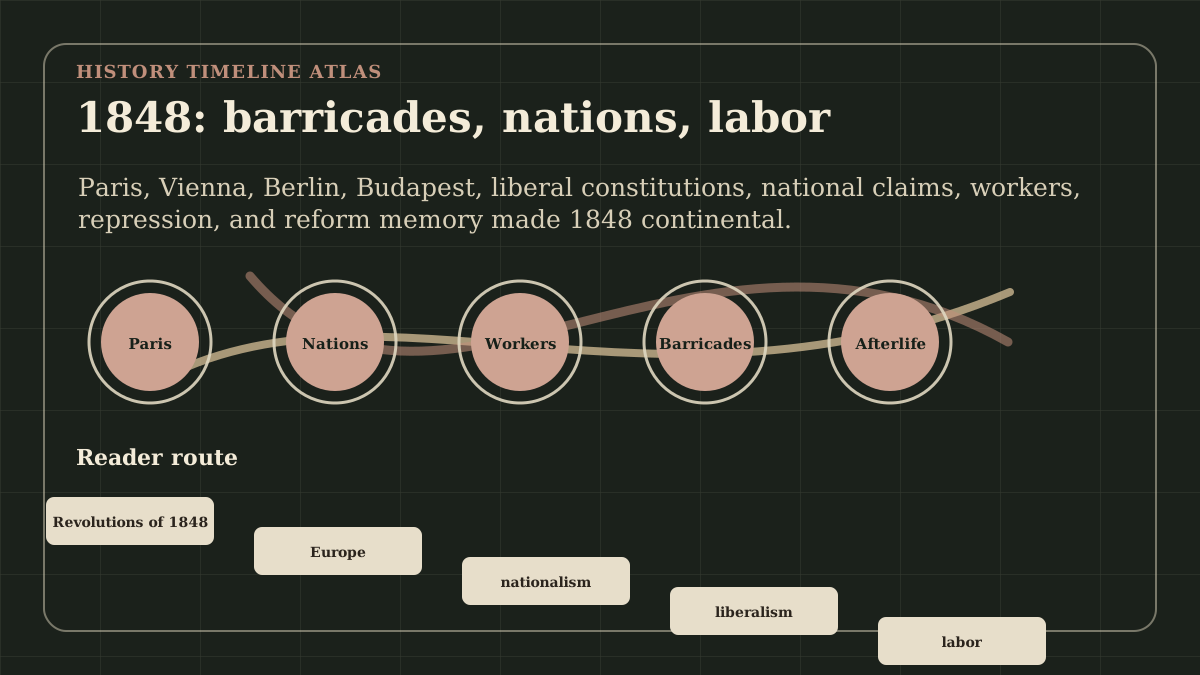
Historians debate how much of the upheaval came from immediate decisions by activists and rulers and how much from deeper economic and social structures. This account keeps that dispute visible: individual choices mattered, but they acted in a tense environment shaped by broader forces. The Revolutions of 1848 are easiest to misunderstand when treated as one revolution. They were a wave of crises across Europe, driven by liberal constitutional demands, nationalist claims, food distress, unemployment, press politics, workers' organization, and anger at old regimes. Similar pressures produced different local outcomes. Geography gives the wave its force. Paris, Vienna, Berlin, Milan, Venice, Budapest, Prague, and many smaller places became connected through news, imitation, fear, and opportunity.
Revolution traveled by rumor, newspapers, students, workers, soldiers, and governments watching one another. The social layer is essential. Middle-class liberals, artisans, wage workers, peasants, students, women activists, national minorities, monarchs, and armies did not want the same future. Coalitions formed quickly and cracked quickly because constitutional reform, national independence, land, wages, and social rights did not align neatly.
The Turning Point
What changed in 1848 was the scale and tempo of political action. Across capitals and provincial towns, groups that had been pressing for reforms stepped out of salons and petitions and into public squares and popular assemblies. European revolutionaries—liberals, nationalists, workers and reformers—faced concrete choices: whether to press for constitutional limits on rulers, to form provisional committees, to strike and demand labor measures, or to attempt new national combinations. Rulers also made decisive choices: some conceded to calls for constitutions or parliaments; others ordered troops and repression. Those immediate decisions converted simmering tensions into open contest.
The revolts were not identical; in some places liberal professionals led the charge for legal change, in others artisans and wage laborers drove strikes and barricades, and in several regions nationalist claims transformed local disputes into struggles over statehood and belonging. The result was a revolutionary wave whose actors repeatedly chose whether to negotiate, retreat or escalate. These real-world decisions determined short-term outcomes and revealed the limits of existing regimes’ ability to respond to simultaneous political, national and social claims. The turning point was the rapid spread from reform protest to regime crisis. Once rulers conceded constitutions, dismissed ministers, or fled capitals, movements learned that old authority could bend. That discovery widened demands faster than governments could absorb.
Counterrevolution then became the second turning point. Armies, conservative elites, divided liberals, and frightened property holders regained control in many places. The failure of immediate revolutions did not mean the questions disappeared.
Consequences
In the near term many uprisings were crushed or rolled back; monarchs and conservative governments reasserted control in numerous places. Yet the revolutions left durable traces. They sharpened debates about national membership and the rights of citizens, making nationalism a central frame for later politics. Liberal demands forced conversations about constitutions, legal equality and representative institutions that governments could not wholly ignore—even when they regained power. Labor questions—about working hours, organization and economic protection—entered political agendas more broadly than before. Over the longer term, the 1848 wave shifted the vocabulary of politics: demands for rights, national dignity and social justice became staples of later reform movements and ideological conflicts.
Crucially, the episode also left historians debating causation: were these outcomes the result of individual choices made in 1848 or the product of structural economic and social change already underway? This account treats that debate as part of the legacy: the revolutions changed realities on the ground while also generating questions about how change happens that would animate later generations. Many 1848 uprisings were defeated, but the wave changed Europe's political vocabulary. National unification, constitutional government, social reform, press freedom, and labor politics remained harder to ignore after millions had acted in public. The afterlife is visible in later German and Italian unification, Habsburg reform, socialist thought, labor organization, and liberal memory.
1848 matters because failure still taught political actors what mass politics could do.
Interpretation Notes
The hardest question around Revolutions of 1848 is causation. The event had immediate actors, but its meaning also came from institutions, geography, resources, and expectations already present in Europe.
Why Keep Reading
Follow the revolutions’ aftermath to see how promises met resistance and how new institutional arrangements were forged or denied. Tracking the next decades will show how constitutional experiments, national unification projects and the first organized labor movements turned the questions raised in 1848 into sustained political struggles. If you want to understand why modern Europe developed its particular mix of nation-states, parliaments and labor laws, the next pages trace the choices and reversals that linked street-level action to long-term reform. Read 1848 beside the French Revolution, Haitian Revolution, Latin American independence, Italian and German unification, Paris Commune, and labor movements. The path shows how revolutionary language moved from rights to nations, work, and social reform.
Reading Path
Follow the story without losing the thread
Before This
- First Opium War Begins1839 CE
- Battle of WaterlooJune 18, 1815
- Industrial Revolution Beginsc. 1760 CE
After This
- American Civil War BeginsApril 12, 1861
- Meiji Restoration1868 CE
- Opening of the Suez CanalNovember 17, 1869
Same Period
- Industrial Revolution Beginsc. 1760 CE
- Battle of WaterlooJune 18, 1815
- First Opium War Begins1839 CE
Wider Timeline
Mind Map
How to think about Revolutions of 1848
economic distress
agrarian downturns and early industrial dislocation increased urban and rural grievances without dictating a single political response
Map Layer
Where this event sits geographically
Gold pins mark the approximate locations of published event pages. This is a schematic locator map, not a historical border map.
Coordinates are approximate and are used to help readers orient themselves before opening a full event page.
References
Where to Check the Facts
- Encyclopaedia Britannica: Revolutions of 1848Specific reference for the 1848 revolutions, republican revolts, geographic spread, and political outcomes.
- Encyclopaedia Britannica: History of Europe - The Revolutions of 1848Context reference for economic distress, liberal agitation, nationalism, and artisan concerns before the 1848 upheavals.