Central Question
How does the history of the Americas change when Indigenous worlds, slavery, revolution, empire, migration, and rights movements are kept in the same frame?
Start With These Dates
- 1492 CEColumbus's First Atlantic Voyage
Christopher Columbus crossed the Atlantic under Spanish sponsorship and reached Caribbean islands, opening a violent era of sustained contact and colonization.
- 1521 CEFall of the Aztec Empire
Spanish forces and Indigenous allies captured Tenochtitlan after conflict, epidemic disease, and political fracture undermined Aztec power.
- July 4, 1776Declaration of Independence
The Continental Congress adopted a declaration that presented the American colonies as independent states and justified separation from Britain.
- 1791 CEHaitian Revolution Begins
Enslaved people in Saint-Domingue rose against plantation slavery, turning the French colony into the center of the Atlantic world's most radical revolution.
- May 10, 1869First Transcontinental Railroad Completed
The first transcontinental railroad in the United States linked eastern and western rail networks after years of construction.
- July 2, 1964Civil Rights Act of 1964
The United States enacted major civil rights legislation banning discrimination in public accommodations, employment, and federally funded programs.
- September 11, 2001September 11 Attacks
Al-Qaeda hijackers attacked targets in the United States, destroying the World Trade Center towers and striking the Pentagon.
Sources Used Here
- Encyclopaedia Britannica: Americas
Reference for the Americas as a hemispheric region across Indigenous, colonial, and modern histories.
- Library of Congress: Primary Source Sets
Reference point for United States, Atlantic, civil rights, and migration primary-source teaching sets.
Americas is designed as a route, not a folder. It gathers events that answer related reader questions about power, belief, conflict, exchange, institutions, and memory. The strongest way to read the page is to move from the earliest events toward the later ones, watching how one kind of pressure changes form across different places.
The route currently runs from 1492 CE to September 11, 2001. That span lets readers compare immediate turning points with slower consequences: the founding of institutions, the spread of ideas, the shock of war or disease, and the way later societies reused earlier events as warnings, models, or symbols.
Start with Columbus's First Atlantic Voyage, Fall of the Aztec Empire, Declaration of Independence, Haitian Revolution Begins, Seneca Falls Convention and then follow the internal links into people, timelines, years, maps, and source lists. The route structure stays visible when each event explains why it belongs with the others and where the next useful page is.
Compare the events by scale. Some are concentrated moments, such as a battle, proclamation, trial, or publication. Others are long processes, such as a reform movement, pandemic, trade route, or diplomatic order. Reading both types together helps prevent the page from becoming a list of dates.
A useful route keeps uncertainty visible. Historical change rarely has one cause or one clean ending, so the reader can separate background pressure, immediate trigger, turning point, result, and later memory. That pattern is what makes the atlas expandable without making the reader start over each time.
This route is also a comparison tool. After reading one event, compare it with a later event on the same page and ask what changed in scale, language, geography, technology, authority, or public memory. The comparison is often more useful than the individual summary because it reveals the pattern the topic page is built to expose. When a claim feels too neat, open the full event page and check whether the evidence supports one cause, several causes, or a contested interpretation before moving on.
The Americas hub has to hold Indigenous worlds, Atlantic conquest, slavery, revolution, republics, civil war, abolition, migration, rights movements, capitalism, Cold War politics, and terrorism in one frame. It begins with Columbus and the fall of the Aztec Empire because the current content has those anchors, but the page is explicit that the Americas did not begin with European arrival. Future expansion must add deeper Indigenous and pre-Columbian routes.
The first visible spine is contact and conquest. Columbus's voyage and the fall of the Aztec Empire show how maritime technology, disease, alliance politics, violence, interpretation, religion, and extraction transformed the Atlantic world. The hub avoids the word discovery unless it is being questioned. Europeans entered societies with their own cities, rulers, enemies, trade systems, sacred landscapes, and political strategies.
The second spine is forced labor and racial capitalism. Atlantic slavery, plantation economies, Indigenous dispossession, mining, sugar, cotton, finance, insurance, law, and racial hierarchy made the Americas central to modern wealth and modern violence. The Haitian Revolution is essential because it proves enslaved people were not only victims of the Atlantic system; they were historical actors who broke it open.
Revolutionary politics gives the hub a third spine. The Declaration of Independence, Haiti, Latin American struggles still to be added, and later republican experiments show how rights language could inspire liberation while leaving slavery, Indigenous sovereignty, gender exclusion, property limits, and racial hierarchy unresolved. The Americas force readers to ask who was included in freedom's first drafts.
The United States route needs to be present without becoming the whole hemisphere. The American Civil War and Emancipation Proclamation show slavery, union, military necessity, constitutional change, and Black freedom struggles colliding. The page then moves to railroads, expansion, migration, Indigenous dispossession, industrial capitalism, and financial crisis to keep the national story connected to land and capital.
Mexico and the Caribbean widen the route. The Mexican Revolution brings land, labor, dictatorship, peasant politics, constitutionalism, and national memory into the hub. Haiti keeps the Caribbean central to slavery, revolution, and postcolonial punishment. These pages prevent the Americas from being reduced to British North America and the United States.
Rights movements continue the unfinished revolution. Seneca Falls, Brown v. Board, the March on Washington, and the Civil Rights Act show that citizenship had to be argued again and again through gender, race, education, voting, labor, law, protest, and public memory. The route asks readers to treat civil rights not as a later moral appendix but as a core structure of the Americas.
Capitalism and crisis are part of the route too. The Wall Street Crash connects finance, speculation, global depression, unemployment, state intervention, and political radicalization. Americas history is not only political revolution; it is also banking, labor, land, commodities, debt, and markets. Those forces shaped migration and state power across the hemisphere.
September 11 brings the route into a modern security world. It is a U.S. event with global consequences: terrorism, war, surveillance, immigration policy, Islamophobia, civil liberties, media memory, and military intervention. The hub uses it carefully as one Americas node that points outward to the Middle East, contemporary world, and global security routes.
The hub also needs environmental and border history. Columbian exchange, plantation ecologies, mining, railroads, cattle, forests, oil, dams, migration corridors, and urbanization all reshaped land and labor. Borderlands such as the U.S.-Mexico frontier, Caribbean sea routes, Amazonia, and the Andes should become future routes because they show the Americas as connected landscapes, not just nation-states.
Evidence is politically charged. Indigenous oral traditions, archaeology, colonial chronicles, plantation records, runaway notices, constitutions, court cases, newspapers, photographs, music, protest speeches, and immigration files all reveal different worlds. Some archives were produced by conquerors, enslavers, or states. A richer Americas hub has to teach readers to ask who made the record and who had to survive outside it.
The route also needs empire inside the Americas, not only European empire over the Americas. The United States, Mexico, Brazil, Spanish American republics, Caribbean states, and Indigenous polities all built or resisted territorial projects. Expansion, annexation, settler colonialism, military occupation, and economic dependency show that empire can operate inside republican language.
Migration gives the hub another through-line. Forced African migration, European settlement, Indigenous displacement, Chinese and Japanese migration, Caribbean movement, Latin American migration, refugee histories, and contemporary border politics all connect labor with identity. Migration makes the Americas a world region rather than a set of separate national stories.
Culture is not decorative here. Music, religion, food, language, literature, sports, monuments, and public holidays carry memory of conquest, slavery, revolution, migration, and rights struggles. Future pages on culture and memory will help readers understand how historical conflict survives in everyday forms.
The Americas route also needs to compare legal freedom with lived freedom. Constitutions, emancipation orders, court decisions, and civil rights laws changed possibilities, but local violence, poverty, policing, land loss, and exclusion could limit what those documents meant. This tension gives the hub its recurring question about power, citizenship, and belonging.
A future reader path should move south and north as well as east and west: Andes, Amazon, Caribbean, Mexico, Canada, Brazil, U.S. borderlands, and Atlantic routes. The current hub names that direction so the site does not settle into a familiar U.S.-Atlantic center.
A hemispheric approach also changes familiar United States topics. The Civil War belongs with slavery in the Atlantic world. Civil rights belongs with decolonization and global human rights. September 11 belongs with Middle Eastern, South Asian, and contemporary security routes. The page therefore turns national history into a wider map rather than trapping readers inside one country.
Pre-Columbian depth is the largest expansion priority. Maya, Inca, Moche, Wari, Tiwanaku, Mississippian, Pueblo, Haudenosaunee, and many other histories require pages that explain cities, confederacies, roads, agriculture, ritual landscapes, writing systems, diplomacy, and environmental adaptation. A broad Americas hub only becomes credible when Indigenous histories are more than a preface to conquest.
The Andes bring a different geography from the Caribbean or eastern North America. Mountain roads, vertical ecology, terraces, storehouses, labor obligations, and highland ritual made power work through altitude and movement. Inca history, earlier Andean states, Spanish conquest, silver mining, Indigenous labor, Tupac Amaru II, and modern land politics can form a long route that does not depend on U.S. chronology.
The Caribbean is not only a crossing point. Taino worlds, Spanish conquest, sugar, slavery, piracy, plantation law, maroon communities, Haiti, Cuban politics, Puerto Rico, Jamaica, migration, tourism, hurricanes, and U.S. power all make the Caribbean a central historical region. The hub becomes richer when island histories are treated as laboratories of empire, resistance, and culture.
Brazil needs a separate ladder inside the hemisphere. Portuguese empire, Indigenous societies, Atlantic slavery, sugar, gold, monarchy, abolition in 1888, coffee, urbanization, dictatorship, Amazon politics, and Black and Indigenous movements do not fit neatly into Spanish American or U.S. patterns. Brazil's scale changes the meaning of Latin American history and gives the hub a stronger south Atlantic route.
Canada and northern borderlands also widen the map. First Nations, Inuit, Metis, French and British rivalry, fur trade, treaty systems, residential schools, confederation, migration, resource extraction, and Arctic sovereignty all connect North America to Indigenous rights and empire in ways that differ from the United States. A hemispheric route becomes stronger when the north is not invisible.
Cold War Latin America is another necessary bridge. Guatemala, Cuba, Chile, Nicaragua, El Salvador, Argentina, Brazil, and other cases connect land reform, revolution, military dictatorship, U.S. intervention, human-rights activism, debt, and memory. These pages would give the Americas hub modern political depth beyond civil rights and September 11.
Culture and language give readers more reasons to stay. Spanish, Portuguese, English, French, Dutch, Indigenous languages, creoles, Black Atlantic religions, Catholicism, Protestantism, jazz, salsa, hip-hop, muralism, literature, film, foodways, and sports all carry memory of conquest, slavery, migration, and resistance. Culture is evidence because it preserves arguments about belonging in forms people repeat.
The strongest next expansion ladder is Indigenous Americas; conquest and disease; Atlantic slavery and plantation capitalism; revolutions and republics; civil war, abolition, and Indigenous dispossession; Latin American state-building; Cold War intervention; migration, borders, environmental history, and rights movements. That sequence can make the Americas broad without turning it into a pile of national summaries.
Environmental history gives the hemisphere another spine. The Columbian Exchange, sugar islands, silver mines, plantation soils, bison destruction, railroads, oil, dams, hurricanes, dust bowls, Amazon deforestation, and climate migration show how land and labor were reorganized together. The Americas cannot be understood only through constitutions and wars; it has to be read through ecosystems under pressure.
Cities make the route concrete. Tenochtitlan, Cusco, Cahokia, Havana, Mexico City, Lima, Port-au-Prince, New Orleans, New York, Montreal, Rio de Janeiro, Buenos Aires, Chicago, Los Angeles, Sao Paulo, and border cities each reveal a different mixture of migration, trade, slavery, industry, policing, culture, and memory. Urban pages can keep the broad hub from floating above lived geography.
Popular politics matters as much as presidents. Slave revolts, maroon communities, abolitionist networks, peasant leagues, labor unions, student movements, Indigenous councils, civil rights groups, feminist organizers, church networks, neighborhood associations, and migrant-rights campaigns all built pressure from below. The hub becomes more inviting when readers can follow people organizing, not only leaders declaring.
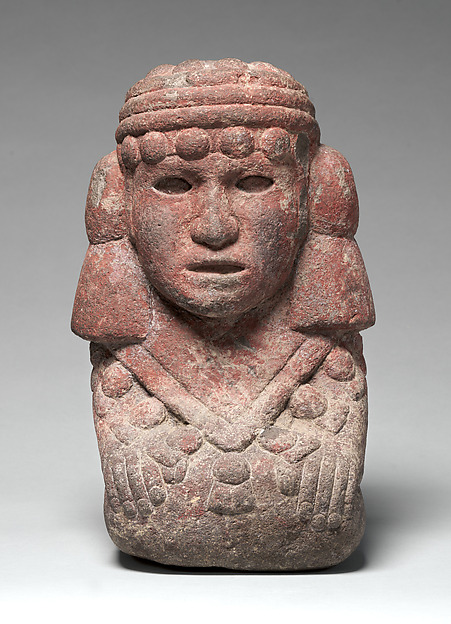
The visual route also needs breadth. The Mexica sculpture is a stronger signal than a generic planet image for an Americas hub, but later pages need maps of the Andes, plantation documents, protest photographs, migration routes, and city images. Visual diversity will help readers understand that the hemisphere is not one landscape or one national story.
Memory disputes create another reason to read across the hemisphere. Columbus monuments, Confederate symbols, independence anniversaries, Indigenous land acknowledgments, slavery museums, truth commissions, dictatorship trials, and border memorials all show societies arguing over what the past authorizes. The Americas are full of public history because old conflicts remain politically useful.
Economic dependency also crosses periods. Silver, sugar, cotton, coffee, bananas, oil, copper, debt, remittances, tourism, and digital labor connect local communities to distant markets. Independence did not always mean control over prices, credit, land, or infrastructure. That tension links colonial extraction to modern inequality.
The next content pass should add at least one strong route for each missing scale: Indigenous city or confederacy, Caribbean plantation and revolution, Andean state and mining, Brazilian slavery and abolition, Canadian treaty history, and Cold War Latin America. That mix would make the hub visibly hemispheric.
It would also turn the topic page into a real routing surface for students who enter through one famous national story, movement, or anniversary.
The reader payoff is a hemispheric map with tension. The Americas are Indigenous and Atlantic, revolutionary and enslaving, republican and exclusionary, capitalist and resistant, national and transnational. A strong next phase will add Maya, Inca, Andes, Amazon, Canada, Brazil, Caribbean, Latin American independence, Cold War Latin America, migration, and environmental histories. This hub gives that expansion a clear spine.
Read the events in order first; the page is built to reveal change over time.
Ask which pressures existed before the visible turning point and which actors had room to choose.
Follow what changed afterward in institutions, borders, law, belief, or everyday life.
Notice which events became symbols and why later generations kept returning to them.
Remember that European arrival entered existing worlds; current pages need deeper Indigenous expansion later.
Track who used rights language, who was left out, and who fought to widen citizenship.
Read slavery, plantations, railroads, land reform, dispossession, and capitalism together.
Move beyond the United States by keeping Mexico, Haiti, the Caribbean, and Latin America visible.
Compare Andes, Amazon, Caribbean, Brazil, Canada, borderlands, and North America instead of treating one country as the region.
Read oral tradition, archaeology, plantation files, court cases, music, monuments, and testimony as contested evidence.
Choose a Reading Path
Start With the Timeline
Use the related timeline first when you want a chronological route through the topic.
Start with 1492 CE: Columbus's First Atlantic VoyageOpen a Person Page
Use people pages when the topic is easier to understand through leadership, resistance, reform, or memory.
Start with 1521 CE: Fall of the Aztec EmpireUse Year Pages
Use year pages when you need a fast answer to what changed in a specific year.
Start with July 4, 1776: Declaration of IndependenceReturn to the Map
Use the map to keep geography visible while moving between events and regions.
Start with 1791 CE: Haitian Revolution BeginsContact Route
Begin with Columbus and the Aztec Empire, while keeping Indigenous agency and disease history visible.
Start with May 10, 1869: First Transcontinental Railroad CompletedRevolution Route
Read 1776, Haiti, Mexico, and future Latin American pages as different freedom struggles.
Start with July 2, 1964: Civil Rights Act of 1964Slavery and Rights Route
Move from slavery and civil war to Brown, March on Washington, and the Civil Rights Act.
Start with September 11, 2001: September 11 AttacksCapital and Security Route
Use Wall Street and September 11 to connect finance, state power, media, and global consequences.
Indigenous Route
Move from pre-Columbian cities and landscapes to conquest, Pueblo resistance, land claims, and modern sovereignty.
Latin America Route
Use Haiti, Mexico, future Brazil, Andes, Caribbean, and Cold War pages to make the hemisphere wider than the United States.
How the Story Builds
Begin with Columbus's First Atlantic Voyage. The opening event usually shows the pressure that made the route necessary: a crisis of authority, an expanding exchange system, a new technology, a contested idea, or a conflict that older institutions could no longer contain.
First Transcontinental Railroad Completed works as a checkpoint because it lets readers ask what had become irreversible, which actors still had choices, and how the route changed scale between the opening event and the later consequences.
The later edge of the route includes March on Washington, Civil Rights Act of 1964, and September 11 Attacks. These pages help readers see what survived beyond the first shock: institutions, borders, laws, memories, technologies, movements, or arguments that kept shaping later history.
The route is easier to remember through people and places. Watch figures such as Christopher Columbus, Isabella I of Castile, Ferdinand II of Aragon, Hernan Cortes, Cuauhtemoc, and Malintzin move through settings such as Caribbean, Tenochtitlan, Philadelphia, Saint-Domingue, and Seneca Falls; that is where large structures become visible as choices, risks, costs, and memories.
Atlantic voyages, disease, alliances, conquest, and extraction remake older Indigenous worlds.
Independence movements use rights language while exposing slavery, race, gender, and property exclusions.
The U.S. route links union, slavery, military policy, Black agency, and constitutional transformation.
Mexico, suffrage, civil rights, labor, and education turn citizenship into repeated struggle.
Finance, terrorism, migration, and security politics connect the hemisphere to global systems.
Latin American cases connect revolution, intervention, military rule, human rights, debt, exile, and memory.
Forced movement, settler migration, diaspora, refugees, labor routes, and border politics make the Americas transnational.
- Which event in Americas feels like the true point of no return, and why might another reader choose a different event?
- What changes if the route is read from the perspective of ordinary people rather than rulers, armies, inventors, reformers, or institutions?
- Which consequence was immediate, and which consequence only became clear decades later?
- Where does the map change the interpretation by showing distance, borders, routes, ports, capitals, or frontiers?
- How can the Americas route foreground Indigenous history before European contact?
- Why did revolutionary rights language coexist with slavery and dispossession?
- What makes Haiti central to world history rather than a side case?
- How does a hemispheric view change a U.S.-centered story?
- Which future pages are needed for Latin America, Brazil, Canada, the Andes, and the Caribbean?
- Why do Brazil, Canada, the Caribbean, the Andes, and Amazonia each require different historical lenses?
- How do culture, language, music, religion, and monuments preserve conflicts over conquest, slavery, migration, and rights?
Interactive Timeline
Follow Americas by sequence
Columbus's First Atlantic Voyage
Christopher Columbus crossed the Atlantic under Spanish sponsorship and reached Caribbean islands, opening a violent era of sustained contact and colonization.
Read the full event pageMap Layer
Americas geography
Gold pins mark the approximate locations of published event pages. This is a schematic locator map, not a historical border map.
Coordinates are approximate and are used to help readers orient themselves before opening a full event page.
Route Events
Events in This Topic
Columbus's First Atlantic Voyage
Christopher Columbus crossed the Atlantic under Spanish sponsorship and reached Caribbean islands, opening a violent era of sustained contact and colonization.
Fall of the Aztec Empire
Spanish forces and Indigenous allies captured Tenochtitlan after conflict, epidemic disease, and political fracture undermined Aztec power.
Declaration of Independence
The Continental Congress adopted a declaration that presented the American colonies as independent states and justified separation from Britain.
Haitian Revolution Begins
Enslaved people in Saint-Domingue rose against plantation slavery, turning the French colony into the center of the Atlantic world's most radical revolution.
Seneca Falls Convention
Women and reformers met at Seneca Falls and issued a declaration demanding expanded civil and political rights for women.
American Civil War Begins
Confederate forces fired on Fort Sumter after secession, turning disputes over slavery, federal authority, and union into open war.
Emancipation Proclamation
Abraham Lincoln issued the Emancipation Proclamation, declaring enslaved people in Confederate-held territory to be free as a war measure.
First Transcontinental Railroad Completed
The first transcontinental railroad in the United States linked eastern and western rail networks after years of construction.
Mexican Revolution Begins
Opposition to Porfirio Diaz opened a revolutionary period in Mexico shaped by demands for democracy, land reform, labor rights, and regional power.
Wall Street Crash of 1929
A severe stock market collapse in New York signaled financial instability that helped deepen the worldwide Great Depression.
Brown v. Board of Education
The U.S. Supreme Court ruled that racial segregation in public schools was unconstitutional, overturning legal support for separate schooling.
March on Washington
Hundreds of thousands gathered in Washington for jobs and freedom, making civil rights demands visible at the national level.
Civil Rights Act of 1964
The United States enacted major civil rights legislation banning discrimination in public accommodations, employment, and federally funded programs.
September 11 Attacks
Al-Qaeda hijackers attacked targets in the United States, destroying the World Trade Center towers and striking the Pentagon.
References
Where to Check the Facts
- Encyclopaedia Britannica: AmericasReference for the Americas as a hemispheric region across Indigenous, colonial, and modern histories.
- Library of Congress: Primary Source SetsReference point for United States, Atlantic, civil rights, and migration primary-source teaching sets.