At a Glance
The shape of the event
- Date
- c. 1250 CE
- Place
- Rapa Nui
- Type
- Monumental Construction
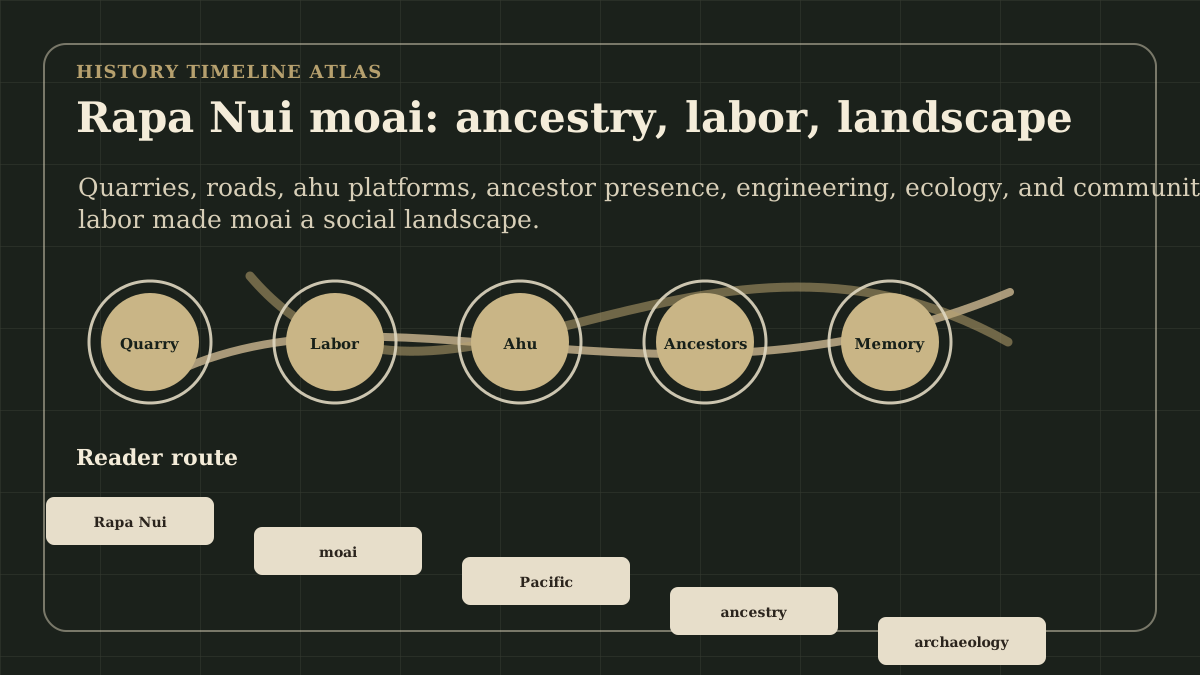
Rapa Nui communities built and moved moai, linking ancestors, authority, labor, engineering, and landscape.
c. 1250 CE; place the event in Rapa Nui before comparing causes or consequences.
The event pushes Pacific history beyond contact narratives and into Indigenous monumental practice.
Rapa Nui carvers / Island communities are the first names or groups to compare before widening the story.
The statues became enduring material evidence of Rapa Nui social organization and memory.
The statues became enduring material evidence of Rapa Nui social organization and memory.
The event pushes Pacific history beyond contact narratives and into Indigenous monumental practice.
Follow this strand of history to see how later generations on Rapa Nui negotiated the meanings of these stone figures: whether they were sites of political assertion, objects of memory, or points of cultural renewal.
Background
Rapa Nui, the remote island in the southeastern Pacific, had a distinctive island society in which lineage, ritual and place-making were closely bound. By the twelfth and thirteenth centuries, communities had the skills to quarry basalt and tuff, fashion oversized human figures, and transport them across uneven ground to ceremonial platforms. These activities did not happen in a vacuum: they reflected pressures and possibilities — the social need to embody ancestry, competitive displays of status between groups, and the island’s finite resources. At the same time, building moai required organized labor, knowledge of building techniques, and decisions about where statues would be placed to watch over land and sea.
Archaeology and oral traditions both point to a mosaic of motivations; no single cause explains the phenomenon. Instead, the practice grew from overlapping needs for memory, authority, communal work, and an intimate reckoning with the island environment. Rapa Nui moai building is strongest when the statues are treated as part of a lived island system rather than as isolated mysteries. Quarrying, carving, moving, and raising moai required skill, authority, food, rope, roads, labor timing, and shared belief about ancestors. The event therefore belongs to social history as much as engineering history. The island setting matters. Rapa Nui was remote, finite, and intensely known by its communities.
Stone, coastlines, slopes, gardens, clan territories, ceremonial platforms, and paths all shaped where work happened and what a statue could mean. Monumental building made authority visible across a landscape that people moved through every day. The evidence layer is also important. Archaeology, oral tradition, experimental reconstruction, and community memory do not always answer the same question. Some evidence explains how statues moved; other evidence asks why they mattered, who organized work, and how later outsiders transformed Rapa Nui into a warning story about collapse.
The Turning Point
Around c. 1250 CE, whatever had been occasional or local practice appears to have intensified into large-scale, more visible programs of moai construction and movement. Carvers and island communities made explicit choices about scale and placement: larger statues, new platforms and longer transport routes concentrated labor, redirected local resources, and demanded coordination across hamlets. These choices involved named kinds of actors — stone carvers with technical knowledge, community leaders who could call out labor, and the groups that received moai as focal points of ancestry and authority. The decisions to enlarge statues and to place them on prominent platforms turned carving into public performance and engineering into political expression.
Moving moai across the landscape required staging, temporary pathways and teams — a sequence of deliberate acts that made social relations visible. In short, the period marks a shift from dispersed practices to highly organized communal projects that inscribed social order into stone and land. The turning point was the concentration of labor into a monumental ancestral landscape. Moai did not become powerful simply because they were large. They became powerful because communities placed them in relation to platforms, descent groups, ritual authority, land, and memory. Moving the statues gives the story its human scale. Whether readers imagine teams coordinating ropes, roads, rocking movements, or other techniques, the central point is organized knowledge.
The work required people to trust a plan, repeat skilled actions, and make stone bodies travel through social space.
Consequences
In the near term, the surge in moai construction and transport reshaped Rapa Nui’s physical and social landscape. Platforms and roadside routes became theaters of communal labor and ritual, and statues functioned as tangible anchors for claims of descent and power. Over decades, the concentration of effort into monumental production left clear archaeological traces: quarries, unfinished figures, and the lines of movement across the island. In the longer view, these statues came to serve as durable evidence of how Rapa Nui society organized labor, expressed authority, and kept ancestral memory alive. They also complicate later narratives that treat Pacific history chiefly through the lens of European contact. The moai demonstrate an Indigenous monumental practice with its own logic and stakes.
Finally, interpretations of this episode continue to vary depending on which voices or evidence are centered — archaeological data, oral memory, community experience, or later external accounts — reminding us that material remains can support multiple, sometimes competing, stories. The result was a durable archive in stone. Quarries, unfinished figures, fallen statues, restored platforms, and island routes let later readers see how labor, ancestry, and place-making connected. The moai preserve history even where written records are absent. The afterlife is contested. Outside accounts often turned Rapa Nui into a simple parable of ecological collapse or mystery. A richer interpretation keeps Indigenous agency visible: Rapa Nui people built, remembered, adapted, suffered colonial violence, and continue to interpret their own heritage.
Interpretation Notes
Interpretations of Rapa Nui Moai Building Peaks depend on whose evidence is centered: rulers and official records, affected communities, oral memory, archaeology, law, diplomacy, labor, and later public memory do not always tell the same story.
Why Keep Reading
Follow this strand of history to see how later generations on Rapa Nui negotiated the meanings of these stone figures: whether they were sites of political assertion, objects of memory, or points of cultural renewal. Subsequent events — changes in island settlement, shifts in ritual practice, and the arrival of outsiders with their own records — all reframed the moai. Tracing those changes clarifies how monumental practices age, how communities remember and reinterpret the past, and how modern understandings of the moai were shaped by which evidence was privileged. The next entries will trace that long conversation between stone, people, and later observers. Read this page beside Polynesian settlement, Hawaiian settlement, Tonga, Maori settlement, James Cook, and Pacific sovereignty routes.
The path keeps Pacific history centered on navigation, kinship, ritual landscapes, and island political knowledge before European contact dominates the story.
Reading Path
Follow the story without losing the thread
Before This
- Maori Settlement of Aotearoac. 1250 CE
- Tongan Maritime Chiefdom Expandsc. 1200 CE
- Eastern Polynesia Settlement Expandsc. 1000 CE
After This
Same Period
- Attack on Pearl HarborDecember 7, 1941
- Lapita Expansion Beginsc. 1600 BCE
- Eastern Polynesia Settlement Expandsc. 1000 CE
Wider Timeline
Mind Map
How to think about Rapa Nui Moai Building Peaks
Ancestor veneration
Moai functioned as visible embodiments of ancestors, linking living groups to their forebears and legitimating claims to land and status.
Map Layer
Where this event sits geographically
Gold pins mark the approximate locations of published event pages. This is a schematic locator map, not a historical border map.
Coordinates are approximate and are used to help readers orient themselves before opening a full event page.
References
Where to Check the Facts
- Official UNESCO World Heritage Centre: Rapa Nui National ParkOfficial World Heritage reference for Rapa Nui National Park, moai, ceremonial sites, and archaeological landscape.
- Encyclopaedia Britannica: Easter IslandReference for Rapa Nui geography, moai, island society, and later historical context.