How to Read the Year
Why does 1810 make independence look regional, oceanic, and unfinished?
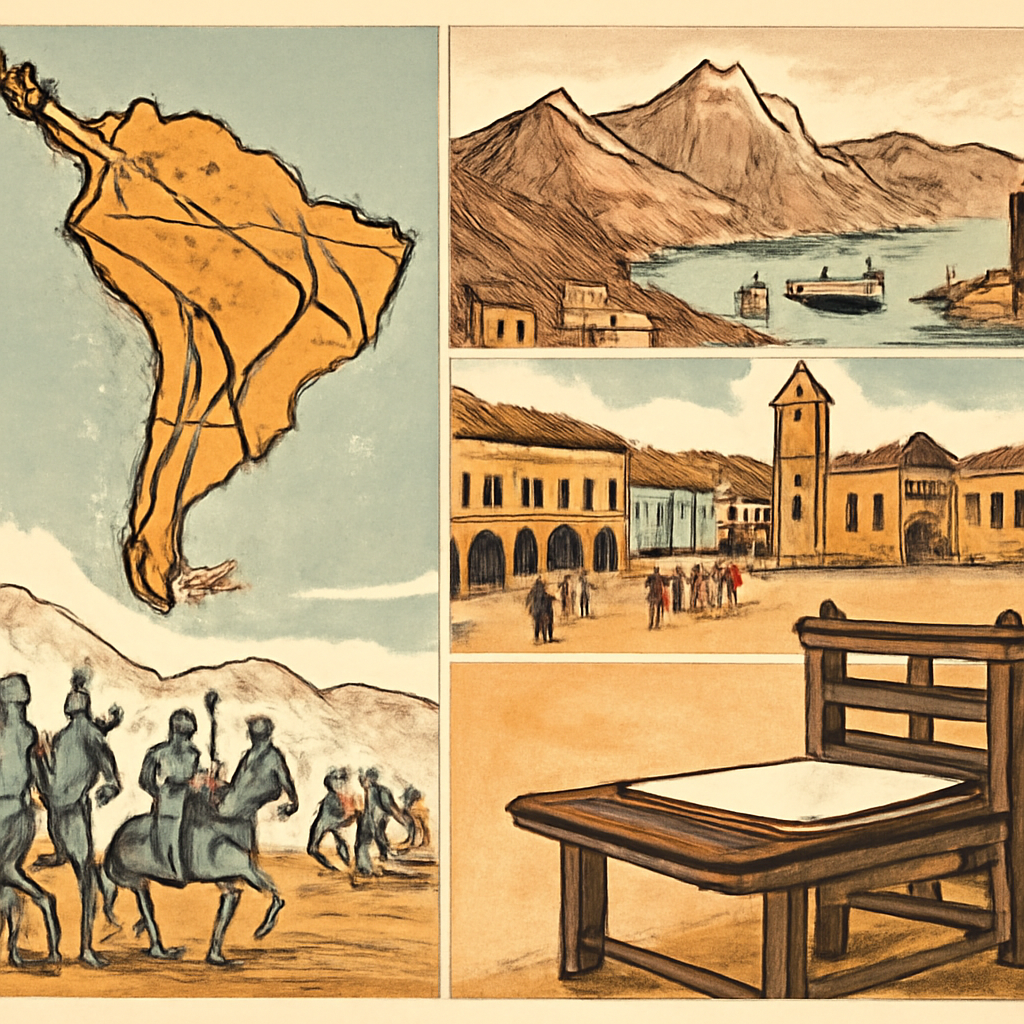
1810 gathers three different transformations: the Grito de Dolores in Mexico, the May Revolution in Buenos Aires, and Kamehameha's unification of Hawaii. The year is not one revolution spreading everywhere. It is a window into several worlds where older authority became unstable and new political forms had to be imagined, fought for, or consolidated.
In Spanish America, the crisis of monarchy opened space for local juntas, insurgent mobilization, creole politics, popular violence, and arguments over sovereignty. Hidalgo's call at Dolores and the Buenos Aires junta both belonged to a wider imperial rupture, but they moved through different local societies and produced different revolutionary paths.
Hawaii gives the year a Pacific dimension. Kamehameha's unification emerged from island warfare, chiefly authority, diplomacy, firearms, foreign ships, sacred legitimacy, and local strategy. Reading Hawaii beside Spanish American upheaval keeps 1810 from becoming only an Atlantic independence date. The year becomes about how communities remake authority when old balances break.
The local actors matter. Priests, insurgents, creole officials, Indigenous and mixed communities, merchants, chiefs, warriors, sailors, and diplomats all appear around the year because sovereignty was made through public calls, councils, battles, bargaining, and memory.
The year also helps readers separate crisis from outcome. In Mexico, rebellion did not immediately create a stable independent state. In Buenos Aires, a junta opened a long struggle over who could speak for the former viceroyalty. In Hawaii, unification strengthened a kingdom that would later face missionary, commercial, and imperial pressure. The same calendar year therefore points to different speeds of political change.
A wider 1810 reading keeps ordinary risk visible. Families faced recruitment, taxes, rumor, market disruption, loyalty tests, and violence long before constitutions or national myths settled the meaning of events. In the Pacific, island communities navigated chiefly competition, foreign ships, weapons, and diplomacy. In Spanish America, village and city politics turned imperial uncertainty into choices about survival, opportunity, and belonging.
The search value of 1810 is that it answers several questions without pretending they are one story: what began in Mexico, why Buenos Aires mattered, how Hawaii unified, and why sovereignty can mean rebellion, council government, kingdom-building, or later memory depending on where the reader stands.
1810 CE in History gathers events that help readers move from a single date into wider historical patterns. A useful year entry does more than answer what happened; it shows why people keep using the year as a marker for change.
The connected events show how decisions, institutions, conflicts, ideas, and consequences crossed beyond one location or one person. The event links explain the immediate story, while the topic routes and timelines show what came before and after.
The year also helps organize broad questions. It gives readers a concise answer and a direct path into deeper event pages where causes, turning points, consequences, maps, and references are easier to inspect.
Read the date in three passes. First ask what happened inside the year itself. Then ask which older pressures made the event possible. Finally ask which later pages reuse the same vocabulary, institutions, borders, technologies, or memories. That sequence keeps the page from becoming a trivia answer.
Even when only one event is currently attached, the year still has a job: it gives students and curious visitors a stable chronological doorway into the atlas. The page makes the doorway useful by pointing to the event, the topic route, the timeline, the map, and the evidence trail that can turn a date into a broader explanation.
This year matters because it connects Grito de Dolores, May Revolution, Kamehameha Unifies Hawaii to a wider sequence of causes and consequences. It gives the reader a chronological anchor while still pointing outward to people, places, institutions, and later effects. A thin year page would only name the event; a useful year page explains why this date is a handle for a larger route through history. 1810 matters because it shows independence and state formation taking different shapes across the Americas and the Pacific. It links colonial crisis, monarchy, local rebellion, island state-building, warfare, diplomacy, and later national memory without pretending all routes followed the same script.
Reader Lenses
Look for the pressures that made change possible.
Identify who acted and what options were available.
Follow what changed after the event.
Ask why this date still appears in historical summaries.
Ask how the breakdown of Spanish authority opened different local possibilities.
Read Hawaiian unification through chiefs, ships, weapons, ritual authority, and diplomacy.
Follow how later Mexico, Argentina, and Hawaii remembered 1810 for very different political reasons.
How This Year Connects
1810 CE in History is anchored by Grito de Dolores, May Revolution, and Kamehameha Unifies Hawaii. Read those pages together and the year stops being a date label; it becomes a crossroads where immediate choices met older pressures and opened later consequences.
The setting matters as much as the date. The year moves through Dolores, Buenos Aires, and Hawaiian Islands and belongs to Latin American Independence and Hawaiian Kingdom. That combination helps readers avoid treating the year as isolated; geography, institutions, conflict, belief, economy, and communication all shape what a date can mean.
The year also opens into people and themes. Figures such as Miguel Hidalgo, Insurgent communities, Buenos Aires revolutionaries, Creole elites, and Kamehameha I appear because their choices made the year visible, while themes such as Mexico, Independence, Revolution, Argentina, and Spanish Empire explain why the consequences outlived the moment. A useful next step is usually an event page, then a topic route, then a timeline.
Evidence changes the way a date reads. A treaty, battle report, inscription, newspaper, census, court record, memoir, photograph, or archaeological trace does not answer the same question. Looking at source type helps separate what happened in the year from how later people remembered it.
A year page is most useful when it keeps two scales open at once. The first scale is immediate: what happened, where, and who was involved. The second scale is interpretive: why later readers use this date to organize a wider story. Holding both scales together makes the page a starting point for deeper reading rather than a dead-end answer.
The before-and-after frame matters too. A date rarely begins the forces it reveals. Earlier pressures made the linked event possible, while later pages show which effects were temporary, which became institutions, and which turned into memory. Reading the year this way helps students avoid the false impression that history changes only when the calendar flips.
Use this page as a junction. If the event feels too brief, follow the topic route for background; if the cause feels too abstract, open the event page for sequence; if the consequence feels larger than the date, move into the timeline. The value of a year page is that it lets readers change scale without losing their place.
Read 1810 beside the Grito de Dolores, May Revolution, Kamehameha I, Latin American independence, Hawaiian sovereignty, Atlantic revolutions, and Pacific routes.
Then compare 1810 with 1776, 1789, 1791, 1824, 1840, and 1893. The comparison asks when sovereignty becomes a republic, a kingdom, a movement, or a later memory.
Events in This Year
- 1810Grito de Dolores
Miguel Hidalgo's call at Dolores helped launch the Mexican War of Independence against Spanish colonial rule.
- 1810May Revolution
The May Revolution in Buenos Aires formed a local junta amid the crisis of Spanish monarchy and imperial authority.
- 1810Kamehameha Unifies Hawaii
Kamehameha I unified the Hawaiian Islands after warfare, diplomacy, and control of changing military technologies.
Map Layer
1810 CE in History geography
Gold pins mark the approximate locations of published event pages. This is a schematic locator map, not a historical border map.
Coordinates are approximate and are used to help readers orient themselves before opening a full event page.
References
Where to Check the Facts
- Primary Source Set: Latin American RevolutionariesPrimary-source set reference for Latin American revolutionary leaders, documents, and independence politics.
- Library of Congress: Hispanic Reading Room CollectionsArchive and collection reference for Latin America, the Caribbean, Iberian worlds, and related primary materials.
- Cambridge University Press: The Cambridge History of Latin AmericaSpecialist scholarly synthesis for colonial society, independence, republic-building, regional variation, and modern Latin American historiography.
- Oxford Research Encyclopedia of Latin American HistoryPeer-reviewed reference for Latin American history themes, regional debates, social history, and competing interpretations.