At a Glance
The shape of the event
- Date
- July 17-August 2, 1945
- Place
- Potsdam
- Type
- Diplomatic Conference
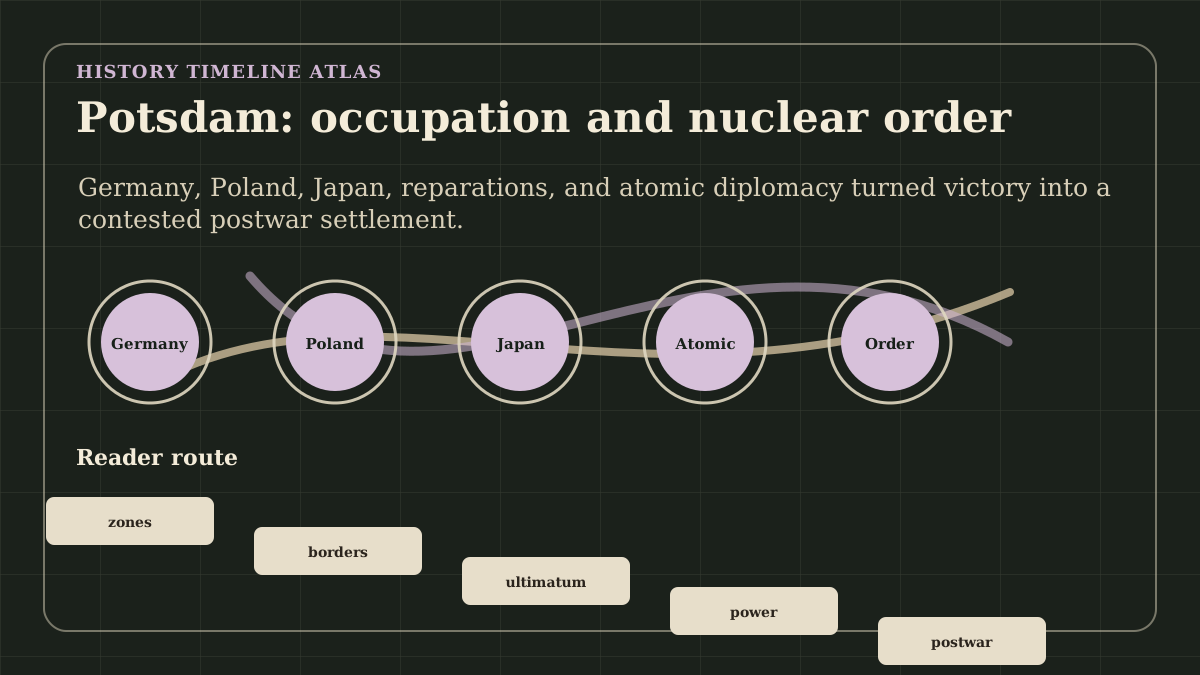
Allied leaders met at Potsdam after Germany's defeat to negotiate occupation policy, borders, reparations, Japan, and the unsettled balance of power after the war.
July 17-August 2, 1945; place the event in Potsdam before comparing causes or consequences.
Potsdam helped define occupation policy and exposed strains that soon fed into Cold War division.
Harry S. Truman / Winston Churchill / Clement Attlee / Joseph Stalin are the first names or groups to compare before widening the story.
The Allies issued agreements on Germany and Japan while leaving many tensions unresolved.
The Allies issued agreements on Germany and Japan while leaving many tensions unresolved.
Potsdam helped define occupation policy and exposed strains that soon fed into Cold War division.
The next useful step is to follow the linked events, people, topic routes, and timelines.
Background
By summer 1945 Germany had surrendered, but the war against Japan continued and the Allies faced immediate questions about governing Germany, Eastern Europe, and postwar security. Before Potsdam Conference, the surrounding world already contained unresolved tensions over authority, resources, belief, strategy, or legitimacy. Those pressures mattered because they shaped what different actors thought was possible. Single-cause explanations flatten the background, which was usually a mix of long-running structures and immediate decisions. The location in Central Europe also matters, because events there connected local choices to wider routes of diplomacy, war, trade, reform, or memory. This context prepares the reader to see the event as part of a sequence rather than as an isolated headline.
Potsdam took place after Germany's defeat but before the war had fully ended. That timing matters. Truman had replaced Roosevelt, Churchill was replaced by Attlee during the conference, Stalin held military leverage in Eastern Europe, and the atomic bomb changed the atmosphere of bargaining. The leaders were negotiating Germany, Japan, borders, reparations, and security while the wartime alliance was already losing its glue. The conference is best read as a table full of unfinished wars. Germany had surrendered, but occupation, denazification, reparations, borders, food shortages, displaced people, and political authority still had to be organized. Japan had not surrendered. Eastern Europe was already being reshaped by armies and local communist power.
The United Nations had been founded, but no one yet knew how far collective security could restrain great-power rivalry. Leadership change made the summit less familiar than earlier Allied meetings. Roosevelt was gone, Truman was still defining his foreign policy, Churchill's electoral defeat brought Attlee into the negotiations, and Stalin's position rested on the Red Army's presence across Eastern Europe. Potsdam therefore did not simply continue Yalta. It reopened coalition politics under colder conditions.
The Turning Point
The conference brought changing leadership, Soviet power in Eastern Europe, the atomic bomb's shadow, and disputes over Germany into one negotiation. It was both the last major wartime conference and an early postwar confrontation. The turning point was not simply that the event occurred, but that it changed the range of options available afterward. People connected to Harry S. Truman, Winston Churchill, Clement Attlee, Joseph Stalin acted inside constraints created by earlier conflicts, institutions, and expectations. Some choices were deliberate; others were responses to pressure, fear, opportunity, or failed compromise. The event's form as diplomatic conference also shaped how consequences unfolded.
It made certain outcomes easier to imagine, gave later actors new evidence or symbols to use, and forced communities to adapt to a situation that could no longer be treated as temporary. The atomic bomb created a second layer of bargaining. It did not make every decision at Potsdam nuclear, and Stalin already had intelligence channels, but the successful test changed Truman's confidence and placed Japan policy inside a new strategic atmosphere. The Potsdam Declaration demanded Japanese surrender while the military and moral consequences of nuclear weapons were about to become visible. Germany's future was another turning point. Occupation zones, reparations, demilitarization, and political reconstruction tried to make defeat governable. Yet those same arrangements created arenas for rivalry.
A policy designed to manage a defeated Germany also made Germany the central stage on which the postwar alliance would fracture.
Consequences
The Allies issued agreements on Germany and Japan while leaving many tensions unresolved. Potsdam helped define occupation policy and exposed strains that soon fed into Cold War division. The immediate result mattered, but the longer effect came from how later people interpreted and reused the event. Some consequences were institutional: laws, borders, offices, alliances, or systems of rule changed. Others were social or cultural: public memory, political language, religious identity, or expectations about power shifted. Read the event on two clocks at once. One clock follows the immediate aftermath; the other follows the slower movement of influence into later crises, reforms, debates, and historical comparisons.
The conference did not simply launch the Cold War, but it made the fault lines visible. Germany would be occupied and reorganized, Eastern Europe remained contested, Japan faced demands for surrender, and nuclear power entered diplomacy before the public fully understood it. Potsdam is therefore an ending and a beginning: it closes the wartime summit sequence while opening the postwar order's hardest disputes. Its human consequences are easy to hide behind diplomatic language. Border changes, population transfers, occupation policy, trials, food supply, destroyed cities, prisoners, and displaced people all sat behind phrases such as settlement and security. A rich Potsdam page should make that translation visible: decisions by leaders became rules and pressures experienced by millions.
Interpretation Notes
The conference is debated as a practical settlement, an opening Cold War moment, or a sign that wartime coalition politics could no longer hide incompatible postwar aims.
Why Keep Reading
The next useful step is to follow the linked events, people, topic routes, and timelines. Potsdam Conference becomes clearer when it is compared with what came before and after it, especially events in Twentieth Century and related pages about World War II and Postwar Order. The map helps locate the event, the mind map separates causes from effects, and the source list gives readers a way to check the factual spine. Keep reading to see whether this event was a beginning, a turning point, an ending, or a symbol that later generations kept reworking. Follow Potsdam into Hiroshima, Japan's surrender, the Nuremberg trials, the Berlin Blockade, and NATO. This path shows why 1945 is not only a victory year.
It is the year military endings became occupation systems, legal experiments, nuclear diplomacy, and Cold War geography.
Reading Path
Follow the story without losing the thread
Before This
- Atomic Bombing of HiroshimaAugust 6, 1945
- United Nations FoundedOctober 24, 1945
- Yalta ConferenceFebruary 1945
After This
- Iron Curtain SpeechMarch 5, 1946
- Long TelegramFebruary 22, 1946
- Truman DoctrineMarch 1947
Same Period
- Assassination of Archduke Franz FerdinandJune 28, 1914
- Russian Revolution1917 CE
- Treaty of VersaillesJune 28, 1919
Wider Timeline
Mind Map
How to think about Potsdam Conference
Pressure
By summer 1945 Germany had surrendered, but the war against Japan continued and the Allies faced immediate questions about governing Germany, Eastern Europe, and postwar security.
Map Layer
Where this event sits geographically
Gold pins mark the approximate locations of published event pages. This is a schematic locator map, not a historical border map.
Coordinates are approximate and are used to help readers orient themselves before opening a full event page.
References
Where to Check the Facts
- Encyclopaedia Britannica: Potsdam ConferenceReference for the conference and its outcomes.
- Office of the Historian: The Potsdam Conference, 1945Official history reference for Potsdam diplomacy.
- The National WWII Museum: The Potsdam ConferenceMuseum reference for Potsdam's participants, postwar settlement, and early Cold War tensions.
- National WWI Museum and Memorial: All About WWIMuseum reference hub for World War I chronology, maps, articles, and educational context.
- U.S. National Archives: World War I CentennialArchive reference hub for World War I records, photographs, documents, and educational resources.
- The National WWII Museum: Explore By TopicMuseum reference hub for World War II theaters, battles, home fronts, aftermath, and memory.
- Imperial War Museums: What You Need to Know About the Second World WarMuseum reference for the global war, civilian experience, military fronts, and consequences.
- U.S. National Archives: The Cold WarArchive reference hub for Cold War records, federal documentation, and research guidance.
- Office of the Historian: The Early Cold War, 1945-1952Official diplomatic history reference for early Cold War foreign-policy context.
- United Nations: History of the United NationsOfficial institutional reference for United Nations founding, charter drafting, and postwar aims.