At a Glance
The shape of the event
- Date
- August 1, 1975
- Place
- Helsinki
- Type
- Diplomatic Agreement
Thirty-five states signed the Helsinki Final Act, linking European security, borders, cooperation, and human-rights commitments during detente.
August 1, 1975; place the event in Helsinki before comparing causes or consequences.
Helsinki helped connect detente to civil society, dissident movements, and later transformations in eastern Europe.
Conference on Security and Co-operation in Europe participants are the first names or groups to compare before widening the story.
The Final Act became a major reference point for European security diplomacy and human-rights activism.
The Final Act became a major reference point for European security diplomacy and human-rights activism.
Helsinki helped connect detente to civil society, dissident movements, and later transformations in eastern Europe.
The next useful step is to follow the linked events, people, topic routes, and timelines.
Background
Detente created room for negotiation over the postwar European order, but eastern and western governments wanted different things. Soviet leaders sought recognition of borders, while western governments and activists saw human-rights language as a tool that could travel across the bloc divide. Before Helsinki Final Act, the surrounding world already contained unresolved tensions over authority, resources, belief, strategy, or legitimacy. Those pressures mattered because they shaped what different actors thought was possible. Single-cause explanations flatten the background, which was usually a mix of long-running structures and immediate decisions. The location in Northern Europe also matters, because events there connected local choices to wider routes of diplomacy, war, trade, reform, or memory.
This context prepares the reader to see the event as part of a sequence rather than as an isolated headline. Helsinki looks diplomatic on the surface, but its deeper power came from linking security and human rights. Soviet leaders valued recognition of postwar borders. Western governments and activists noticed that the same text gave public language for civil liberties, contact, and monitoring. That double meaning made the agreement unexpectedly important. The agreement is easier to read through its baskets: security, cooperation, and human contacts. Those categories made the text more than a border settlement. They tied military stability, trade, information, family contact, travel, and rights language into one public document.
Different governments emphasized different parts, which is why the same agreement could mean recognition to one side and pressure to another. That layered design is the key to why Helsinki kept producing consequences after the conference ended. Dissidents turned diplomatic wording into a tool. Monitoring groups, writers, religious activists, national minorities, and human-rights defenders could cite the text back to governments that had signed it. That did not make repression vanish. It made hypocrisy easier to name.
The Turning Point
The agreement balanced security principles, economic and cultural cooperation, and human-rights commitments. Its immediate text did not dissolve the Cold War, but it gave dissidents and monitoring groups a vocabulary for holding governments to public promises. The turning point was not simply that the event occurred, but that it changed the range of options available afterward. People connected to Conference on Security and Co-operation in Europe participants acted inside constraints created by earlier conflicts, institutions, and expectations. Some choices were deliberate; others were responses to pressure, fear, opportunity, or failed compromise. The event's form as diplomatic agreement also shaped how consequences unfolded.
It made certain outcomes easier to imagine, gave later actors new evidence or symbols to use, and forced communities to adapt to a situation that could no longer be treated as temporary. The turning point was the public nature of the commitment. Unlike private bargaining, Helsinki produced language that citizens and outside observers could quote. Once a state had endorsed rights language, activists could ask why prisons, censorship, travel restrictions, and harassment contradicted the promise. The event also changed detente's meaning. Detente was not only arms restraint and summit diplomacy; it became a contested field where security language and civic pressure interacted. The Cold War did not soften evenly, but the tools available to dissidents changed.
Consequences
The Final Act became a major reference point for European security diplomacy and human-rights activism. Helsinki helped connect detente to civil society, dissident movements, and later transformations in eastern Europe. The immediate result mattered, but the longer effect came from how later people interpreted and reused the event. Some consequences were institutional: laws, borders, offices, alliances, or systems of rule changed. Others were social or cultural: public memory, political language, religious identity, or expectations about power shifted. Read the event on two clocks at once. One clock follows the immediate aftermath; the other follows the slower movement of influence into later crises, reforms, debates, and historical comparisons.
The Final Act helped dissidents and monitoring groups turn state promises into political pressure. It did not overthrow governments by itself, but it made human-rights claims harder to dismiss as purely foreign propaganda. The event belongs in the timeline because detente created tools that later reformers could use against the limits of detente. Its afterlife reached into the 1980s. Helsinki language influenced monitoring networks and later debates about reform, legitimacy, and European security. It also shows how legal and diplomatic texts can become active historical forces when people outside government learn to use them. For readers, the lesson is that a conference communique can become a political instrument when its language is repeatable, public, and attached to signatures.
Interpretation Notes
Some critics thought the agreement conceded too much by recognizing Europe's postwar borders, while others argue that its human-rights language created unexpected pressure inside authoritarian systems.
Why Keep Reading
The next useful step is to follow the linked events, people, topic routes, and timelines. Helsinki Final Act becomes clearer when it is compared with what came before and after it, especially events in Cold War and related pages about Cold War and Human Rights. The map helps locate the event, the mind map separates causes from effects, and the source list gives readers a way to check the factual spine. Keep reading to see whether this event was a beginning, a turning point, an ending, or a symbol that later generations kept reworking. Read Helsinki between detente, the INF Treaty, Solidarity, the fall of the Berlin Wall, and human-rights history.
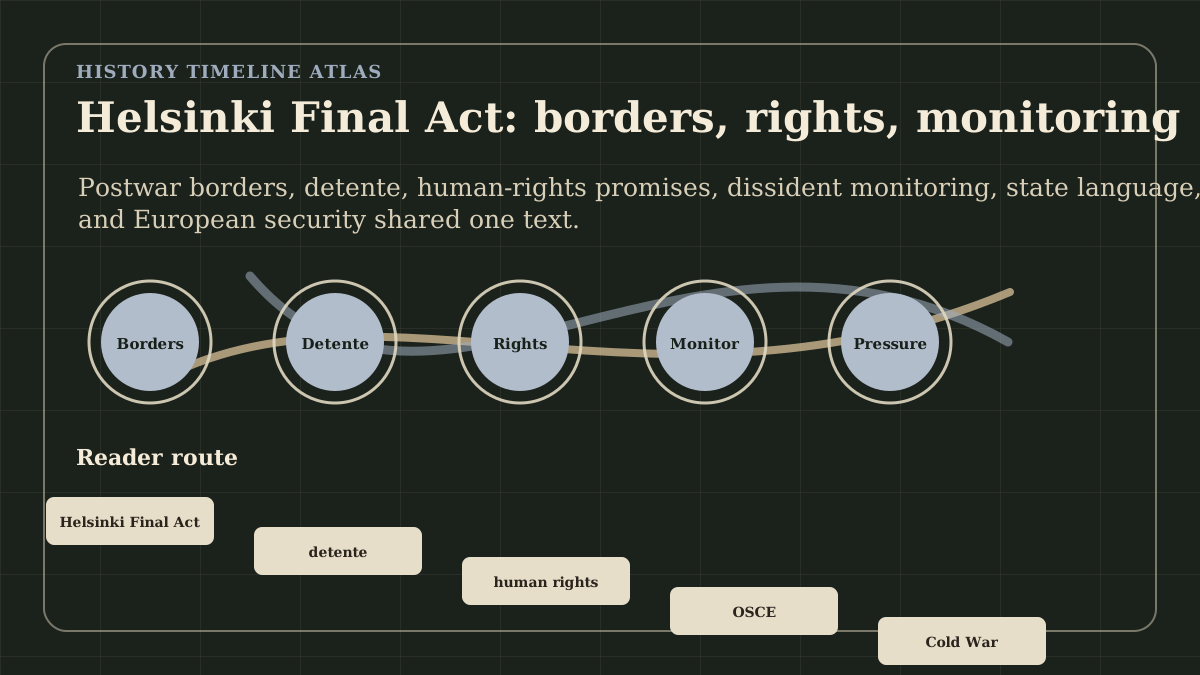
The path shows how written commitments moved from state diplomacy into civil society pressure.
Reading Path
Follow the story without losing the thread
Before This
- Fall of SaigonApril 30, 1975
- Angola Gains IndependenceNovember 11, 1975
- Arab Oil Embargo1973-1974 CE
After This
- Soviet-Afghan War BeginsDecember 1979
- Iranian Revolution1978-1979 CE
- Sandinista Revolution1979
Same Period
- Cuban Missile CrisisOctober 1962
- Apollo 11 Moon LandingJuly 20, 1969
- Fall of the Berlin WallNovember 9, 1989
Wider Timeline
Mind Map
How to think about Helsinki Final Act
Pressure
Detente created room for negotiation over the postwar European order, but eastern and western governments wanted different things. Soviet leaders sought recognition of borders, while western governments and activists saw human-rights language as a tool that could travel across the bloc divide.
Map Layer
Where this event sits geographically
Gold pins mark the approximate locations of published event pages. This is a schematic locator map, not a historical border map.
Coordinates are approximate and are used to help readers orient themselves before opening a full event page.
References
Where to Check the Facts
- OSCE: Helsinki Final ActInstitutional reference for the Helsinki Final Act and CSCE framework.
- Commission on Security and Cooperation in Europe: Helsinki Final ActOfficial reference for the 1975 Helsinki agreement and its principles.
- U.S. National Archives: The Cold WarArchive reference hub for Cold War records, federal documentation, and research guidance.
- Office of the Historian: The Early Cold War, 1945-1952Official diplomatic history reference for early Cold War foreign-policy context.
- United Nations: Universal Declaration of Human RightsOfficial reference for the Universal Declaration of Human Rights and its global human-rights framework.