At a Glance
The shape of the event
- Date
- 794
- Place
- Heian-kyo
- Type
- Capital Foundation
The Japanese court moved to Heian-kyo, opening a long period of aristocratic culture, court politics, and changing provincial power.
794; place the event in Heian-kyo before comparing causes or consequences.
The event links capital planning, elite culture, and the later rise of warrior power.
Emperor Kammu / Heian court elites are the first names or groups to compare before widening the story.
Heian court life became a defining reference point for Japanese literary and political memory.
Heian court life became a defining reference point for Japanese literary and political memory.
The event links capital planning, elite culture, and the later rise of warrior power.
Follow the subsequent decades to see how the planted institutions and cultural practices of Heian-kyo matured and were contested.
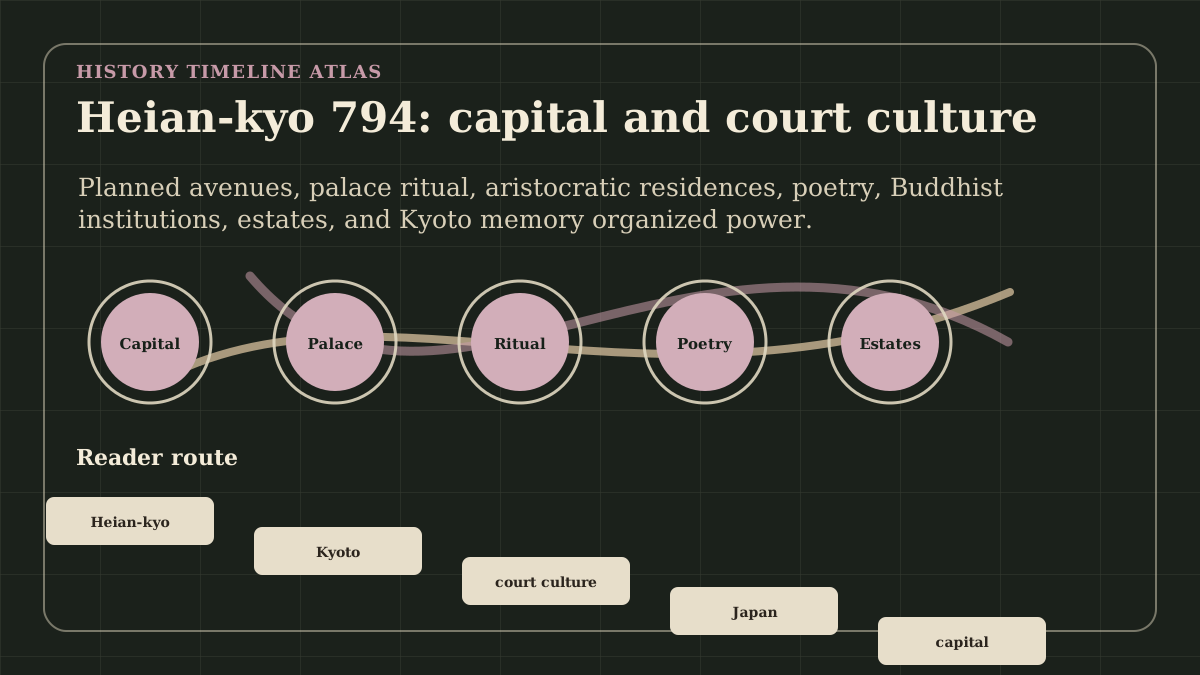
Background
By the late eighth century, rulers and court elites in Japan faced overlapping pressures: the need to administer a growing polity, the social expectations of aristocratic life, and the practical tasks of diplomacy and law. Those who held power at court sought visible expressions of authority that could house government machinery and stage political legitimacy. At the same time, provincial actors—local magnates, administrators, and military leaders—were evolving in ways that would test centralized control over time. The move to Heian-kyo cannot be reduced to a single motive: it answered administrative and symbolic needs, accommodated the tastes and networks of court elites, and required organized planning and labor to create a sustained seat of government.
Different kinds of evidence—official records, archaeology, local memory, and legal documents—survive to tell parts of this story; each highlights different priorities and consequences, and none alone explains the many layers of change that the new capital inaugurated. The establishment of Heian-kyo was a political decision about space, legitimacy, and control. Emperor Kanmu's court moved away from Nara-era arrangements where powerful Buddhist institutions, aristocratic families, and earlier court networks shaped politics. The new capital used continental planning ideas, but it also answered a local problem: how to organize court authority in a setting that could project renewal. A capital is more than a seat of government.
Streets, palaces, gates, offices, residences, ritual spaces, and processional routes teach people where power sits and how rank is performed. Heian-kyo helped organize aristocratic life through visibility, etiquette, ceremony, poetry, marriage politics, appointments, and access to the emperor. The page also needs provincial distance. Court culture produced brilliant literature and refined aesthetics, but the state depended on land, taxes, local elites, provincial offices, labor, and military capacities beyond the capital. Reading only palace culture misses the tensions that later helped warrior power grow.
The Turning Point
The critical change in 794 was both physical and institutional. Emperor Kammu authorized the relocation of the court to Heian-kyo, and Heian court elites moved their households, rituals, and administrative offices into a newly ordered city. Pragmatic choices were made: planners laid out streets and spaces intended for governance and ceremony; officials established courts of law and channels for taxation and diplomacy that relied on the court’s central authority; artisans and laborers were mobilized to build palaces, shrines, and bureaucratic offices. In practice this meant the daily life of government—audiences with the emperor, the circulation of petitions, the composition of poetry and records—became concentrated in one designed place.
The city itself became an instrument of rule: a setting where etiquette, protocol, and patronage reinforced rank and where court elites could cultivate cultural forms that distinguished the capital from the provinces. The move created a new institutional rhythm that made aristocratic court life both more visible and more durable as a reference point for later generations. The turning point was the creation of a new court center that linked urban design to political renewal. The move did not erase old conflicts, but it gave the ruling order a different stage for authority. A second turning point was cultural.
Over time, Heian court society produced forms of writing, taste, gendered authorship, etiquette, and memory that became central to later ideas of classical Japan.
Consequences
In the near term, establishing Heian-kyo gave the imperial court a stable center for governance and a place where elite culture could flourish. Court ceremonies, literary production, and political bargaining became anchored to the palace and its surrounding neighborhoods, producing the familiar image of refined court life that later writers would repeatedly evoke. Over the longer term, the capital’s concentration of resources and prestige shaped expectations about how power should be displayed and transmitted. That concentration also helped define the boundaries between court influence and provincial authority; as local actors adapted to or resisted court policies, new forms of regional power slowly emerged.
Historians trace a line from the institutional and cultural patterns hardened at Heian-kyo to the eventual rise of warrior elites who derived power in different ways from the court. Interpretations of these consequences vary depending on whether scholars privilege official records, archaeology, oral traditions, legal texts, or memory; each source highlights different winners, burdens, and silences in the story of state formation. The immediate consequence was the opening of the Heian period and the consolidation of Kyoto as a long-lasting center of imperial and cultural memory. Court families, offices, and rituals were reorganized around the new city. The longer consequence was a layered legacy.
Heian culture shaped literature, art, religion, aristocratic identity, and later nostalgia, while provincial military and estate developments revealed limits in capital-centered rule.
Interpretation Notes
Interpretations of Heian Capital Established depend on whose evidence is centered: rulers and official records, affected communities, oral memory, archaeology, law, diplomacy, labor, and later public memory do not always tell the same story.
Why Keep Reading
Follow the subsequent decades to see how the planted institutions and cultural practices of Heian-kyo matured and were contested. Explore how court literature and ceremony codified ideals of rank, how provincial authorities negotiated or ignored central directives, and how the material city shaped political careers. Tracking these threads will reveal why the Heian court became both a mirror for cultural achievement and a flashpoint for changing patterns of provincial power that eventually brought new actors—the warriors—into the foreground. Read this page before Fujiwara regency, The Tale of Genji, samurai rise, Kamakura rule, and Kyoto's later political memory. That path makes Heian history both cultural and institutional.
Reading Path
Follow the story without losing the thread
Before This
- Nara Capital Established710
- Tiwanaku State Expandsc. 700 CE
- Taika Reforms645
After This
Same Period
- Qin Unification of China221 BCE
- First Opium War Begins1839 CE
- Meiji Restoration1868 CE
Wider Timeline
Mind Map
How to think about Heian Capital Established
planned capital
Emperor-ordered layout and construction of Heian-kyo to house governance and ceremony
Map Layer
Where this event sits geographically
Gold pins mark the approximate locations of published event pages. This is a schematic locator map, not a historical border map.
Coordinates are approximate and are used to help readers orient themselves before opening a full event page.
References
Where to Check the Facts
- Encyclopaedia Britannica: Tang dynastyReference for Tang state formation, government, culture, and regional influence.
- Encyclopaedia Britannica: Song dynastyReference for Song political chronology, economy, technology, and culture.
- Official UNESCO World Heritage Centre: Historic Monuments of Ancient NaraInstitutional reference for Nara's capital landscape, Buddhist monuments, and East Asian cultural exchange.