At a Glance
The shape of the event
- Date
- 936
- Place
- Korean Peninsula
- Type
- State Unification
Goryeo unified much of the Korean Peninsula after the Later Three Kingdoms period, creating a durable dynasty that shaped Korean institutions, Buddhism, diplomacy, and political memory.
936; place the event in Korean Peninsula before comparing causes or consequences.
The event adds Korea as a central East Asian route rather than a side note to Chinese and Japanese history.
Wang Geon / Korean elites are the first names or groups to compare before widening the story.
A durable Korean dynasty emerged with Buddhist, aristocratic, military, and diplomatic institutions.
A durable Korean dynasty emerged with Buddhist, aristocratic, military, and diplomatic institutions.
The event adds Korea as a central East Asian route rather than a side note to Chinese and Japanese history.
Follow the sequences that Goryeo set in motion to see how institutions, art, and diplomacy evolve under a single dynasty.
Background
The Later Three Kingdoms period fractured power across the Korean Peninsula. Competing courts, local strongmen, and regional elites created shifting alliances; military commanders and aristocrats each held pieces of authority. Buddhism already threaded through courts and communities, not merely as religion but as a source of legitimacy, land, and institutional continuity. External pressure and diplomatic opportunity in East Asia — trade, tributary ties, and the reputations of neighboring states — also shaped choices on the peninsula, though those external links did not determine events by themselves. Economic and social relations at the village and temple level mattered as much as proclamations from palace halls.
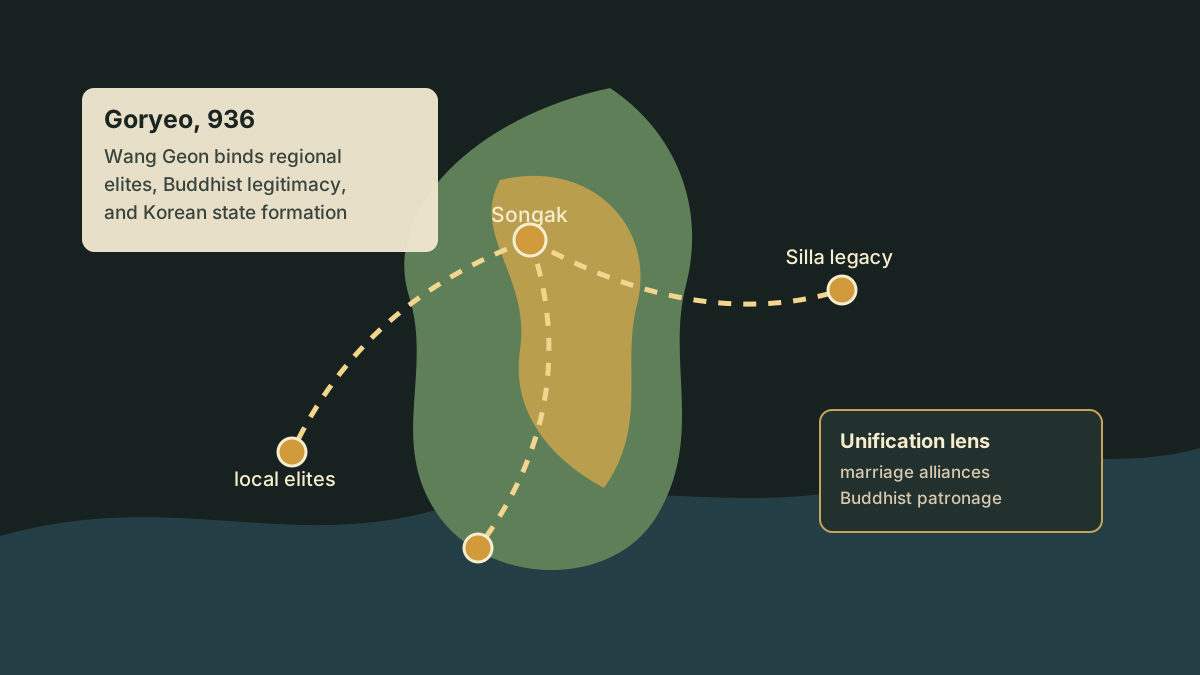
Historians note that interpretations change with the evidence you privilege: official chronicles emphasize rulers and ceremonies; archaeology, law codes, and local memory reveal different patterns of continuity and disruption. No single cause explains unification; it was the product of military success, political negotiation, institutional adaptation, and the uneven experiences of people across the land. Goryeo's unification emerged from the Later Three Kingdoms period, when Silla's old authority weakened and regional powers competed for legitimacy. Wang Geon built power from Songak and used military strength, marriage alliances, elite negotiation, and Buddhist patronage to bind fractured regions. The name Goryeo looked back to Goguryeo, giving the new dynasty a memory of northern prestige. Unification in 936 therefore joined conquest with symbolic inheritance.
It was not merely a map becoming one color; it was a new court persuading regional actors to accept a shared political future.
The Turning Point
The turning point was not a single battle but a sequence of decisive moves that made one polity plausible where many had been possible. Wang Geon emerged as a central actor who could negotiate with military leaders and aristocratic families, use Buddhist institutions for legitimation, and engage in diplomacy with external powers to secure recognition and resources. His choices — offering positions to rivals, codifying rights and obligations, and aligning temple interests with state aims — reshaped incentives for elites and local leaders. Korean elites who accepted incorporation preserved status and land; those who resisted faced marginalization or defeat.
The consolidation that culminated in 936 turned a patchwork of competing authorities into a more coherent state apparatus: military structures were reorganized, aristocratic ranks clarified, and diplomatic channels institutionalized. At the same time, many communities continued to experience change unevenly; law, labor obligations, and temple patronage altered everyday realities in ways that official records only partially capture. The result was a negotiated political settlement as much as a conquest. The decisive turn came when Wang Geon defeated or absorbed rivals while avoiding unnecessary destruction of local elites. His approach combined force with incorporation. Marriage ties, titles, land arrangements, and Buddhist institutions helped make loyalty practical.
This matters because many unifications fail after victory if the center cannot integrate local power holders. Goryeo's success lay in turning rival networks into a dynasty that could govern beyond the battlefield. The founding also established patterns of aristocratic politics that shaped Korea for centuries.
Consequences
In the near term, unification under Goryeo brought a measure of centralized authority that reduced the frequency of large-scale internecine warfare and offered a clearer framework for governance. Aristocratic families and military leaders found new roles within a dynastic order; Buddhist institutions retained and sometimes expanded their economic and social influence as they partnered with state-building. Over decades, those arrangements hardened into durable institutions: court ritual and aristocratic ranks, a standing military ethos linked to administration, and formal diplomatic engagement with neighboring states. In the long term, this state formation reframed Korea’s place in East Asia.
Rather than being portrayed simply as peripheral to Chinese or Japanese narratives, the peninsula under Goryeo became a sustained route of exchange and a diplomatic actor in its own right. Yet outcomes were uneven: archaeological evidence, legal records, oral memories, and the histories written by rulers offer different pictures of who benefited and who lost, and how coerced labor, land tenure, and regional autonomy were negotiated. The dynasty was durable, but it was built on compromises and competing claims that continued to shape Korean society and memory. The consequences were long-lasting.
Goryeo gave its name to Korea in many outside languages, supported Buddhism, developed distinctive elite culture, and navigated relations with Khitan Liao, Song China, Jurchen Jin, and later Mongol power. The dynasty's formation shows Korea as an active state between regional powers, not merely a receiver of Chinese influence. Its unification created institutions and identities that later Joseon would inherit, revise, and criticize. The page matters because it makes Korean state formation visible on its own terms.
Interpretation Notes
Interpretations of Goryeo Unifies Korea depend on whose evidence is centered: rulers and official records, affected communities, oral memory, archaeology, law, diplomacy, labor, and later public memory do not always tell the same story.
Why Keep Reading
Follow the sequences that Goryeo set in motion to see how institutions, art, and diplomacy evolve under a single dynasty. Tracking tax policy, temple patronage, and diplomatic correspondence reveals how a political center sustained itself and responded to pressure from local elites and neighbors. Readers who continue will encounter clashes between official law and lived practice, archaeological surprises that challenge chronicle accounts, and the ways later generations remembered or repurposed the founding story. Each connected event — reforms, rebellions, foreign missions, and cultural production — shows a different facet of how a state carved order from decades of fragmentation. Read next into Silla, Buddhist statecraft, East Asian diplomacy, and later Joseon Korea.
Goryeo is a useful route for seeing how memory, religion, and elite bargains stabilize a new dynasty.
Reading Path
Follow the story without losing the thread
Before This
- Heian Capital Established794
- Tiwanaku State Expandsc. 700 CE
- Taika Reforms645
After This
Same Period
- Qin Unification of China221 BCE
- First Opium War Begins1839 CE
- Meiji Restoration1868 CE
Wider Timeline
Mind Map
How to think about Goryeo Unifies Korea
Fragmented polities
Power split among regional courts and military leaders during the Later Three Kingdoms created conditions for negotiation and consolidation.
Map Layer
Where this event sits geographically
Gold pins mark the approximate locations of published event pages. This is a schematic locator map, not a historical border map.
Coordinates are approximate and are used to help readers orient themselves before opening a full event page.
References
Where to Check the Facts
- Encyclopaedia Britannica: Tang dynastyReference for Tang state formation, government, culture, and regional influence.
- Encyclopaedia Britannica: Song dynastyReference for Song political chronology, economy, technology, and culture.
- Official UNESCO World Heritage Centre: Historic Monuments of Ancient NaraInstitutional reference for Nara's capital landscape, Buddhist monuments, and East Asian cultural exchange.