At a Glance
The shape of the event
- Date
- 1325
- Place
- Tenochtitlan
- Type
- City Foundation
Mexica settlers founded Tenochtitlan on an island in Lake Texcoco, building the urban base for later Aztec imperial power.
1325; place the event in Tenochtitlan before comparing causes or consequences.
Tenochtitlan lets readers see Aztec history as urban, environmental, and political before the Spanish conquest.
Mexica founders / Central Mexican communities are the first names or groups to compare before widening the story.
The city became the political and ritual center of the Aztec world.
The city became the political and ritual center of the Aztec world.
Tenochtitlan lets readers see Aztec history as urban, environmental, and political before the Spanish conquest.
Follow the threads that begin here: the growth of an island town into an imperial center, the changing relationships between Tenochtitlan and neighboring polities, and the ways urban life reshaped agriculture, ritual...
Background
Central Mexico in the early fourteenth century was a crowded and contested world of lakes, valleys and many polities. The Mexica, often described in later sources as newcomers, entered a landscape already inhabited by diverse Central Mexican communities with long histories of settlement, ritual life and diplomacy. Environmental pressures — fluctuating lake levels, limited arable land on the valley floor — met social pressures: migration, alliance-making, and competition for prestige and resources. No single cause explains why people move or why cities emerge; choices to settle, to adopt particular laws, to negotiate with neighbors and to remember events later all matter.
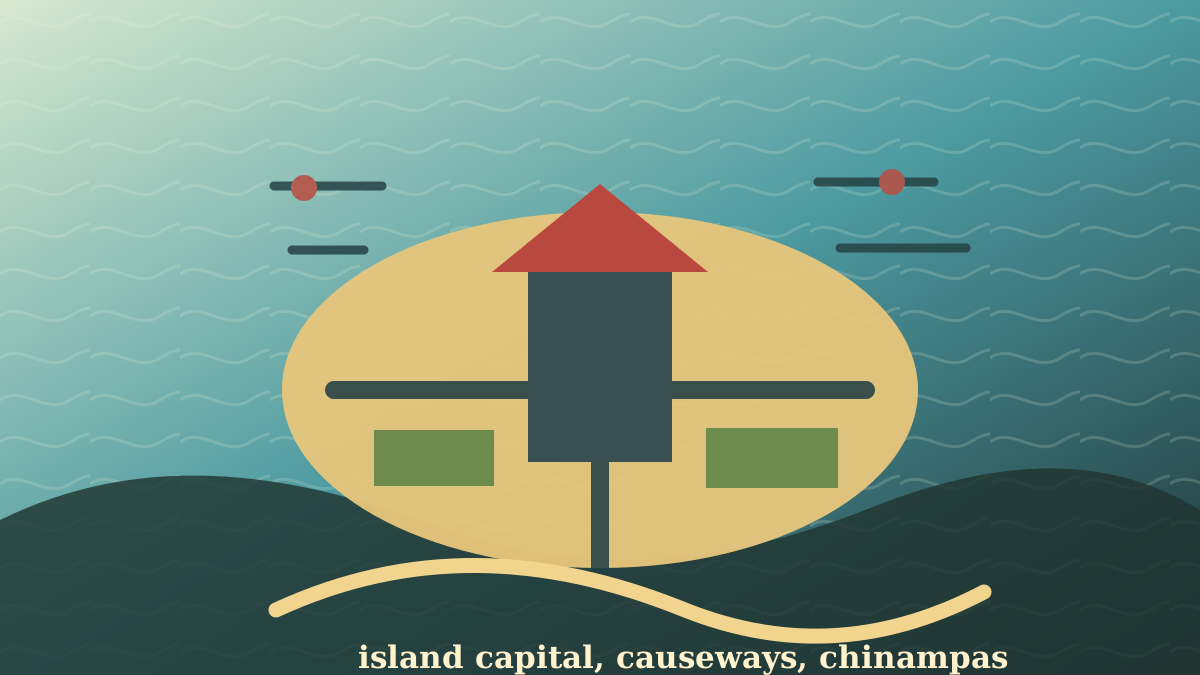
Different kinds of evidence — codices written under elite direction, oral memory preserved in communities, archaeological remains dug from mud and stone, and legal or diplomatic records — each give a partial picture. Taken together they suggest that founding a city in this place was a calculated, contested act shaped by many hands and many interests. The lake setting was not scenery; it was infrastructure. Canoe traffic, causeways, freshwater management, chinampa agriculture, and access to markets made the island foundation a practical choice as well as a remembered sacred beginning. The Mexica were not simply choosing a defensible island. They were positioning themselves inside a basin where food, labor, ritual prestige, and diplomatic ties could be organized through water.
The Turning Point
The act of founding Tenochtitlan changed the scale and shape of Mexica life. Choosing an island in Lake Texcoco as the site for settlement meant concentrating people, ritual practice and administration in a single, distinctive setting. The Mexica founders and allied Central Mexican communities made concrete choices about where to plant homes, perform ceremonies and organize collective labor. Those choices converted a small settlement into an urban base: paths of daily life became structured around shared spaces; political claims could be anchored in a fixed capital; ritual and political calendars found a common geography. Importantly, the record of that founding is not univocal.
Rulers’ accounts and later public memory emphasize divine signs and dynastic beginnings; other evidence — from neighbouring groups’ records, oral histories, and the physical traces archaeologists uncover — highlights negotiation, labor and law. The founding was therefore both an event celebrated in elite narratives and a lived project that depended on diplomacy, communal effort and adaptation to an island environment. The founding became a political technology because it tied place to legitimacy. A city could coordinate labor, stage ceremonies, store tribute, and present rulers as guardians of a divinely charged landscape. Later Mexica power depended on armies and alliances, but those forces needed a center.
Tenochtitlan gave expansion a capital whose temples, markets, canals, and palace spaces made authority visible every day.
Consequences
In the near term, the new city concentrated power and ritual life in a place that could sustain a growing population and complex administration. It became a focal point for alliances and rivalries in central Mexico, a site where decisions about war, tribute and marriage could be coordinated from a common center. Over the longer term, Tenochtitlan emerged as the political and ritual heart of what later came to be called the Aztec world — a transformation that historians and archaeologists trace through urban growth, monumental architecture and shifts in regional influence. But the consequences are interpreted differently depending on whose evidence is foregrounded.
Rulers’ records present a narrative of destined imperial ascendancy; affected communities and oral memories sometimes record displacement, negotiation and contested authority; material remains offer traces of daily life, infrastructure and environmental adaptation that do not always match later myths. Reading Tenochtitlan’s foundation therefore opens questions about how cities are built not only of stone, but of law, labor and stories that different groups would remember and use in different ways. The city's later grandeur can make the foundation look inevitable, but that is backward history. Early residents had to solve ordinary problems of food, construction, water, negotiation, and conflict.
Their success created a platform for imperial growth, and it also created a dense urban world that Spanish conquerors later encountered with astonishment, fear, and political calculation.
Interpretation Notes
Interpretations of Tenochtitlan Founded depend on whose evidence is centered: rulers and official records, affected communities, oral memory, archaeology, law, diplomacy, labor, and later public memory do not always tell the same story.
Why Keep Reading
Follow the threads that begin here: the growth of an island town into an imperial center, the changing relationships between Tenochtitlan and neighboring polities, and the ways urban life reshaped agriculture, ritual and power in the basin of Mexico. If you want to understand how later Aztec rulership looked and why the city mattered to both rulers and ordinary residents, trace the timelines of expansion, diplomacy, and urban development that radiate from this foundation. Each reveals different pieces of a contested past and shows why one foundation can produce many histories. Next, follow the growth of the Triple Alliance and the fall of Tenochtitlan.
Those pages show how an island foundation became an imperial capital, and how the same urban density that strengthened Mexica rule also shaped the crisis of conquest. A useful source lens is to compare founding stories with material urban evidence. Sacred signs, dynastic memory, lake engineering, market life, and later Spanish descriptions all illuminate different parts of the city. Reading them together helps explain why Tenochtitlan was both a remembered beginning and a functioning metropolis.
Reading Path
Follow the story without losing the thread
Before This
- Pueblo Bonito Flourishesc. 1100 CE
- Cahokia Risesc. 1050 CE
- Tula and Toltec Power Flourishc. 950 CE
After This
Same Period
Wider Timeline
Mind Map
How to think about Tenochtitlan Founded
Island choice
Founders selected an island in Lake Texcoco as their settlement site, creating a distinctive urban-environmental context.
Map Layer
Where this event sits geographically
Gold pins mark the approximate locations of published event pages. This is a schematic locator map, not a historical border map.
Coordinates are approximate and are used to help readers orient themselves before opening a full event page.
References
Where to Check the Facts
- Encyclopaedia Britannica: Mesoamerican civilizationReference for Mesoamerican chronology, cities, religion, trade, and political systems.
- Encyclopaedia Britannica: AztecReference for Aztec political expansion, Tenochtitlan, and the Triple Alliance.
- The Metropolitan Museum of Art: TenochtitlanMuseum reference for Mexica urban power, Tenochtitlan, and pre-Columbian imperial context.
- Encyclopaedia Britannica: The Spanish Conquest of the AztecsReference for the Spanish conquest, alliances, Tenochtitlan siege, and Indigenous context.