At a Glance
The shape of the event
- Date
- c. 1100 CE
- Place
- Chaco Canyon
- Type
- Architecture and Regional Network
Pueblo Bonito and the wider Chaco system linked architecture, roads, ritual space, exchange, and social organization across the Southwest.
c. 1100 CE; place the event in Chaco Canyon before comparing causes or consequences.
The event adds the American Southwest to a wider Indigenous Americas route.
Ancestral Pueblo builders / Chaco communities are the first names or groups to compare before widening the story.
Chaco became a regional center whose buildings and roads still shape debates about authority and community.
Chaco became a regional center whose buildings and roads still shape debates about authority and community.
The event adds the American Southwest to a wider Indigenous Americas route.
Follow the next entries to see how Chaco’s influence spread and then changed: subsequent chapters trace the work of craftspeople who built and renovated great houses, the construction and purpose of the straight roads...
Background
For centuries before and after c. 1100 CE, communities now described as Ancestral Pueblo built and maintained settlements across the American Southwest. Chaco Canyon sat within a broader landscape of mesas, river valleys, and seasonal resources. Pressures shaping this landscape included the need to coordinate labor and food storage, to manage ritual life and seasonal gatherings, and to sustain long-distance exchange in an arid environment. Architects and planners—people trained in local building traditions—developed new forms of multiroom, multilevel masonry construction and linked them with straight, engineered roads. These were choices about social organization as much as they were about stonework: where plazas, kivas, and thresholds were placed mattered for who could convene and how.
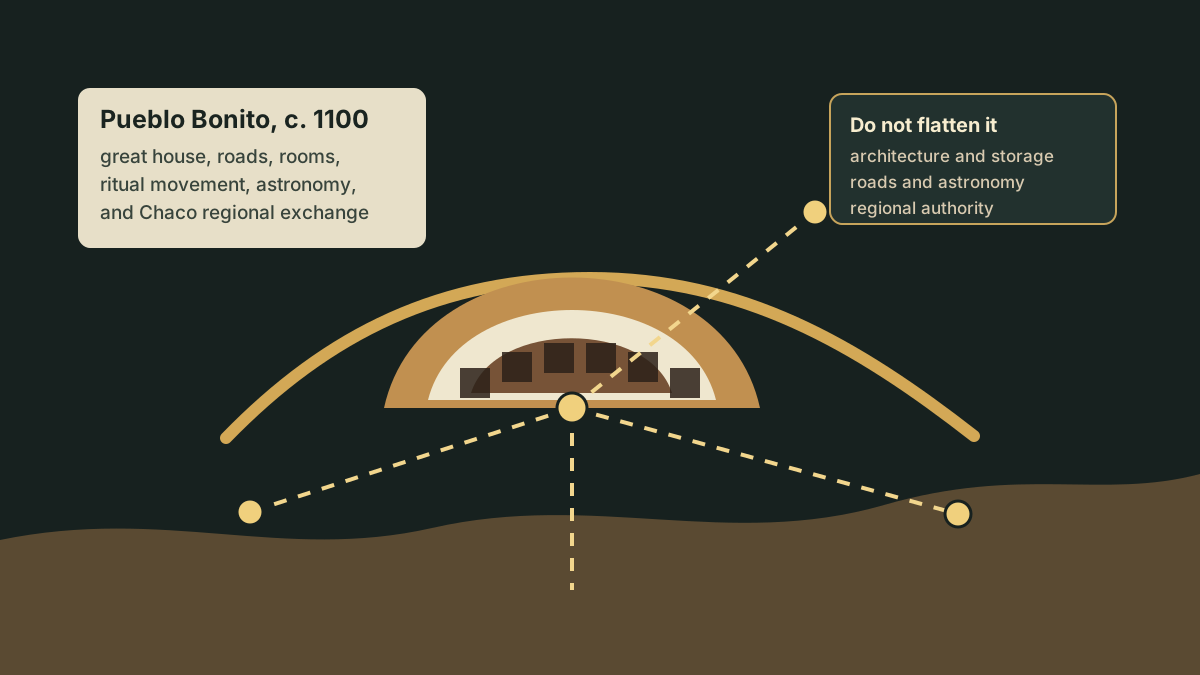
Archaeology now reveals patterns of travel and material movement, but no single cause explains Chaco’s rise. Environment, craft specialization, ceremonial practice, regional diplomacy, and sustained work by communities all combined in ways we reconstruct from a mix of written records made later, oral memory, and the material traces left behind. Pueblo Bonito is not just an impressive ruin; it is evidence of a regional system. The great house in Chaco Canyon contained hundreds of rooms, formal plazas, ritual spaces, storage areas, and architectural alignments that suggest coordinated labor and planning. Roads linked Chaco to distant communities, and materials such as timber, turquoise, shell, and macaws point to wide exchange networks.
The site challenges any assumption that complexity requires a city in the familiar Old World sense. Chaco was monumental, planned, and connected on its own terms.
The Turning Point
The flourishing of Pueblo Bonito around c. 1100 CE marks a shift from scattered local centers toward a focal place that linked many settlements. Builders and communities at Chaco made deliberate choices: to invest labor in large, planned masonry buildings; to create formal public and ritual spaces; and to lay out roads that connected the canyon to distant neighborhoods and resources. These were not neutral technical decisions. They redistributed visibility and access—who could enter great rooms or plazas, who participated in exchange networks, and who benefited from the movement of goods and ideas. The actors were the Ancestral Pueblo builders and the wider Chaco communities whose coordinated construction and maintenance created the landscape.
Ritual activity and exchange moved through the new architecture and roads, producing recurring gatherings that reinforced social bonds and claims to authority. At the same time, different communities experienced these changes differently: for some, Chaco’s buildings and routes opened opportunities for trade and alliance; for others, they marked new concentrations of power. The moment matters because it shows how built environments and collective choices reshaped region-wide relationships in ways still visible to both archaeologists and descendant communities. Around 1100, Pueblo Bonito stood near the height of Chacoan influence. The turning point was the concentration of ritual, storage, movement, and prestige in a built landscape that drew people and goods from far away.
Archaeologists debate whether Chaco was primarily a ceremonial center, political center, redistribution hub, pilgrimage landscape, or some combination. That debate is part of the page's value. Different evidence points in different directions: room patterns, roads, tree-ring dates, burials, pottery, and astronomical alignments all reveal parts of the system.
Consequences
In the near term, the consolidation of Chaco as a regional center reorganized patterns of movement, labor, and ritual across a broad swath of the Southwest. Roads and great houses funneled participation and exchange into Chaco Canyon, making it a focal point for shared ceremonies, material flows, and political interactions. Over the longer term, Pueblo Bonito’s architecture and the Chaco system entered scholarly and public debates about authority, community, and landscape. Archaeologists use its masonry, roadways, and artifact distributions to infer social organization; descendant communities remember and reinterpret these places through oral traditions and contemporary cultural practices; legal and diplomatic claims sometimes turn on how Chaco’s past is understood.
The result is a contested legacy: the site has been treated as a center of ritual authority, a hub of economic exchange, a networked regional polity, and a cultural touchstone in different narratives. Importantly, the flourishing of Pueblo Bonito also places the American Southwest more firmly on routes of Indigenous connectivity across the Americas, reminding readers that precontact networks linked distant peoples through shared practices of travel, ceremony, and exchange. The evidence we center—whether archaeological, oral, documentary, or legal—shapes which of these consequences we see most clearly. The consequences are measured in memory and method as much as political succession.
Chaco's influence declined after environmental stress, social change, and shifting regional patterns, but descendant Pueblo communities continue to connect the landscape to living history. For readers, Pueblo Bonito teaches how archaeology must be handled with humility. Stones, roads, and artifacts can show scale and planning, but interpretation should not erase Indigenous knowledge or turn sacred landscapes into puzzles detached from people.
Interpretation Notes
Interpretations of Pueblo Bonito Flourishes depend on whose evidence is centered: rulers and official records, affected communities, oral memory, archaeology, law, diplomacy, labor, and later public memory do not always tell the same story.
Why Keep Reading
Follow the next entries to see how Chaco’s influence spread and then changed: subsequent chapters trace the work of craftspeople who built and renovated great houses, the construction and purpose of the straight roads, and how seasonal gatherings sustained regional ties. You will also encounter the long afterlives of Chaco in law, memory, and modern stewardship—how later narratives and claims reinterpret authority and community. If you want to understand how places become centers of power without kings’ chronicles, these linked events deepen the picture. Read next into Indigenous Americas, Cahokia, Tenochtitlan, and archaeological methods. Pueblo Bonito is a strong bridge between material evidence and living cultural memory.
It also keeps architecture connected to people rather than treating buildings as isolated artifacts.
Reading Path
Follow the story without losing the thread
Before This
- Cahokia Risesc. 1050 CE
- Teotihuacan Reaches Its Urban Peakc. 450 CE
- Monte Alban Foundedc. 500 BCE
After This
Same Period
- Monte Alban Foundedc. 500 BCE
- Teotihuacan Reaches Its Urban Peakc. 450 CE
- Cahokia Risesc. 1050 CE
Wider Timeline
Mind Map
How to think about Pueblo Bonito Flourishes
Labor investment
Deliberate, sustained communal work to erect and repair multiroom masonry structures and roads
Map Layer
Where this event sits geographically
Gold pins mark the approximate locations of published event pages. This is a schematic locator map, not a historical border map.
Coordinates are approximate and are used to help readers orient themselves before opening a full event page.
References
Where to Check the Facts
- Smithsonian National Museum of the American Indian: Native Knowledge 360Indigenous-centered educational reference for Native history, sovereignty, community knowledge, and public interpretation.
- Smithsonian NMAI: Haudenosaunee Guide for EducatorsCommunity-consulted educational reference for Haudenosaunee culture, history, continuity, and interpretation.
- Yale History: Ned Blackhawk, The Rediscovery of AmericaIndigenous historian's synthesis for centering Native peoples in broader American historical interpretation.
- Indigenous ChicagoCommunity-partnered public-history project for place-based Native history, maps, memory, and continuity.
- Encyclopaedia Britannica: Pre-Columbian civilizationsReference for pre-Columbian civilizations in Mesoamerica and the Andes before European conquest.
- Official UNESCO World Heritage Centre: Cahokia Mounds State Historic SiteReference for Cahokia as a major pre-Columbian settlement north of Mexico.