At a Glance
The shape of the event
- Date
- c. 950 CE
- Place
- Tula
- Type
- Regional Power
Tula became a major Postclassic center associated with Toltec political power, warrior imagery, trade, and later Mesoamerican memory.
c. 950 CE; place the event in Tula before comparing causes or consequences.
The event connects archaeology, political memory, and later Aztec identity in one route.
Toltec elites / Central Mexican communities are the first names or groups to compare before widening the story.
Toltec-style prestige and stories shaped later claims to legitimacy in central Mexico.
Toltec-style prestige and stories shaped later claims to legitimacy in central Mexico.
The event connects archaeology, political memory, and later Aztec identity in one route.
Follow this thread to see how memory and material culture travel across centuries.
Background
By the Postclassic era, Central Mexico was a patchwork of competing towns, trade routes, and shifting alliances. Agricultural communities, craft specialists, and regional elites navigated droughts, market opportunities, and the constant negotiation of authority. In this landscape, symbolic displays mattered as much as harvests and tribute: warrior imagery, monumental architecture, and control of trade could all turn a settlement into a regional focus. Archaeology reveals networks of objects and construction; oral traditions and later chronicles record reputations and origin stories; legal and diplomatic records, when they exist, show how claims to power were framed. No single pressure explains why Tula rose in prestige: its prominence emerged where commercial connections, military claims, elite strategies, and collective memory converged and competed.
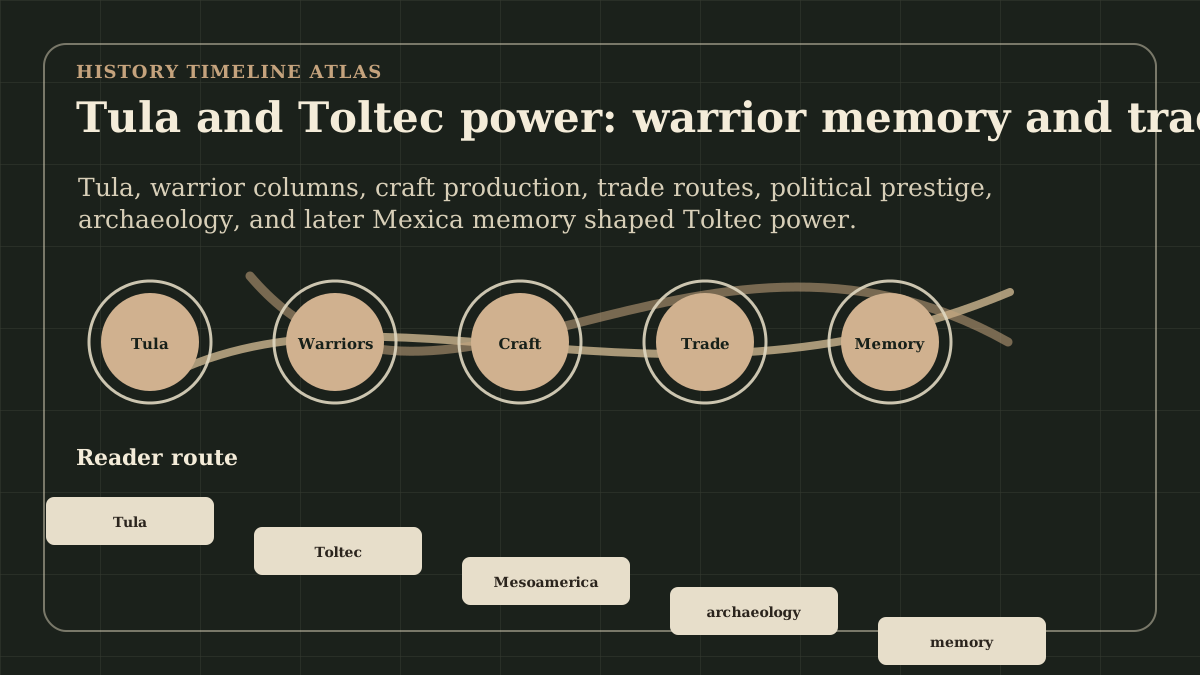
Understanding Tula requires looking at material remains alongside the ways communities—neighbors, rivals, and later states—remembered or rewrote its past. Tula and Toltec power are best read through archaeology and later memory together. The city had architecture, sculpture, warrior imagery, craft production, exchange connections, and political prestige. Later Mesoamerican traditions also made Toltec identity a powerful reference point. The challenge is to keep material evidence and later claims distinct without separating them completely. The famous warrior figures at Tula are not only dramatic objects. They point toward a political culture where military imagery, ritual authority, urban planning, and elite display reinforced one another. The page becomes richer when readers ask what kinds of power those forms made visible.
Trade and movement also matter. Central Mexico was not isolated. Goods, styles, religious ideas, and political language moved through networks that connected Tula to wider Mesoamerican worlds. Toltec power cannot be understood only by looking at a single city center.
The Turning Point
Around 950 CE something shifted in the balance of regional prominence: Tula consolidated a visible set of signs that others read as political power. Toltec elites — the men and women who controlled temples, workshops, and trade links — emphasized warrior imagery and public works that broadcast social rank. They engaged with Central Mexican communities through exchange, diplomacy, and possibly coercion; those communities responded by aligning, resisting, or adopting Toltec styles for their own purposes. The choices made by elites mattered: investments in monumental architecture and martial symbolism created a reputation that extended beyond the city's walls, turning local authority into a regional language of prestige.
At the same time ordinary people and neighboring towns shaped outcomes by providing labor, goods, and stories that reinforced or subverted elite claims. What changed was not only who held power in Tula but how that power was signaled and remembered — a set of practices that could be imitated, invoked, or contested across central Mexico. The turning point was the transformation of Tula into a major Postclassic center whose prestige outlived its political moment. Power became memory as later communities used Toltec references to explain legitimacy, civilization, ancestry, or elite status. That afterlife makes the event tricky. Later Mexica claims about Toltec inheritance reveal the prestige of Tula, but they are not a neutral photograph of the tenth century.
Readers need both lenses: what archaeology shows about Tula itself, and what later memory did with the Toltec name.
Consequences
In the near term, Tula’s prominence reorganized networks of trade and influence: merchants, artisans, and political actors reoriented attention toward Toltec markers of status. In communities across Central Mexico, Toltec-style objects and motifs circulated as signs of connection or aspiration. Over the long term, the story hardened into a form of political memory: Toltec prestige and origin narratives became tools later groups used to justify their own authority. This is especially visible in how later central Mexican actors referenced Toltec models when crafting claims of lineage or legitimacy. Archaeology, oral memory, and later historical accounts each preserve fragments of this cascade, but they do not always agree.
Some sources foreground elite proclamations and public monuments; others record how common people and neighboring towns experienced Toltec rule, through labor obligations, diplomacy, or legal contests. The result is a layered legacy in which material remains, legal practices, and collective storytelling all contributed to a Toltec afterlife, shaping how later polities—most notably those who later identified with Toltec heritage—framed their power. Toltec memory shaped later Mesoamerican political imagination. Claims of Toltec ancestry or style could make power seem older, refined, and legitimate. This does not mean every later story is literal evidence. It means memory itself became a political resource. The event also keeps Indigenous American history from being reduced to Aztec and Inca endpoints.
Tula gives the route a Postclassic chapter where urban power, warfare, trade, craft, and memory connect earlier cities to later imperial claims.
Interpretation Notes
Interpretations of Tula and Toltec Power Flourish depend on whose evidence is centered: rulers and official records, affected communities, oral memory, archaeology, law, diplomacy, labor, and later public memory do not always tell the same story.
Why Keep Reading
Follow this thread to see how memory and material culture travel across centuries. The story of Tula is not simply a local rise and fall; it becomes a reservoir of models for later leaders who sought legitimacy in central Mexico. Tracing Toltec-style prestige forward helps explain why later groups invoked Toltec names, images, and origin tales when they negotiated marriage, warfare, or the right to rule. If you want to understand how an archaeological horizon became a political resource, the next stops explore how later communities reused Toltec signs in diplomacy, law, and myth—and how modern archaeology and indigenous memories continue to untangle those layered claims. Read Tula between Teotihuacan, Chichen Itza, Tenochtitlan, and the Mexica route.
The path shows how cities, memory, and legitimacy moved across Mesoamerican time.
Reading Path
Follow the story without losing the thread
Before This
- Teotihuacan Reaches Its Urban Peakc. 450 CE
- Monte Alban Foundedc. 500 BCE
- Olmec Centers Flourishc. 1200 BCE
After This
Same Period
Wider Timeline
Mind Map
How to think about Tula and Toltec Power Flourish
Regional networks
Tula’s rise linked trade routes and exchange networks that spread Toltec goods and styles.
Map Layer
Where this event sits geographically
Gold pins mark the approximate locations of published event pages. This is a schematic locator map, not a historical border map.
Coordinates are approximate and are used to help readers orient themselves before opening a full event page.
References
Where to Check the Facts
- Encyclopaedia Britannica: Mesoamerican civilizationReference for Mesoamerican chronology, cities, religion, trade, and political systems.
- Encyclopaedia Britannica: AztecReference for Aztec political expansion, Tenochtitlan, and the Triple Alliance.
- The Metropolitan Museum of Art: TenochtitlanMuseum reference for Mexica urban power, Tenochtitlan, and pre-Columbian imperial context.
- Encyclopaedia Britannica: The Spanish Conquest of the AztecsReference for the Spanish conquest, alliances, Tenochtitlan siege, and Indigenous context.