How to Read the Year
Why does 1952 make Kenyan decolonization harder than a simple independence timeline?
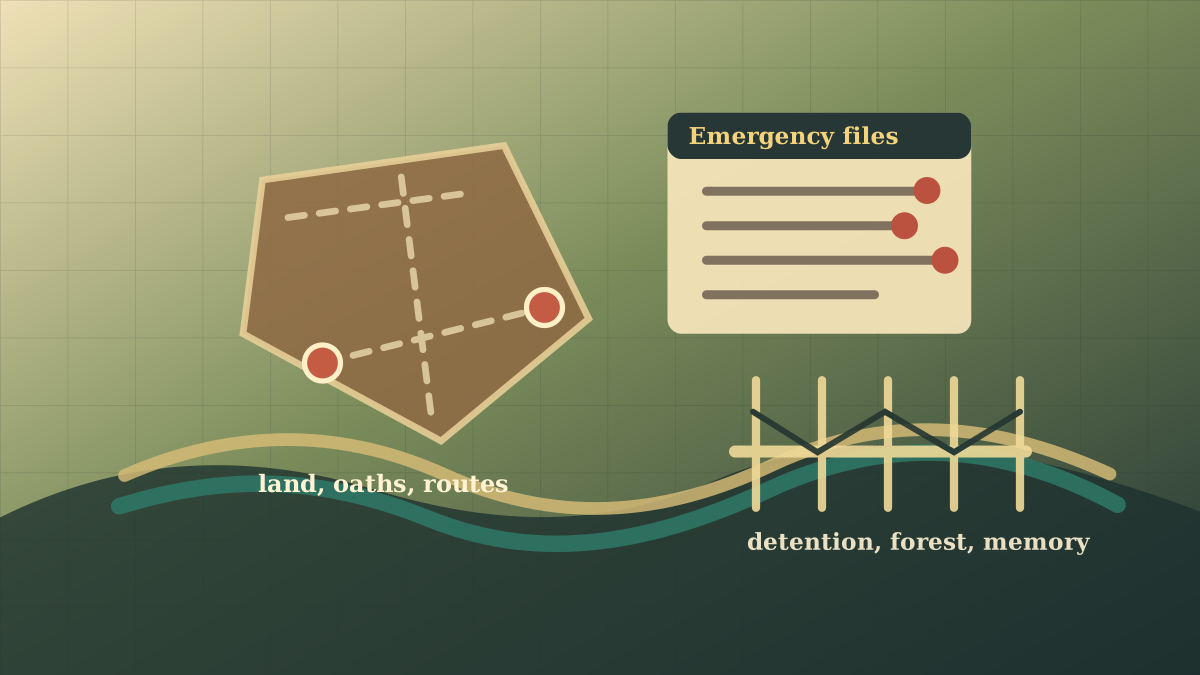
1952 is anchored by the beginning of the Mau Mau uprising and the declaration of emergency in Kenya. The year matters because it turns decolonization from a neat story of constitutional progress into a much harsher field of land conflict, settler power, colonial policing, rural resistance, loyalist violence, detention, and memory. Kenya did become independent later, but 1952 shows how costly and contested that path became.
The roots of the crisis reached back through land alienation, labor control, political exclusion, racial hierarchy, and the concentration of settler privilege in the so-called White Highlands. Kikuyu communities were especially central, but the conflict cannot be reduced to one community acting with one voice. Some people joined forest fighters or underground networks; others became loyalists, home guards, informants, detainees, or civilians caught between coercive forces.
British colonial authorities framed the emergency through law and order, but emergency rule expanded the state's capacity for detention, surveillance, punishment, forced movement, and collective control. The violence of the period included insurgent attacks, loyalist reprisals, colonial counterinsurgency, and severe pressure on rural society. Those layers make the page more honest than a simple rebel-versus-empire outline.
The memory of Mau Mau remained politically charged after independence. Veterans, detainees, loyalists, families, nationalist politicians, and later historians did not all tell the same story. Some memories celebrated sacrifice; others emphasized trauma, betrayal, land, gendered violence, or the silencing of people whose roles did not fit national heroic narratives.
For readers, 1952 is a gateway into the moral complexity of decolonization. It shows that independence movements were made through hope and violence, that colonial power did not disappear politely, and that postcolonial nations often inherited unresolved wounds from the struggle that created them.
Detention camps, forced villagization, oaths, forest warfare, home guards, courts, and family separation belong in the same history. Those details help explain why Mau Mau is not only a nationalist milestone, but also a study in how colonial emergency powers remade social trust inside villages and households. Land and memory stayed unsettled after independence.
A thicker reading also follows gender and family. Women carried food, information, labor burdens, punishment, and memory through the emergency, while children and elders experienced the conflict through removal, fear, schooling disruption, and household division. Decolonization becomes clearer when the home is treated as a political site, not merely a private refuge.
1952 CE in History gathers events that help readers move from a single date into wider historical patterns. A useful year entry does more than answer what happened; it shows why people keep using the year as a marker for change.
The connected events show how decisions, institutions, conflicts, ideas, and consequences crossed beyond one location or one person. The event links explain the immediate story, while the topic routes and timelines show what came before and after.
The year also helps organize broad questions. It gives readers a concise answer and a direct path into deeper event pages where causes, turning points, consequences, maps, and references are easier to inspect.
Read the date in three passes. First ask what happened inside the year itself. Then ask which older pressures made the event possible. Finally ask which later pages reuse the same vocabulary, institutions, borders, technologies, or memories. That sequence keeps the page from becoming a trivia answer.
Even when only one event is currently attached, the year still has a job: it gives students and curious visitors a stable chronological doorway into the atlas. The page makes the doorway useful by pointing to the event, the topic route, the timeline, the map, and the evidence trail that can turn a date into a broader explanation.
This year matters because it connects Mau Mau Uprising Begins to a wider sequence of causes and consequences. It gives the reader a chronological anchor while still pointing outward to people, places, institutions, and later effects. A thin year page would only name the event; a useful year page explains why this date is a handle for a larger route through history. 1952 matters because it forces decolonization history to include land, emergency rule, counterinsurgency, detention, rural division, and contested memory. It connects Kenyan nationalism to the wider end of empire while showing that the route to independence could fracture communities as well as challenge colonial rule.
Reader Lenses
Look for the pressures that made change possible.
Identify who acted and what options were available.
Follow what changed after the event.
Ask why this date still appears in historical summaries.
Track how land loss, labor pressure, settler privilege, and rural inequality fed political crisis.
Ask how colonial law created detention, policing, surveillance, and counterinsurgency powers.
Compare nationalist, veteran, loyalist, civilian, family, and later legal memories of the conflict.
How This Year Connects
1952 CE in History is anchored by Mau Mau Uprising Begins. Read those pages together and the year stops being a date label; it becomes a crossroads where immediate choices met older pressures and opened later consequences.
The setting matters as much as the date. The year moves through Kenya and belongs to Decolonization. That combination helps readers avoid treating the year as isolated; geography, institutions, conflict, belief, economy, and communication all shape what a date can mean.
The year also opens into people and themes. Figures such as Kikuyu fighters and Jomo Kenyatta appear because their choices made the year visible, while themes such as Mau Mau, Kenya, Decolonization, and Land explain why the consequences outlived the moment. A useful next step is usually an event page, then a topic route, then a timeline.
Evidence changes the way a date reads. A treaty, battle report, inscription, newspaper, census, court record, memoir, photograph, or archaeological trace does not answer the same question. Looking at source type helps separate what happened in the year from how later people remembered it.
A year page is most useful when it keeps two scales open at once. The first scale is immediate: what happened, where, and who was involved. The second scale is interpretive: why later readers use this date to organize a wider story. Holding both scales together makes the page a starting point for deeper reading rather than a dead-end answer.
The before-and-after frame matters too. A date rarely begins the forces it reveals. Earlier pressures made the linked event possible, while later pages show which effects were temporary, which became institutions, and which turned into memory. Reading the year this way helps students avoid the false impression that history changes only when the calendar flips.
Use this page as a junction. If the event feels too brief, follow the topic route for background; if the cause feels too abstract, open the event page for sequence; if the consequence feels larger than the date, move into the timeline. The value of a year page is that it lets readers change scale without losing their place.
Read 1952 beside the Mau Mau Uprising, Ghanaian independence, Bandung, Algeria, and wider African decolonization routes. That path compares constitutional negotiation, armed struggle, emergency rule, and global anti-colonial politics.
Then move to post-independence Kenya and memory pages where available. The comparison reveals why victory narratives often leave difficult local histories unresolved.
Events in This Year
- 1952 CEMau Mau Uprising Begins
The Mau Mau uprising began in British Kenya amid grievances over land dispossession, labor, political exclusion, emergency rule, and colonial violence.
Map Layer
1952 CE in History geography
Gold pins mark the approximate locations of published event pages. This is a schematic locator map, not a historical border map.
Coordinates are approximate and are used to help readers orient themselves before opening a full event page.
References
Where to Check the Facts
- Encyclopaedia Britannica: Mau Mau RebellionReference for the uprising, dates, causes, and consequences.
- Encyclopaedia Britannica: Mau MauReference for the movement and grievances under British colonial rule.