How to Read the Year
Why does the Zong massacre make Atlantic slavery impossible to treat as an abstraction?
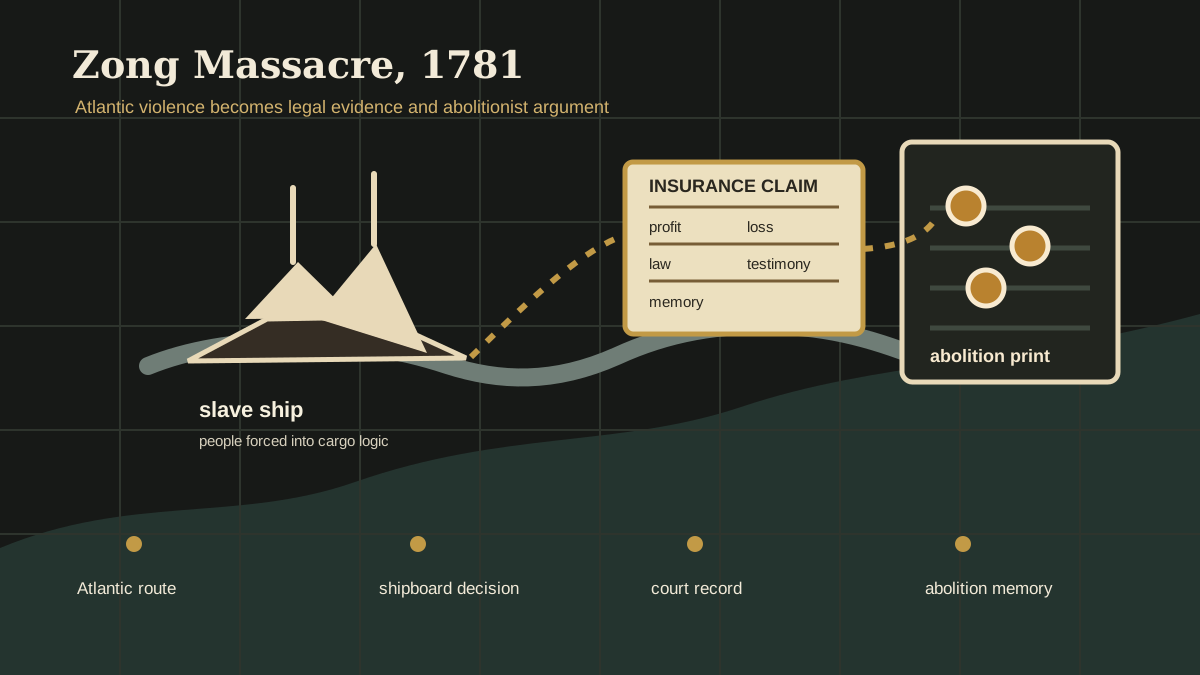
1781 is anchored by the Zong massacre, one of the starkest events in the history of the Atlantic slave trade. The year matters because it forces readers to see the trade through shipboard violence, insurance claims, law, public scandal, and the deliberate reduction of human beings to commercial loss.
The Zong was not an exception outside the system. It reveals the system's logic. Captives were carried as property within a maritime economy where routes, disease, water, crew decisions, mortality, insurance, and legal claims all shaped outcomes. The horror of the massacre lies partly in how commercial procedure tried to process killing as a financial question.
A strong reading keeps enslaved people visible even when the surviving legal record speaks through ship owners, insurers, judges, and abolitionists. The archive is unequal. It often preserves the language of those who profited or argued over liability, while the names and voices of the murdered Africans are largely absent.
The legal afterlife is part of the violence. Arguments over maritime insurance, navigation decisions, water shortage claims, and whether murder could be categorized as lost cargo show how law can hide moral reality inside technical language. That is why 1781 belongs in a history atlas as more than a crime: it is a case study in how institutions can make atrocity administratively legible.
The Atlantic setting also keeps scale visible. Liverpool merchants, Caribbean plantations, African captives, ship crews, insurers, judges, religious critics, and Black abolitionist voices were tied together by routes of profit and testimony. The massacre cannot be separated from the plantation economy that made human cargo profitable.
The public afterlife mattered. Abolitionists used the case to expose the moral violence of the trade, and the story became part of a wider campaign built from testimony, pamphlets, petitions, images, religious argument, and Black abolitionist writing. The Zong did not by itself end the trade, but it helped make the trade harder to defend in public.
Memory work matters because the archive remains incomplete. Later historians, artists, teachers, and communities have had to confront both the brutality of what happened and the silence around the murdered people as individuals. That silence is not a reason to make the story abstract. It is a reason to name the limits of the evidence while refusing the commercial language that tried to erase them.
1781 should therefore be read beside resistance, not only victimization. The Atlantic slavery route includes revolts, lawsuits, maroonage, Haiti, abolition, and testimony. The Zong page is a wound in that route, but it is also a source for understanding why evidence, memory, and public pressure became weapons against the trade.
1781 CE in History gathers events that help readers move from a single date into wider historical patterns. A useful year entry does more than answer what happened; it shows why people keep using the year as a marker for change.
The connected events show how decisions, institutions, conflicts, ideas, and consequences crossed beyond one location or one person. The event links explain the immediate story, while the topic routes and timelines show what came before and after.
The year also helps organize broad questions. It gives readers a concise answer and a direct path into deeper event pages where causes, turning points, consequences, maps, and references are easier to inspect.
Read the date in three passes. First ask what happened inside the year itself. Then ask which older pressures made the event possible. Finally ask which later pages reuse the same vocabulary, institutions, borders, technologies, or memories. That sequence keeps the page from becoming a trivia answer.
Even when only one event is currently attached, the year still has a job: it gives students and curious visitors a stable chronological doorway into the atlas. The page makes the doorway useful by pointing to the event, the topic route, the timeline, the map, and the evidence trail that can turn a date into a broader explanation.
This year matters because it connects Zong Massacre to a wider sequence of causes and consequences. It gives the reader a chronological anchor while still pointing outward to people, places, institutions, and later effects. A thin year page would only name the event; a useful year page explains why this date is a handle for a larger route through history. 1781 matters because it turns Atlantic slavery from a general topic into a concrete confrontation with shipboard violence, commerce, insurance, law, and memory. It helps readers ask how systems make atrocity administratively thinkable, and how abolitionists tried to reverse that logic by turning evidence into public outrage.
Reader Lenses
Look for the pressures that made change possible.
Identify who acted and what options were available.
Follow what changed after the event.
Ask why this date still appears in historical summaries.
Ask whose words survive when law and insurance records dominate the evidence.
Track how people were turned into cargo, risk, claims, and profit calculations.
Follow how a legal scandal became evidence for a wider moral and political campaign.
How This Year Connects
1781 CE in History is anchored by Zong Massacre. Read those pages together and the year stops being a date label; it becomes a crossroads where immediate choices met older pressures and opened later consequences.
The setting matters as much as the date. The year moves through Atlantic Ocean and belongs to Atlantic Slavery. That combination helps readers avoid treating the year as isolated; geography, institutions, conflict, belief, economy, and communication all shape what a date can mean.
The year also opens into people and themes. Figures such as Enslaved Africans aboard the Zong and British insurers appear because their choices made the year visible, while themes such as Slave Trade, Abolition, and Maritime Law explain why the consequences outlived the moment. A useful next step is usually an event page, then a topic route, then a timeline.
Evidence changes the way a date reads. A treaty, battle report, inscription, newspaper, census, court record, memoir, photograph, or archaeological trace does not answer the same question. Looking at source type helps separate what happened in the year from how later people remembered it.
A year page is most useful when it keeps two scales open at once. The first scale is immediate: what happened, where, and who was involved. The second scale is interpretive: why later readers use this date to organize a wider story. Holding both scales together makes the page a starting point for deeper reading rather than a dead-end answer.
The before-and-after frame matters too. A date rarely begins the forces it reveals. Earlier pressures made the linked event possible, while later pages show which effects were temporary, which became institutions, and which turned into memory. Reading the year this way helps students avoid the false impression that history changes only when the calendar flips.
Use this page as a junction. If the event feels too brief, follow the topic route for background; if the cause feels too abstract, open the event page for sequence; if the consequence feels larger than the date, move into the timeline. The value of a year page is that it lets readers change scale without losing their place.
Read 1781 beside Zong Massacre, then move to Britain Abolishes the Slave Trade and the Atlantic Slavery / Abolition timeline. That order shows violence, evidence, public campaigning, and law as a sequence.
Compare the Zong with Haiti, Amistad, Equiano, and Douglass pages where available. The comparison brings enslaved resistance and Black testimony back into a story often preserved by hostile records.
Events in This Year
- 1781Zong Massacre
The killing of enslaved Africans aboard the slave ship Zong became a notorious example of how commerce treated human life as insurable property.
Map Layer
1781 CE in History geography
Gold pins mark the approximate locations of published event pages. This is a schematic locator map, not a historical border map.
Coordinates are approximate and are used to help readers orient themselves before opening a full event page.
References
Where to Check the Facts
- Encyclopaedia Britannica: Transatlantic slave tradeReference for the forced migration system, Atlantic paths, and slavery's global consequences.
- Gilder Lehrman Institute: Olaudah Equiano, 1789Primary-source teaching reference for Equiano's abolitionist narrative and remembered Middle Passage experience.
- Official database: Slave VoyagesReference database for transatlantic slave trade paths, voyages, forced migration, and estimates.
- Library of Congress: U.S. History Primary Source TimelinePrimary-source timeline reference for Atlantic settlement, colonial expansion, reform, and later U.S. history paths.