How to Read the Year
Why did the 1529 siege of Vienna become a map lesson about Ottoman power and its limits?
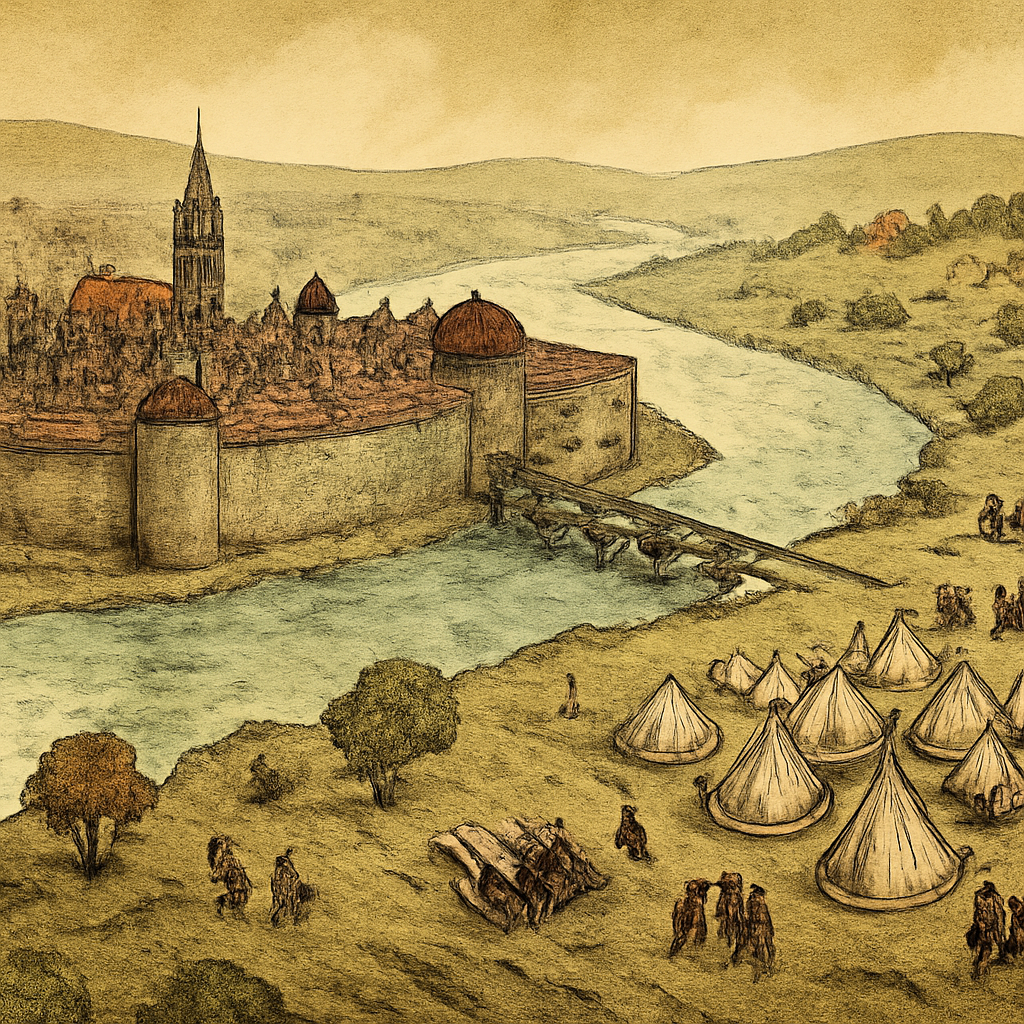
1529 CE is anchored by the Ottoman siege of Vienna. The year matters because it gives readers a concrete map of early modern power: Istanbul, Hungary, the Danube corridor, Habsburg lands, Central Europe, weather, supply, artillery, fortifications, and coalition politics all appear in one campaign.
The siege is stronger as strategy than as a simple clash-of-civilizations story. It was an episode inside Ottoman-Habsburg rivalry after the Battle of Mohacs and the crisis of Hungarian succession. Dynastic claims, frontier fortresses, logistics, local elites, imperial prestige, and seasonal campaigning mattered as much as religious language.
Vienna held, and that outcome made the city a symbol. But the failed siege did not mean Ottoman power was weak. It showed that even a formidable empire faced distance, weather, supply lines, terrain, artillery transport, defensive preparation, and the problem of turning battlefield momentum into lasting control deep in Central Europe.
The year also helps readers understand frontiers as zones, not lines. Communities around Hungary, Austria, the Balkans, and the Danube lived with raids, fortresses, taxation, negotiation, conversion pressures, military service, and shifting loyalties. The siege concentrated those realities into a famous date.
For the atlas, 1529 connects Ottoman expansion, Habsburg survival, gunpowder warfare, Central European politics, and later memories of Vienna. It is a better page when it asks what the campaign reveals about imperial reach, not only whether a city fell.
The campaign's weather and timing give readers a concrete way to understand limits. Heavy movement across long routes, difficult roads, river crossings, late-season rain, artillery transport, disease, animal losses, and supply pressure all shaped what an army could do. A siege is not only walls and cannons; it is the whole system that brings people, food, powder, tools, and orders to the walls.
The memory of Vienna also needs a careful lens. Later European stories sometimes turned 1529 into a civilizational symbol, but the campaign itself was entangled with dynastic rivalry, Hungarian politics, frontier communities, imperial prestige, and practical logistics. Reading the year carefully lets readers separate what happened in the campaign from the meanings later generations attached to it.
The defenders' world deserves attention too. City authorities, soldiers, laborers, refugees, messengers, and nearby communities experienced the siege as fear, repair work, food pressure, rumor, and waiting. Their perspective turns a strategic campaign into an urban crisis.
1529 CE in History gathers events that help readers move from a single date into wider historical patterns. A useful year entry does more than answer what happened; it shows why people keep using the year as a marker for change.
The connected events show how decisions, institutions, conflicts, ideas, and consequences crossed beyond one location or one person. The event links explain the immediate story, while the topic routes and timelines show what came before and after.
The year also helps organize broad questions. It gives readers a concise answer and a direct path into deeper event pages where causes, turning points, consequences, maps, and references are easier to inspect.
Read the date in three passes. First ask what happened inside the year itself. Then ask which older pressures made the event possible. Finally ask which later pages reuse the same vocabulary, institutions, borders, technologies, or memories. That sequence keeps the page from becoming a trivia answer.
Even when only one event is currently attached, the year still has a job: it gives students and curious visitors a stable chronological doorway into the atlas. The page makes the doorway useful by pointing to the event, the topic route, the timeline, the map, and the evidence trail that can turn a date into a broader explanation.
This year matters because it connects Siege of Vienna to a wider sequence of causes and consequences. It gives the reader a chronological anchor while still pointing outward to people, places, institutions, and later effects. A thin year page would only name the event; a useful year page explains why this date is a handle for a larger route through history. 1529 matters because it shows Ottoman expansion at the edge of logistical possibility. The year links Suleiman the Magnificent, Vienna, Habsburg-Ottoman rivalry, Hungary, fortifications, supply, weather, and frontier politics. It helps readers see that empires are defined by limits as well as victories.
Reader Lenses
Look for the pressures that made change possible.
Identify who acted and what options were available.
Follow what changed after the event.
Ask why this date still appears in historical summaries.
Follow supply, weather, artillery, roads, river routes, and seasonal limits.
Read Hungary and the Danube as a contested zone of forts, claims, raids, and negotiation.
Ask why Vienna became a symbol and what that symbolism can hide about strategy.
How This Year Connects
1529 CE in History is anchored by Siege of Vienna. Read those pages together and the year stops being a date label; it becomes a crossroads where immediate choices met older pressures and opened later consequences.
The setting matters as much as the date. The year moves through Vienna and belongs to Gunpowder Empires. That combination helps readers avoid treating the year as isolated; geography, institutions, conflict, belief, economy, and communication all shape what a date can mean.
The year also opens into people and themes. Figures such as Suleiman the Magnificent and Ferdinand I appear because their choices made the year visible, while themes such as Ottoman Empire, Habsburg Monarchy, Central Europe, and Warfare explain why the consequences outlived the moment. A useful next step is usually an event page, then a topic route, then a timeline.
Evidence changes the way a date reads. A treaty, battle report, inscription, newspaper, census, court record, memoir, photograph, or archaeological trace does not answer the same question. Looking at source type helps separate what happened in the year from how later people remembered it.
A year page is most useful when it keeps two scales open at once. The first scale is immediate: what happened, where, and who was involved. The second scale is interpretive: why later readers use this date to organize a wider story. Holding both scales together makes the page a starting point for deeper reading rather than a dead-end answer.
The before-and-after frame matters too. A date rarely begins the forces it reveals. Earlier pressures made the linked event possible, while later pages show which effects were temporary, which became institutions, and which turned into memory. Reading the year this way helps students avoid the false impression that history changes only when the calendar flips.
Use this page as a junction. If the event feels too brief, follow the topic route for background; if the cause feels too abstract, open the event page for sequence; if the consequence feels larger than the date, move into the timeline. The value of a year page is that it lets readers change scale without losing their place.
Read 1529 beside the Siege of Vienna, Ottoman conquest of Egypt, Chaldiran, and the Ottoman-Safavid / Middle East timeline. That route places the campaign inside a wider imperial system.
Then compare 1529 with 1453 and 1683 where available. The comparison asks why some sieges create capitals, some expose limits, and some become memory symbols long after the campaign ends.
Events in This Year
- 1529 CESiege of Vienna
The Ottoman siege of Vienna tested the empire's ability to project power deep into Central Europe and made the Habsburg-Ottoman frontier a durable strategic zone.
Map Layer
1529 CE in History geography
Gold pins mark the approximate locations of published event pages. This is a schematic locator map, not a historical border map.
Coordinates are approximate and are used to help readers orient themselves before opening a full event page.
References
Where to Check the Facts
- Encyclopaedia Britannica: Siege of Vienna 1529Reference for the 1529 Ottoman siege and its significance.
- Encyclopaedia Britannica: Ottoman EmpireReference for Ottoman imperial chronology, institutions, reform, war, and decline.
- Encyclopaedia Britannica: TanzimatReference for the nineteenth-century Ottoman reform program and its administrative setting.