Central Question
How did Achaemenid rulers make a vast multi-ethnic empire governable, and why did Persian imperial practice remain important after Alexander's conquest?
Start With These Dates
- c. 550 BCEAchaemenid Empire Founded
Cyrus the Great built the Achaemenid Empire from a Persian power base, creating an imperial system that connected Iran, Mesopotamia, Anatolia, and Central Asia.
- 539 BCECyrus Conquers Babylon
Cyrus the Great captured Babylon, absorbing the Neo-Babylonian kingdom into the expanding Achaemenid Empire.
- 490 BCEBattle of Marathon, 490 BCE: Summary, Sides, Winner, and Significance
The Battle of Marathon happened in 490 BCE on the plain of Marathon near Athens. An Athenian-led force, joined by Plataeans, defeated a Persian expedition sent after the Ionian Revolt and Athenian involvement in it. The battle did not end Persian power, but it gave Athens a powerful memory of citizen defense before later Persian War battles such as Thermopylae and Salamis.
- 480 BCEBattle of Thermopylae
A small Greek force led by Sparta delayed the Persian army at Thermopylae during the second Persian invasion of Greece.
- 331 BCEBattle of Gaugamela
Alexander the Great defeated Darius III at Gaugamela, breaking Persian imperial power and opening the way to Macedonian control over the empire.
- 221 BCEQin Unification of China
The Qin state defeated its rival kingdoms and declared a unified imperial order, creating institutions that later dynasties would adapt, contest, and remember.
- 27 BCEFounding of the Roman Empire
Octavian accepted the title Augustus and reorganized Roman power around a new imperial settlement that preserved republican language while concentrating authority.
Sources Used Here
- The Metropolitan Museum of Art - The Achaemenid Persian Empire (550-330 B.C.)
Used to verify the imperial scale, geography, and art-historical context of Achaemenid Persia.
- Encyclopaedia Britannica - Achaemenid Empire
Used to cross-check the Achaemenid dynasty, chronology, and imperial administration frame.
- World History Encyclopedia - Achaemenid Empire
Used to cross-check satrapies, autonomy, and the multi-region character of Persian rule.
Achaemenid Persia makes empire visible before Rome becomes the usual comparison point. The useful starting question is not simply how large the empire became. It is how Persian rulers made distance governable across Anatolia, Mesopotamia, Egypt, Iran, Central Asia, and the Indus frontier. The answer sits in royal roads, satrapies, tribute, local elites, royal inscriptions, court ritual, military force, and a political language that allowed many peoples to remain visibly different while still being placed inside one imperial order.
The route begins with Achaemenid state formation and Cyrus in Babylon because these pages show conquest turning into legitimacy. Cyrus did not only take cities; he had to explain rule in terms that local populations could recognize. Babylon is especially important because older Near Eastern traditions of kingship, temple patronage, and imperial rhetoric became part of a Persian story. That is why this hub pairs geography with memory. A capital or road is infrastructure, but a conquered city also becomes a stage where the ruler performs authority.
Greek resistance enters the hub because Achaemenid Persia is often remembered through Greek sources and Greek wars. Marathon and Thermopylae matter, but not because they make Persia a one-dimensional enemy. They show how the same empire could look different from different positions: to royal administrators it was a system of provinces and tribute; to some Greek poleis it was an external danger; to subject communities it could mean local autonomy under imperial oversight; to soldiers and couriers it was a network of routes, garrisons, and obligations.
Gaugamela changes the route from Persian rule to Persian afterlife. Alexander's victory broke Achaemenid dynastic power, but it did not erase Persian imperial practice. Macedonian and Seleucid rulers inherited cities, treasuries, administrators, roads, ceremonial habits, and a geography already made imperial by Persian rule. This is why the Seleucid Empire belongs in the hub. It reminds readers that conquest can destroy a dynasty while leaving behind tools that the conqueror still needs.
Sources have to stay visible in Achaemenid history. Much of the empire is seen through royal monuments, administrative tablets, Greek narrative, archaeology, and later memory. Each source type has a bias. Royal inscriptions want order and legitimacy; Greek authors often frame Persia through conflict; excavated objects and palace reliefs show court ideals more clearly than village life. The route asks readers to treat evidence as part of the story, not just a footnote.
The human layer does not disappear behind the size of the empire. Couriers, soldiers, scribes, builders, deported communities, temple personnel, merchants, local dynasts, and subject farmers all made imperial rule work or bearable. Some benefited from roads, security, and long-distance exchange; others carried tribute burdens, military obligations, and the risks of rebellion or punishment. The hub therefore treats administration as lived history. A satrapy was not only a district on a map. It was a space where royal commands met local languages, religious institutions, property claims, and everyday negotiation.
The comparison question is whether Persia's strength came from tolerance, hierarchy, road systems, elite cooperation, fear, wealth, or the prestige of kingship. The answer changes by region and moment. That complexity is precisely why Achaemenid Persia deserves its own civilization hub inside Ancient Empires. It stops the atlas from making antiquity a Mediterranean-only route and gives readers a model for thinking about imperial scale before Rome, Han China, and the Maurya Empire. It also prepares readers to ask why later rulers kept borrowing Persian solutions even when they claimed to have replaced Persian rule, especially in cities, roads, court performance, and provincial administration.
A deeper Achaemenid route begins by refusing to see Persia only through its Greek enemies. Greek sources are essential, but the empire also speaks through inscriptions, reliefs, administrative tablets, royal roads, palace complexes, conquered cities, local elites, tribute systems, and later reuse of Persian space. The hub helps readers hold those perspectives together. Persia was not merely the antagonist in Greek freedom stories; it was one of the largest and most sophisticated imperial systems of the ancient world.
Periodization starts with Cyrus and the formation of a multi-regional monarchy, then moves through Cambyses, Darius, Xerxes, later royal politics, and the Macedonian conquest. Cyrus matters because his conquests linked older Near Eastern traditions to a new imperial house. Darius matters because he made rule legible through inscriptions, administration, satrapies, roads, weights, coinage, and royal ideology. Xerxes and the Greek wars matter, but they do not crowd out the administrative and cultural systems that made the empire durable.
The political layer centers on the king and the satrapies. The king projected universal authority, but everyday rule depended on provincial governors, local elites, scribes, soldiers, tax collectors, temple communities, and negotiated customs. Satrapies did not erase older identities. They organized tribute, loyalty, military resources, and communication while allowing many local practices to continue. That balance is one reason the Achaemenid Empire could govern such a large and varied territory without turning every place into a copy of Persia.
The economic layer includes tribute, land, labor, canals, roads, ports, cities, temples, and precious metals. Royal power moved through material systems: messengers needed roads and stations, armies needed supplies, palaces needed labor and resources, and conquered regions had to be made fiscally visible. The empire's wealth was not simply stored treasure. It was a network of obligations and movement that connected Egypt, Babylonia, Anatolia, Iran, Central Asia, and the Indus frontier to a royal center.
The religious and cultural layer requires care because the empire ruled many religious communities. Royal inscriptions use the language of Ahura Mazda and kingly legitimacy, while conquered regions retained temples, priesthoods, rituals, and local sacred geographies. Babylon is important because Persian rule had to be explained in terms older Mesopotamian communities could understand. Egypt required different performances of kingship. The hub shows that imperial legitimacy often worked by speaking several political and religious languages at once.
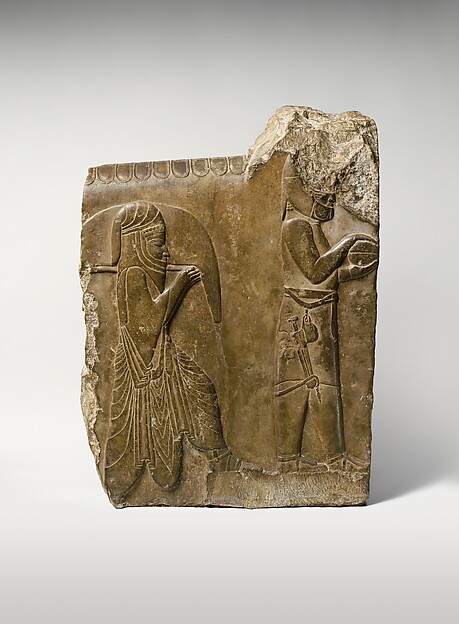
The visual and architectural layer is not decoration. Persepolis, Pasargadae, royal reliefs, tribute scenes, and inscriptions taught viewers how to imagine empire: many peoples approaching the king, order without sameness, and hierarchy without total cultural erasure. A generated or schematic visual on the site can make that logic clear by pointing readers toward procession, distance, scale, inscription, costume, and the way art turns diversity into a claim of royal harmony.
Geography is the core of the page. The empire stretched across Anatolia, the Levant, Mesopotamia, Egypt, Iran, Central Asia, and toward the Indus. That map explains why roads, satrapies, messengers, ports, and frontier garrisons mattered. It also explains why Greek encounters were only one edge of a much wider system. Marathon and Thermopylae become more meaningful when they are placed at the western edge of an empire whose center of gravity lay elsewhere.
The social layer includes subject peoples, deported or resettled communities, soldiers, artisans, scribes, merchants, temple personnel, court women, and local dynasts. Many people experienced Persian rule through taxes, service, legal documents, garrisons, religious patronage, or the protection and pressure of imperial order. Some local elites gained from imperial connection; others resisted or negotiated. The empire's size becomes readable only when those intermediate groups appear between the king and the map.
One more human detail matters: Achaemenid power often appeared locally through paperwork, labor obligations, garrison life, road stations, temple privileges, and royal ceremonies rather than through the king himself. That texture gives the page a lived scale and keeps imperial sophistication tied to the people who carried its costs.
The before-and-after frame is especially strong. Before the Achaemenids, Assyrian, Babylonian, Median, Elamite, Egyptian, and Anatolian traditions had already developed languages of conquest, kingship, tribute, and city rule. During Achaemenid rule, those traditions were reorganized into a larger imperial framework. After Alexander, many administrative geographies, cities, roads, and symbolic habits remained useful to Macedonian and Hellenistic rulers. This makes Persian history central to understanding what Alexander conquered and inherited.
The hub also corrects a common misconception: conquest did not automatically mean uniformity. Achaemenid power often worked by accepting difference while ranking it under the king. Local law, religion, language, and elite status could survive, but they now operated inside a hierarchy of tribute and loyalty. That is why the empire can look tolerant in some contexts and coercive in others. The richer interpretation is to ask which differences were useful to imperial rule and which became dangerous.
Comparison makes the route stronger. Compared with Rome, Achaemenid Persia began as a royal empire rather than a city-republic that became imperial. Compared with Han China, it governed a wider range of older urban and religious traditions through provincial accommodation rather than a single classical-bureaucratic ideal. Compared with Maurya, it raises parallel questions about public royal messages, distance, roads, and moral authority, but in a different religious and administrative language. These contrasts make the hub a world-history engine.
The better question is not whether Persia lost to Greece. It is how an empire made diversity governable, why its western wars became so famous in later memory, and how much of its structure remained useful after dynastic defeat. Gaugamela ended Achaemenid royal rule, but it did not make Persian imperial geography disappear. That is why the route continues into Alexander and the Seleucids instead of stopping at battlefield defeat.
The communication layer gives the hub another way to hold the empire together. Royal roads, mounted couriers, multilingual administration, seals, tablets, and local scribal habits turned royal command into repeatable practice. The empire was too large to rule by personal presence. It needed messages that could travel, be recorded, be trusted, and be interpreted by people who lived far from the king. This is where infrastructure becomes political thought.
Imperial vulnerability also belongs in the story. Size created prestige, but it also created succession risks, court rivalry, regional revolt, logistical strain, and dependence on loyal intermediaries. The Greek wars did not destroy the empire, but they reveal how frontier conflict, naval campaigning, supply, and memory could put pressure on royal claims. Later dynastic instability and Alexander's invasion show that an empire built to manage diversity still depended on political confidence at the top.
A final Achaemenid layer is evidence literacy. The Cyrus Cylinder, royal inscriptions, Greek histories, Persepolis tablets, archaeological remains, and later classical traditions do not all answer the same questions. Some show royal ideology, some administrative practice, some enemy memory, and some material setting. The hub teaches source awareness before turning evidence into a claim. That habit makes the page more useful than a simple narrative of kings and battles.
The hub finally gives readers a practical route: start with Cyrus, pause at Babylon to test local legitimacy, move to administrative scale, then read Marathon and Thermopylae as western memories, not total explanations. End with Gaugamela and the Seleucids to see defeat and inheritance together. That path turns Persian history from backdrop into architecture.
Achaemenid Persia needs a route that is not only royal magnificence. Tribute reliefs, inscriptions, roads, satrapies, royal capitals, court ritual, garrisons, envoys, local elites, and multilingual administration show a political system designed to make diversity governable. The empire's strength was not that every region became Persian in the same way; it was that difference could be organized into service, taxation, and loyalty.
The hub becomes clearer when readers follow movement. Royal roads, relay systems, river crossings, mountain passes, and Mediterranean ports turned imperial space into something rulers could imagine and administrators could manage. That infrastructure did not remove distance or revolt, but it made orders, people, goods, tribute, and intelligence move with a speed that shaped later imperial comparisons.
Greek sources need careful cross-reading. Herodotus and later Greek memory made Persia a major political opposite, but Persian royal inscriptions and material culture tell a different story about order, kingship, legitimacy, and the many lands under imperial rule. The page is strongest when it lets readers compare hostile memory, royal self-presentation, and museum evidence instead of letting one tradition speak for the whole empire.
Ask how provincial government, couriers, tribute, and royal roads made a vast empire more legible to the court without making local societies identical.
Read Cyrus in Babylon as a problem of political language: taking a city is not the same as persuading people that rule is lawful, protected, or inevitable.
Use Marathon and Thermopylae carefully. They reveal Greek anxieties and political identity, but they do not exhaust what the Persian Empire was.
Follow Gaugamela and the Seleucids to see which Persian imperial tools survived after the Achaemenid dynasty lost power.
Compare royal inscriptions, palace art, Greek narrative, and archaeology. Each source answers some questions while hiding others.
Read Greek narratives beside inscriptions, reliefs, tablets, roads, palaces, and conquered cities so Persia is not only an opponent.
Ask how provincial governors, local elites, tribute, soldiers, and scribes made rule possible across many languages and regions.
Use Persepolis, inscriptions, and tribute scenes to see how royal art made diversity look ordered under the king.
Follow Alexander and the Seleucids to ask what conquerors kept from Persian roads, cities, administration, and prestige.
Read tribute, language, roads, and satrapies as tools for governing difference rather than signs of uniformity.
Choose a Reading Path
Need the Short Version
Start with Achaemenid Empire Founded, Cyrus Conquers Babylon, and Gaugamela. Together they show rise, legitimacy, and dynastic defeat.
Start with c. 550 BCE: Achaemenid Empire FoundedWant the Greek Wars
Read Marathon and Thermopylae after the Persian foundation pages so the wars appear as border conflicts within a much larger imperial system.
Start with 539 BCE: Cyrus Conquers BabylonWant Administration
Use the hub's map, event route, and source list to track roads, capitals, satrapies, local elites, tribute, and royal communication.
Start with 490 BCE: Battle of Marathon, 490 BCE: Summary, Sides, Winner, and SignificanceWant Comparison
Compare Persia with Rome, Han China, and Maurya. Focus on distance, provincial rule, elite cooperation, and the symbolic work of kingship.
Start with 480 BCE: Battle of ThermopylaeFor the Persian Core
Start with Achaemenid Empire Founded, Cyrus in Babylon, and Darius-era administration to understand legitimacy and structure.
Start with 331 BCE: Battle of GaugamelaFor Greek War Memory
Read Marathon and Thermopylae after the Persian core, so Greek resistance appears as one edge of a larger empire.
Start with 221 BCE: Qin Unification of ChinaFor Imperial Geography
Use the map to connect Anatolia, Egypt, Mesopotamia, Iran, Central Asia, and the Indus frontier through roads and satrapies.
Start with 27 BCE: Founding of the Roman EmpireFor Afterlife
Continue into Gaugamela and the Seleucid Empire to see how conquest changed the dynasty without erasing the imperial landscape.
How the Story Builds
Achaemenid state formation gives the route its opening problem: how a regional power became a framework for multi-region rule.
Cyrus in Babylon shows conquest becoming a public story of protection, restoration, and lawful kingship rather than only battlefield success.
Marathon and Thermopylae show how the empire's western edge became a memory machine for Greek political identity and later historical writing.
Gaugamela breaks the Achaemenid ruling line, but the event also exposes how much imperial infrastructure a conqueror could inherit.
The Seleucid route asks what survived: cities, roads, tax habits, administrative geography, and the prestige of ruling older imperial lands.
Cyrus and Babylon show conquest becoming acceptable through older local languages of kingship, temple patronage, and political order.
Satrapies, tribute, roads, messengers, inscriptions, and court ritual made distance governable without making every region identical.
Marathon and Thermopylae belong on the route as famous western confrontations, not as the whole story of Persian power.
Gaugamela ends the Achaemenid ruling line while revealing how much imperial geography and administrative practice could be reused.
The Seleucid stage asks what survived when Macedonian rulers governed older Persian spaces through cities, roads, taxes, and prestige.
- Was Achaemenid strength mainly military, administrative, economic, symbolic, or geographic?
- How does the story change when Greek sources are read as one perspective rather than the whole empire?
- Why did conquered cities and local elites matter as much as armies in keeping Persian rule workable?
- Which Persian imperial practices were useful enough for later conquerors to keep?
- What does a map of Achaemenid Persia show that a simple date list hides?
- Which sources make Persia visible without filtering everything through Greek memory?
- How did the empire use local difference instead of simply trying to erase it?
- What did Alexander inherit from the Achaemenids besides land?
- Where does the map make Persian power easier to understand than a battle list does?
- How much of Achaemenid history changes when Persian royal evidence is read beside Greek narratives?
- What made roads, envoys, tribute, and local elites as important as battlefield victories?
Interactive Timeline
Follow Achaemenid Persia by sequence
Achaemenid Empire Founded
Cyrus the Great built the Achaemenid Empire from a Persian power base, creating an imperial system that connected Iran, Mesopotamia, Anatolia, and Central Asia.
Read the full event pageMap Layer
Achaemenid Persia geography
Gold pins mark the approximate locations of published event pages. This is a schematic locator map, not a historical border map.
Coordinates are approximate and are used to help readers orient themselves before opening a full event page.
Route Events
Events in This Topic
Achaemenid Empire Founded
Cyrus the Great built the Achaemenid Empire from a Persian power base, creating an imperial system that connected Iran, Mesopotamia, Anatolia, and Central Asia.
Cyrus Conquers Babylon
Cyrus the Great captured Babylon, absorbing the Neo-Babylonian kingdom into the expanding Achaemenid Empire.
Battle of Marathon, 490 BCE: Summary, Sides, Winner, and Significance
The Battle of Marathon happened in 490 BCE on the plain of Marathon near Athens. An Athenian-led force, joined by Plataeans, defeated a Persian expedition sent after the Ionian Revolt and Athenian involvement in it. The battle did not end Persian power, but it gave Athens a powerful memory of citizen defense before later Persian War battles such as Thermopylae and Salamis.
Battle of Thermopylae
A small Greek force led by Sparta delayed the Persian army at Thermopylae during the second Persian invasion of Greece.
Battle of Gaugamela
Alexander the Great defeated Darius III at Gaugamela, breaking Persian imperial power and opening the way to Macedonian control over the empire.
Mauryan Empire Founded
Chandragupta Maurya founded the Mauryan Empire, creating one of South Asia's largest early imperial states after the decline of older kingdoms.
Seleucid Empire Founded
Seleucus I Nicator established the Seleucid Empire from part of Alexander the Great's former realm, linking Greek-Macedonian rule with western Asian political geography.
Qin Unification of China
The Qin state defeated its rival kingdoms and declared a unified imperial order, creating institutions that later dynasties would adapt, contest, and remember.
Founding of the Roman Empire
Octavian accepted the title Augustus and reorganized Roman power around a new imperial settlement that preserved republican language while concentrating authority.
References
Where to Check the Facts
- The Metropolitan Museum of Art - The Achaemenid Persian Empire (550-330 B.C.)Used to verify the imperial scale, geography, and art-historical context of Achaemenid Persia.
- Encyclopaedia Britannica - Achaemenid EmpireUsed to cross-check the Achaemenid dynasty, chronology, and imperial administration frame.
- World History Encyclopedia - Achaemenid EmpireUsed to cross-check satrapies, autonomy, and the multi-region character of Persian rule.