Historical Role
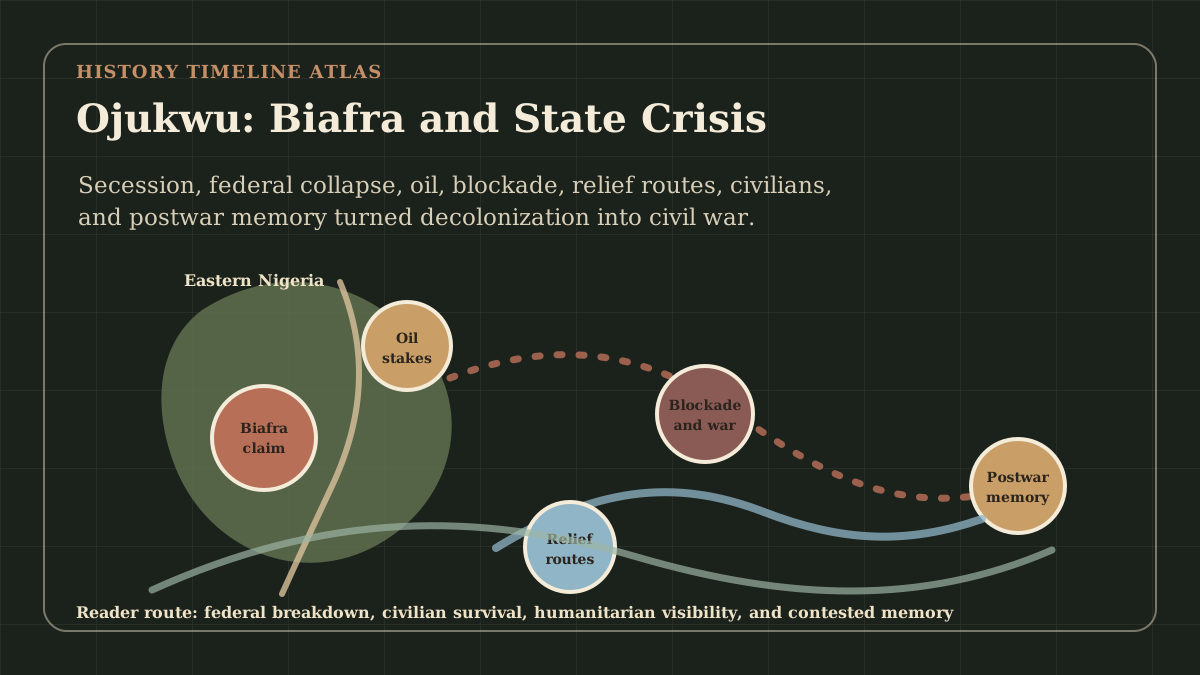
Chukwuemeka Odumegwu Ojukwu is best read through the crisis of postcolonial state formation. His role in Biafra did not emerge from a timeless ethnic conflict. It came after colonial boundaries, regional politics, military coups, anti-Igbo violence, oil politics, refugee movement, and the breakdown of trust in Nigeria's federal system made survival and sovereignty feel inseparable to many eastern Nigerians.
The declaration of Biafra in 1967 gives the biography its public turning point, but the deeper issue is legitimacy. Ojukwu claimed that the eastern region needed protection after massacres and failed federal bargains. The Nigerian federal government claimed that secession would destroy national unity and state authority. The tragedy is that sovereignty and human security became arguments with deadly consequences.
Biafra's war also became an international media event. Images of famine, children, airlifts, relief agencies, church networks, journalists, and Cold War diplomacy made the conflict visible far beyond West Africa. Ojukwu's leadership therefore belongs inside both Nigerian history and the history of humanitarian response. The war helped change how the world saw famine, civil war, relief corridors, and the politics of recognition.
A responsible biography must keep civilians at the center. Ojukwu's decisions mattered, but the war's meaning cannot be reduced to elite strategy. Displacement, blockade, hunger, bombing, local defense, propaganda, medical relief, family separation, and postwar reintegration shaped the lives of people who did not command armies.
The end of Biafra in 1970 did not end the historical questions. Nigeria survived as a state, but the memory of the war remains a live issue around federalism, oil, minority rights, military rule, reconciliation, and the phrase 'no victor, no vanquished.' Ojukwu's later political life and public memory show that defeated secession can remain powerful as an argument over justice.
For the atlas, Ojukwu connects decolonization to civil war rather than only to flag independence. The page asks what happens when a newly independent state inherits deep regional tensions, military institutions, resource stakes, and citizens who no longer trust that the center can protect them.
The prewar sequence matters because the crisis unfolded through institutions before it became a battlefield. Coups, countercoups, massacres of Igbo people in the north, refugee flows into the eastern region, failed federal negotiations, and the Aburi talks made compromise harder. Ojukwu's claim to speak for the east grew from that atmosphere of fear, but fear also narrowed the space for bargaining.
Oil and geography made Biafra more than a moral claim. Control of ports, roads, radio, airstrips, relief corridors, and the Niger Delta's resources shaped military strategy and international interest. Recognition by a few states, covert support, church networks, and relief flights show that a secessionist war could become a diplomatic and humanitarian arena even without broad international recognition.
Ojukwu's exile and return add another historical layer. Defeat did not erase his name from Nigerian politics, and later public memory kept asking whether Biafra represented survival, ambition, tragedy, or an unfinished federal question. That afterlife helps readers see why the biography remains sensitive: it is about a person, but also about the unresolved meaning of security inside a postcolonial state.
Chukwuemeka Odumegwu Ojukwu helps connect individual action with wider historical change in Nigeria and Biafra. The biography works best when it keeps the surrounding world visible: authority, conflict, belief, reform, or discovery moved through decisions made under pressure.
The related events show how roles such as Biafran leader, Military officer can be read through dates, places, institutions, and consequences rather than through reputation alone. The biography explains why this person matters, while the linked events explain what changed around them.
A richer reading starts with the limits around the person. Some figures acted through offices, armies, courts, laboratories, churches, parties, ships, trade networks, or protest movements; others became important because later communities turned their lives into symbols. The page therefore asks what this person could actually change, what was already moving before them, and which consequences later readers attached to the name.
Read the biography against absence as well. Many lives around Chukwuemeka Odumegwu Ojukwu are less visible in the record: opponents, collaborators, family members, workers, soldiers, students, subjects, victims, translators, scribes, or local communities. Keeping those surrounding people in view makes the page less like a name card and more like an entry point into historical systems.
Chukwuemeka Odumegwu Ojukwu also works as a navigation point. Open the linked event pages to see where the biography becomes chronology, then use the topic routes to test whether the same pattern appears beyond one life. That extra step matters because historical importance is rarely contained inside a single decision; it usually spreads through institutions, witnesses, opponents, imitators, and later arguments over memory.
Sources and Method
Source trail: the page uses Britannica's Biafra and Nigerian Civil War references for chronology, secession, war, famine, and postwar settlement.
Method note: the page separates Ojukwu's own claims from the wider history of Nigerian federalism, civilian suffering, international relief, and contested memory.
Evidence Notes
How Sensitive Claims Are Sourced
- 1
Secession as sovereignty and survival claim
Ojukwu is read through the collapse of federal trust, the declaration of Biafra, civil war, famine, humanitarian response, and Nigeria's postwar survival.
Why This Person Matters
Chukwuemeka Odumegwu Ojukwu matters because the connected events make a larger historical pattern easier to follow. The page links biography to consequences so readers can move from a life story into the wider atlas, compare the person with contemporaries, and understand why later memory kept returning to this figure. Ojukwu matters because his career turns decolonization into a harder question: what is a state for if many citizens believe it cannot protect them? His biography links Biafra, Nigerian federalism, civil war, famine, oil, humanitarian politics, and the long memory of postcolonial fracture.
When does a claim to protect a people become a claim to create a new state, and who pays the cost when that claim fails?
How to Read This Life
Chukwuemeka Odumegwu Ojukwu is easiest to understand when the biography is read beside Nigerian Civil War Begins. Those events show the historical setting in motion: dates, places, institutions, conflict, and consequences give the life a structure that a short biography alone cannot provide.
The surrounding route crosses Postcolonial Africa and locations such as Nigeria and Biafra. That matters because influence rarely stays inside one person. It moves through offices, armies, movements, laws, texts, speeches, institutions, and later memory.
A useful reading path starts with the role labels, then opens the event pages to see what changed, and finally compares this person with other actors facing similar pressures.
For readers who arrive on a biography first, this page is meant to become a doorway rather than a stop. Read one paragraph for the answer, then use the turning points, topic routes, and event links to test whether the person's reputation matches the wider evidence.
Read Ojukwu beside Nigerian Civil War Begins, then move to African decolonization and postcolonial state pages. That route shows why independence did not automatically solve federal power, resource control, and minority security.
Compare the Biafra page with Bangladesh, Eritrea, and other secession or independence routes when available. The comparison asks when self-determination, state unity, and civilian protection collide.
Read Chukwuemeka Odumegwu Ojukwu through the roles of Biafran leader, Military officer rather than as reputation alone.
Place the biography inside Nigeria and Biafra and the wider events linked below.
Ask which choices were personal and which were constrained by institutions or crisis.
Follow how later memory simplified, contested, or reused this person's role.
Track how regional power, military rule, violence, and oil made Nigerian unity contested.
Read famine images beside blockade, relief politics, recognition, and civilian suffering.
Ask why a defeated secession remains active in political memory.
Legacy, Limits, and Memory
A useful biography keeps scale in view. Chukwuemeka Odumegwu Ojukwu mattered because individual choices met a wider structure: institutions, enemies, allies, audiences, technologies, beliefs, and inherited conflicts. The related event pages help separate personal agency from conditions that no single person controlled.
Memory is part of the biography too. Later readers often simplify a figure into a hero, villain, founder, reformer, conqueror, prophet, scientist, or symbol. Those labels can be helpful, but they become misleading when they hide conflict, compromise, exclusion, uncertainty, or the experiences of people outside the main biography.
For the next step, compare this life with a topic route rather than stopping at the name. If the same pattern appears across several figures, the reader has found a historical structure; if this person breaks the pattern, the contrast is usually where the most interesting question begins.
A serious reading avoids treating Biafra as either pure heroism or pure error. Historical explanation has to hold fear, political ambition, state survival, oil, humanitarian catastrophe, and memory together.
Humanitarian imagery can simplify the war if it is detached from politics. The famine mattered, but it was produced inside military strategy, blockade, displacement, recognition struggles, and international response.
Turning Points to Read Next
Nigerian Civil War Begins
The Nigerian Civil War began after Biafra declared secession, turning ethnic violence, federal power, oil, famine, and postcolonial state survival into a brutal conflict.
Related Timeline
- 1967 CENigerian Civil War Begins
The Nigerian Civil War began after Biafra declared secession, turning ethnic violence, federal power, oil, famine, and postcolonial state survival into a brutal conflict.
References
Where to Check the Facts
- Encyclopaedia Britannica: BiafraReference for Biafra and Ojukwu's role in secession.
- Encyclopaedia Britannica: Nigerian Civil WarReference for the civil war.