How to Read the Year
Why does Karbala make 680 a year about legitimacy, sacrifice, and memory?
680 is anchored by the Battle of Karbala, where Husayn ibn Ali and a small group of supporters were killed by Umayyad forces. The date matters because it became far more than a military episode. It opened a powerful memory of sacrifice, injustice, leadership, mourning, and moral witness inside Islamic history.
The page does not flatten Karbala into a simple sectarian label. The conflict belonged to early Islamic politics after Muhammad's death, disputes over authority, dynastic rule, local allegiance, and the legitimacy of Yazid's caliphate. Later Shi'a devotional memory made the event central, but the historical setting was also political, regional, and communal.
A useful year page keeps reverence and historical method in balance. Karbala is sacred memory for many Muslims, especially Shi'a communities, and it is also studied through chronicles, ritual practice, sermons, poetry, processions, and later interpretation. The page explains without turning grief into spectacle.
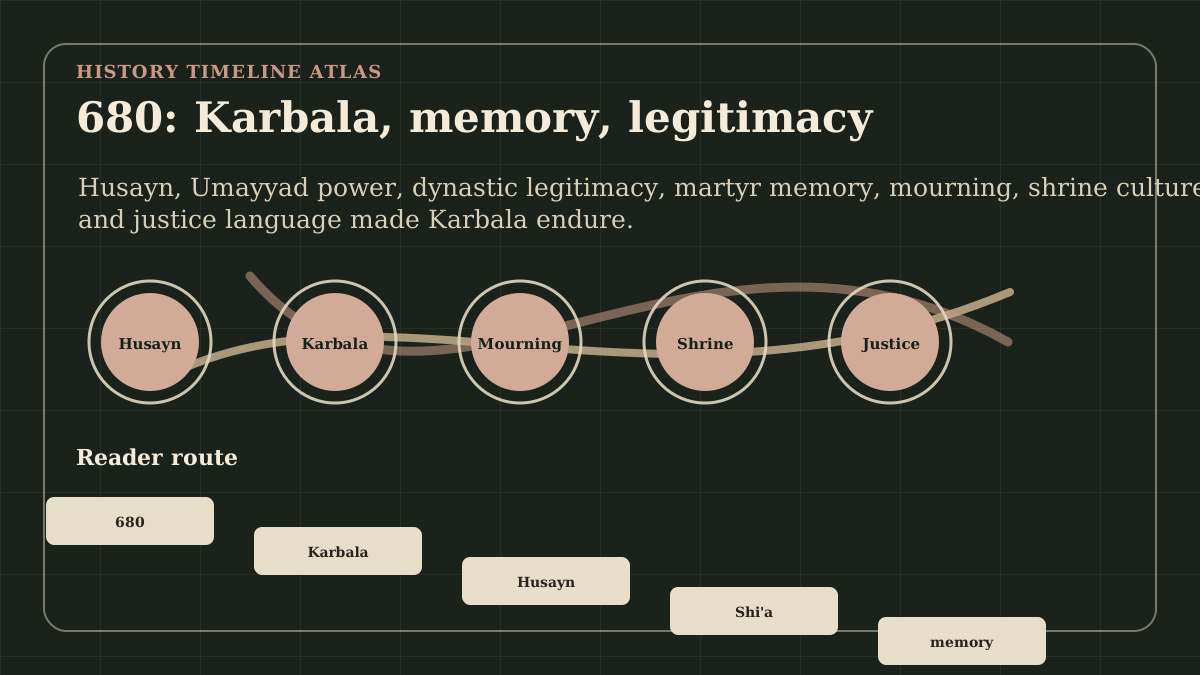
680 also points forward. Ashura, mourning rituals, political protest language, shrine culture, and debates over just leadership kept returning to Karbala across centuries. That afterlife is part of why one small battlefield became a world-historical date.
The human scale matters. Thirst, isolation, kinship, small numbers, refusal, and death gave the event its emotional power. Later memory returned to those details because they made political legitimacy feel like a moral test rather than an abstract succession dispute.
The year also helps readers compare memory across religions and empires. Like Nicaea, martyr cults, pilgrimage sites, and reform movements, Karbala shows how an event can become ritual time, public emotion, sacred geography, and political language.
A careful route moves from 680 to Umayyad rule, Abd al-Malik, Abbasid revolution, Shi'a history, and modern protest language. That route keeps devotion, politics, and historical evidence connected.
The year also teaches how small numbers can become large history. Karbala's power does not come from battlefield scale; it comes from kinship, refusal, injustice, grief, and repeated remembrance. That distinction helps readers understand why military size is not the same as historical weight.
680 CE in History gathers events that help readers move from a single date into wider historical patterns. A useful year entry does more than answer what happened; it shows why people keep using the year as a marker for change.
The connected events show how decisions, institutions, conflicts, ideas, and consequences crossed beyond one location or one person. The event links explain the immediate story, while the topic routes and timelines show what came before and after.
The year also helps organize broad questions. It gives readers a concise answer and a direct path into deeper event pages where causes, turning points, consequences, maps, and references are easier to inspect.
Read the date in three passes. First ask what happened inside the year itself. Then ask which older pressures made the event possible. Finally ask which later pages reuse the same vocabulary, institutions, borders, technologies, or memories. That sequence keeps the page from becoming a trivia answer.
Even when only one event is currently attached, the year still has a job: it gives students and curious visitors a stable chronological doorway into the atlas. The page makes the doorway useful by pointing to the event, the topic route, the timeline, the map, and the evidence trail that can turn a date into a broader explanation.
This year matters because it connects Battle of Karbala to a wider sequence of causes and consequences. It gives the reader a chronological anchor while still pointing outward to people, places, institutions, and later effects. A thin year page would only name the event; a useful year page explains why this date is a handle for a larger route through history. 680 matters because Karbala made early Islamic leadership conflict into one of the most enduring memories of moral sacrifice and contested legitimacy in world history. The year connects caliphal politics, Shi'a identity, ritual mourning, sacred geography, family memory, justice language, and the long use of martyr memory in religious and political life. It also teaches readers how historical events can become recurring moral calendars, shaping identity, protest, devotional practice, grief, public ethics, communal belonging, and historical imagination across centuries.
Reader Lenses
Look for the pressures that made change possible.
Identify who acted and what options were available.
Follow what changed after the event.
Ask why this date still appears in historical summaries.
Ask who could claim rightful leadership and why dynastic rule became so contested.
Read ritual memory with respect, treating grief, poetry, procession, and shrine practice as historical evidence.
Follow how Karbala became a language for justice, sacrifice, and resistance across later periods.
How This Year Connects
680 CE in History is anchored by Battle of Karbala. Read those pages together and the year stops being a date label; it becomes a crossroads where immediate choices met older pressures and opened later consequences.
The setting matters as much as the date. The year moves through Karbala and belongs to Early Islamic World. That combination helps readers avoid treating the year as isolated; geography, institutions, conflict, belief, economy, and communication all shape what a date can mean.
The year also opens into people and themes. Figures such as Husayn ibn Ali and Yazid I appear because their choices made the year visible, while themes such as Islamic World, Shi'a Islam, Umayyad Caliphate, and Memory explain why the consequences outlived the moment. A useful next step is usually an event page, then a topic route, then a timeline.
Evidence changes the way a date reads. A treaty, battle report, inscription, newspaper, census, court record, memoir, photograph, or archaeological trace does not answer the same question. Looking at source type helps separate what happened in the year from how later people remembered it.
A year page is most useful when it keeps two scales open at once. The first scale is immediate: what happened, where, and who was involved. The second scale is interpretive: why later readers use this date to organize a wider story. Holding both scales together makes the page a starting point for deeper reading rather than a dead-end answer.
The before-and-after frame matters too. A date rarely begins the forces it reveals. Earlier pressures made the linked event possible, while later pages show which effects were temporary, which became institutions, and which turned into memory. Reading the year this way helps students avoid the false impression that history changes only when the calendar flips.
Use this page as a junction. If the event feels too brief, follow the topic route for background; if the cause feels too abstract, open the event page for sequence; if the consequence feels larger than the date, move into the timeline. The value of a year page is that it lets readers change scale without losing their place.
Read 680 beside Abd al-Malik, the Dome of the Rock, Umayyad foundation, Abbasid Revolution, and early Islam routes. That sequence keeps succession, dynastic power, monumentality, and memory connected.
Then compare 680 with Nicaea, Ashoka's edicts, and later religious reform pages where available. The comparison asks how events become ritual, doctrine, public memory, and political language.
Events in This Year
- 680 CEBattle of Karbala
Husayn ibn Ali and a small group of supporters were killed by Umayyad forces at Karbala, creating one of the most powerful memories of sacrifice, legitimacy, and mourning in Islamic history.
Map Layer
680 CE in History geography
Gold pins mark the approximate locations of published event pages. This is a schematic locator map, not a historical border map.
Coordinates are approximate and are used to help readers orient themselves before opening a full event page.
References
Where to Check the Facts
- Encyclopaedia Britannica: Battle of KarbalaReference for the battle, participants, outcome, and Shi'a commemorative significance.
- Encyclopaedia Britannica: KarbalaReference for Karbala as a city and shrine landscape tied to the battle's memory.