How to Read the Year
Why does 2015 make small island climate diplomacy part of world history?
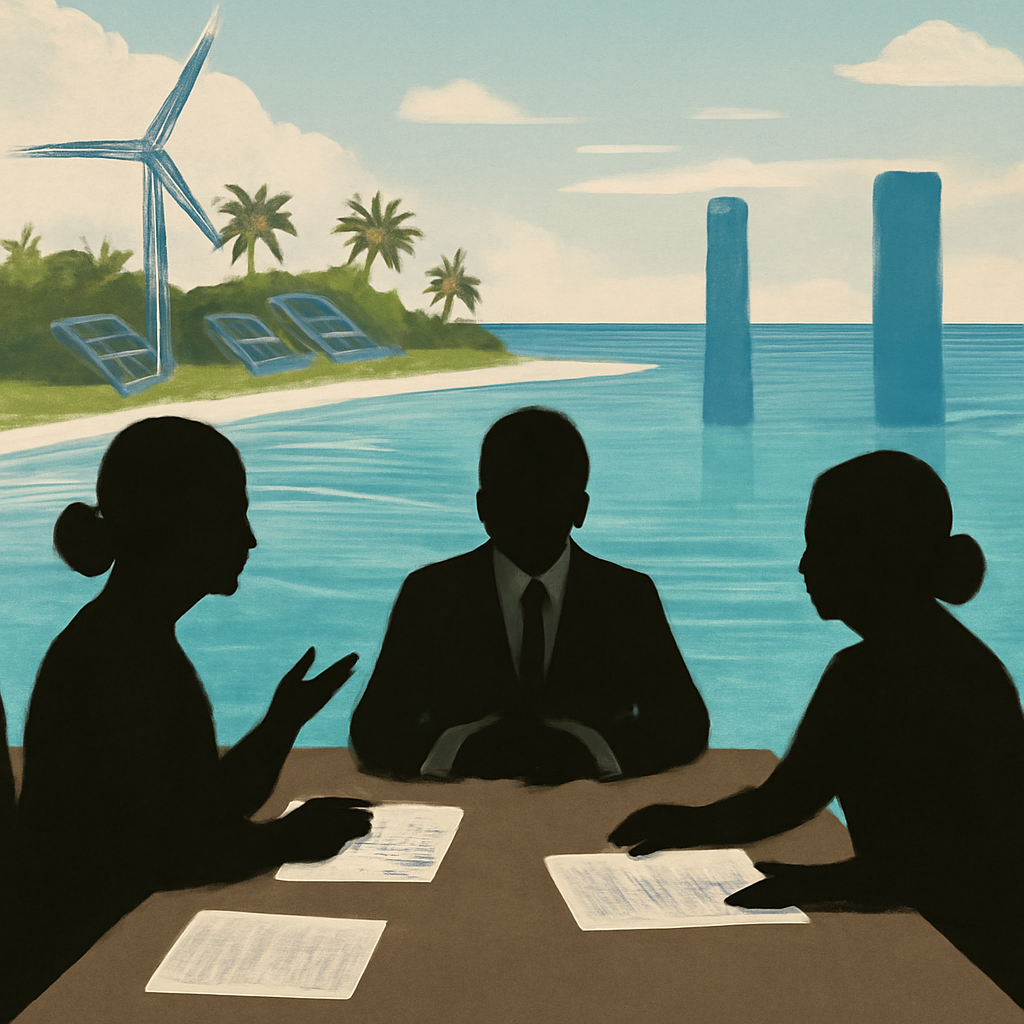
2015 is anchored by small island states pushing survival, sea-level risk, and the 1.5 degree goal into the Paris Agreement negotiations. The year matters because contemporary history is not only about superpowers and treaties signed by the largest states. Low-lying islands and coastal societies helped reshape the language of climate diplomacy.
A careful reading avoids portraying small island states only as victims. Vulnerability is real, but so is diplomatic agency. Island negotiators, Pacific voices, AOSIS advocacy, legal framing, adaptation demands, loss-and-damage language, and moral pressure all helped change what global climate talks had to acknowledge.
2015 also belongs to a longer Pacific route. Climate diplomacy sits beside colonial histories, nuclear testing, sovereignty struggles, migration debates, fisheries, ocean knowledge, and the politics of whose future counts. That makes the year a bridge between environmental science and decolonization history.
The Paris Agreement did not solve climate change. A useful year page distinguishes recognition from implementation. It asks what the agreement made visible, what remained underfunded or unenforced, and why island advocacy continues after 2015.
The most human reading keeps households, coasts, graves, schools, fisheries, freshwater, language, and future citizenship in view. Climate diplomacy becomes easier to understand when readers can see what abstract targets mean for places people are trying to keep livable.
The year also shows how evidence travels into politics. Temperature targets, sea-level projections, storm risk, adaptation plans, legal advocacy, coalition statements, and personal testimony entered the same negotiating space. That mix matters because climate diplomacy is not only technical modeling; it is also a fight over whose evidence counts as urgent and whose future gets negotiated seriously.
A Pacific-centered reading changes the scale of the story. For island communities, climate change is tied to colonial borders, military testing legacies, development dependency, migration law, ocean stewardship, intergenerational responsibility, and the right to remain. The Paris Agreement becomes one node in a longer sovereignty route rather than the final chapter.
The year also belongs to legal imagination. Questions about loss and damage, relocation, maritime zones, statehood, cultural heritage, and responsibility for emissions forced diplomats to think beyond ordinary treaty language. That makes 2015 useful for readers who want to understand why climate politics is also a history of law, territory, and survival.
2015 CE in History gathers events that help readers move from a single date into wider historical patterns. A useful year entry does more than answer what happened; it shows why people keep using the year as a marker for change.
The connected events show how decisions, institutions, conflicts, ideas, and consequences crossed beyond one location or one person. The event links explain the immediate story, while the topic routes and timelines show what came before and after.
The year also helps organize broad questions. It gives readers a concise answer and a direct path into deeper event pages where causes, turning points, consequences, maps, and references are easier to inspect.
Read the date in three passes. First ask what happened inside the year itself. Then ask which older pressures made the event possible. Finally ask which later pages reuse the same vocabulary, institutions, borders, technologies, or memories. That sequence keeps the page from becoming a trivia answer.
Even when only one event is currently attached, the year still has a job: it gives students and curious visitors a stable chronological doorway into the atlas. The page makes the doorway useful by pointing to the event, the topic route, the timeline, the map, and the evidence trail that can turn a date into a broader explanation.
This year matters because it connects Small Island States Push the Paris Agreement to a wider sequence of causes and consequences. It gives the reader a chronological anchor while still pointing outward to people, places, institutions, and later effects. A thin year page would only name the event; a useful year page explains why this date is a handle for a larger route through history. 2015 matters because it shows how climate history entered global diplomacy through people whose countries face existential risk. The year connects science, law, negotiation, Pacific sovereignty, adaptation finance, sea-level rise, migration, and the limits of international agreements. It gives readers a way to understand contemporary history without treating vulnerable states as passive scenery for larger powers.
Reader Lenses
Look for the pressures that made change possible.
Identify who acted and what options were available.
Follow what changed after the event.
Ask why this date still appears in historical summaries.
Watch how small island states used coalition, law, science, testimony, and moral pressure in negotiations.
Connect sea-level rise to land, culture, migration, freshwater, heritage, and political sovereignty.
Separate treaty recognition from emissions cuts, finance, adaptation, and loss-and-damage action.
How This Year Connects
2015 CE in History is anchored by Small Island States Push the Paris Agreement. Read those pages together and the year stops being a date label; it becomes a crossroads where immediate choices met older pressures and opened later consequences.
The setting matters as much as the date. The year moves through Paris and belongs to Contemporary Climate History. That combination helps readers avoid treating the year as isolated; geography, institutions, conflict, belief, economy, and communication all shape what a date can mean.
The year also opens into people and themes. Figures such as Pacific diplomats and Small island negotiators appear because their choices made the year visible, while themes such as Climate Change, Small Island States, and Pacific explain why the consequences outlived the moment. A useful next step is usually an event page, then a topic route, then a timeline.
Evidence changes the way a date reads. A treaty, battle report, inscription, newspaper, census, court record, memoir, photograph, or archaeological trace does not answer the same question. Looking at source type helps separate what happened in the year from how later people remembered it.
A year page is most useful when it keeps two scales open at once. The first scale is immediate: what happened, where, and who was involved. The second scale is interpretive: why later readers use this date to organize a wider story. Holding both scales together makes the page a starting point for deeper reading rather than a dead-end answer.
The before-and-after frame matters too. A date rarely begins the forces it reveals. Earlier pressures made the linked event possible, while later pages show which effects were temporary, which became institutions, and which turned into memory. Reading the year this way helps students avoid the false impression that history changes only when the calendar flips.
Use this page as a junction. If the event feels too brief, follow the topic route for background; if the cause feels too abstract, open the event page for sequence; if the consequence feels larger than the date, move into the timeline. The value of a year page is that it lets readers change scale without losing their place.
Read 2015 beside Pacific history, small island states, Moruroa, Bougainville, Waitangi, Hawaiian sovereignty, and globalization routes. That path keeps climate diplomacy tied to sovereignty and historical inequality.
Then compare 2015 with 1945, 1960, 1975, and 1997 where available. The comparison asks how international institutions, decolonization, sovereignty, and global agreements change who gets heard.
Events in This Year
- 2015Small Island States Push the Paris Agreement
Small island states, including Pacific voices, pushed climate diplomacy toward recognizing survival, sea-level rise, and the 1.5 degree goal.
Map Layer
2015 CE in History geography
Gold pins mark the approximate locations of published event pages. This is a schematic locator map, not a historical border map.
Coordinates are approximate and are used to help readers orient themselves before opening a full event page.
References
Where to Check the Facts
- Official NZ History: Nuclear testing in the PacificReference for French nuclear testing in the Pacific and regional protest.
- Moruroa Files: Investigation into French nuclear tests in the PacificInvestigative reference for declassified-record analysis and contested health-impact claims around French Polynesian nuclear testing.
- Bougainville Referendum Commission: PublicationsOfficial reference for Bougainville referendum materials, voter information, observers, and public communication.
- PaCSIA: Bougainville Referendum DialoguesCivil-society reference for Bougainville dialogue work, referendum education, and local peace-process participation.