How to Read the Year
Why does 1973 make energy, democracy, and Cold War pressure part of the same story?
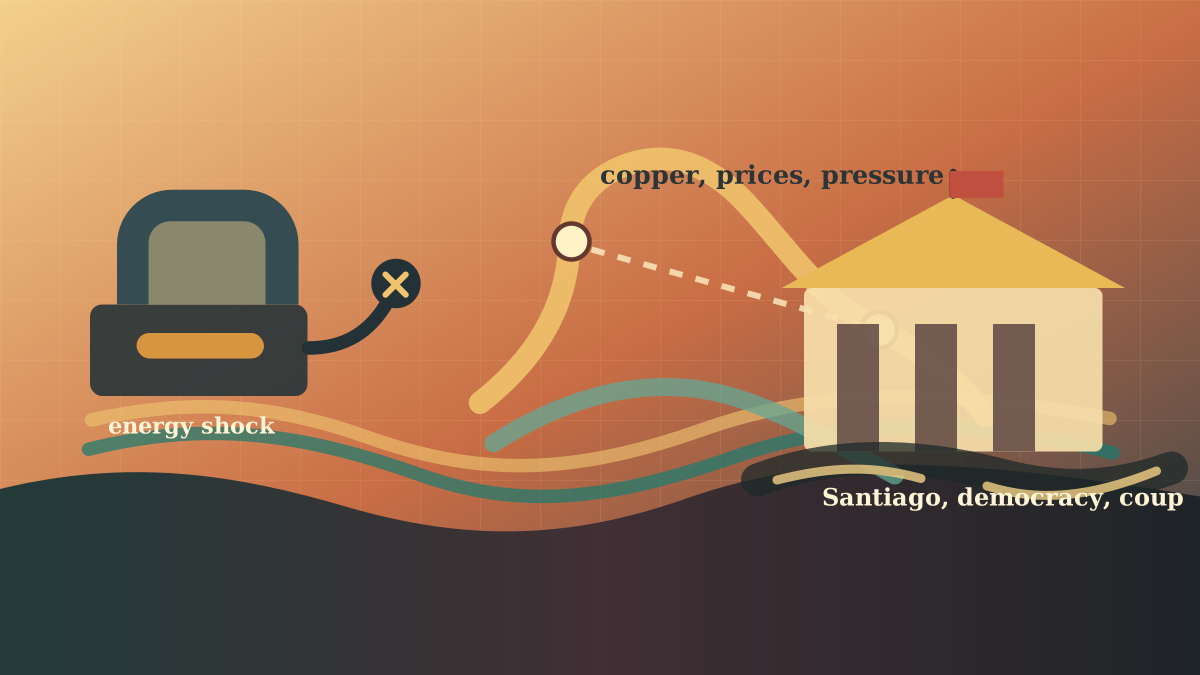
1973 is anchored by the Arab oil embargo and the Chilean coup, two events that make the year a study in interdependence and political crisis. The oil embargo showed that energy, Middle Eastern diplomacy, war, prices, industry, and everyday life were connected across borders. The coup in Chile showed how democratic conflict, military power, social polarization, and Cold War intervention could converge with devastating consequences.
The energy story begins with the Arab-Israeli conflict and the use of oil as political leverage. For many consumers, the crisis appeared as fuel lines, inflation, speed limits, and anxiety about scarcity. For producing states, it revealed new bargaining power inside a world economy that had treated cheap energy as background. The year made dependence visible.
Chile adds a different but related lesson about vulnerability. Salvador Allende's elected government faced economic crisis, domestic opposition, U.S. hostility, military plotting, and intense ideological conflict. The September coup brought Augusto Pinochet's dictatorship, repression, exile, torture, censorship, disappearances, and a long argument over memory and accountability.
Reading the two events together prevents a narrow year page. 1973 was not only oil prices and not only a coup. It showed that the postwar order was under stress: global capitalism, resource politics, democratic legitimacy, military institutions, and Cold War alignments could all shape ordinary lives far from diplomatic tables.
The best reading path moves from 1973 to Suez, Arab-Israeli conflict, oil politics, Chile, Allende, Cold War interventions, human rights, and globalization. The year becomes a doorway into how systems that seem separate can suddenly reveal their dependence on one another.
Ordinary effects stay close to structural explanation. Fuel lines, price shocks, workplace anxiety, military curfews, exile, censorship, and human-rights campaigns show how international systems enter daily life. That texture makes the year readable beyond policy language and gives readers reasons to move from economics into political memory.
The year is also useful for explaining why crisis can change habits. Energy conservation, inflation politics, strategic reserves, human-rights activism, exile communities, and debates over market reform all gained sharper public meaning after 1973. The aftershocks lasted because they changed what governments and households thought was secure.
1973 CE in History gathers events that help readers move from a single date into wider historical patterns. A useful year entry does more than answer what happened; it shows why people keep using the year as a marker for change.
The connected events show how decisions, institutions, conflicts, ideas, and consequences crossed beyond one location or one person. The event links explain the immediate story, while the topic routes and timelines show what came before and after.
The year also helps organize broad questions. It gives readers a concise answer and a direct path into deeper event pages where causes, turning points, consequences, maps, and references are easier to inspect.
Read the date in three passes. First ask what happened inside the year itself. Then ask which older pressures made the event possible. Finally ask which later pages reuse the same vocabulary, institutions, borders, technologies, or memories. That sequence keeps the page from becoming a trivia answer.
Even when only one event is currently attached, the year still has a job: it gives students and curious visitors a stable chronological doorway into the atlas. The page makes the doorway useful by pointing to the event, the topic route, the timeline, the map, and the evidence trail that can turn a date into a broader explanation.
This year matters because it connects Arab Oil Embargo, Chilean Coup to a wider sequence of causes and consequences. It gives the reader a chronological anchor while still pointing outward to people, places, institutions, and later effects. A thin year page would only name the event; a useful year page explains why this date is a handle for a larger route through history. 1973 matters because it exposed hidden dependencies. Energy systems were political, democracies were vulnerable to military and international pressure, and Cold War conflict reached into prices, workplaces, streets, and prisons. The year helps readers connect economics, diplomacy, human rights, and global interdependence without reducing the story to one crisis.
Reader Lenses
Look for the pressures that made change possible.
Identify who acted and what options were available.
Follow what changed after the event.
Ask why this date still appears in historical summaries.
Track how oil, war, prices, transport, industry, and consumer life became one political system.
Use Chile to ask how elected politics can be broken by polarization, military force, and foreign pressure.
Look for connections between distant decisions and ordinary effects: fuel lines, inflation, exile, and fear.
How This Year Connects
1973 CE in History is anchored by Arab Oil Embargo and Chilean Coup. Read those pages together and the year stops being a date label; it becomes a crossroads where immediate choices met older pressures and opened later consequences.
The setting matters as much as the date. The year moves through Middle East and global oil markets and Santiago and belongs to Cold War and Globalization and Cold War Latin America. That combination helps readers avoid treating the year as isolated; geography, institutions, conflict, belief, economy, and communication all shape what a date can mean.
The year also opens into people and themes. Figures such as OAPEC governments, Richard Nixon, Salvador Allende, and Augusto Pinochet appear because their choices made the year visible, while themes such as Oil, Middle East, Cold War, Global Economy, and Chile explain why the consequences outlived the moment. A useful next step is usually an event page, then a topic route, then a timeline.
Evidence changes the way a date reads. A treaty, battle report, inscription, newspaper, census, court record, memoir, photograph, or archaeological trace does not answer the same question. Looking at source type helps separate what happened in the year from how later people remembered it.
A year page is most useful when it keeps two scales open at once. The first scale is immediate: what happened, where, and who was involved. The second scale is interpretive: why later readers use this date to organize a wider story. Holding both scales together makes the page a starting point for deeper reading rather than a dead-end answer.
The before-and-after frame matters too. A date rarely begins the forces it reveals. Earlier pressures made the linked event possible, while later pages show which effects were temporary, which became institutions, and which turned into memory. Reading the year this way helps students avoid the false impression that history changes only when the calendar flips.
Use this page as a junction. If the event feels too brief, follow the topic route for background; if the cause feels too abstract, open the event page for sequence; if the consequence feels larger than the date, move into the timeline. The value of a year page is that it lets readers change scale without losing their place.
Read 1973 beside the Arab oil embargo, Chilean coup, Salvador Allende, Cold War, Middle East diplomacy, human-rights routes, and globalization explainers.
Then compare 1973 with 1956, 1962, 1968, 1979, and 1989. The comparison asks when international crisis changes daily life, state legitimacy, and public memory at once.
Events in This Year
- 1973-1974 CEArab Oil Embargo
Arab oil producers restricted shipments during the 1973 Arab-Israeli war, turning energy supply into a global diplomatic and economic crisis.
- 1973Chilean Coup
The Chilean military overthrew Salvador Allende's elected government and established a dictatorship under Augusto Pinochet.
Map Layer
1973 CE in History geography
Gold pins mark the approximate locations of published event pages. This is a schematic locator map, not a historical border map.
Coordinates are approximate and are used to help readers orient themselves before opening a full event page.
References
Where to Check the Facts
- Encyclopaedia Britannica: Iranian RevolutionReference for the 1978-1979 revolution and establishment of the Islamic Republic.
- Encyclopaedia Britannica: Arab oil embargoReference for the 1973-1974 embargo and its energy, diplomatic, and economic consequences.
- Official United Nations Peacekeeping: First United Nations Emergency ForceOfficial UN reference for the Suez Crisis, UNEF, ceasefire, withdrawal, and international peacekeeping frame.
- Official UN Peacemaker: Oslo AccordsOfficial UN-hosted reference for the 1993 Declaration of Principles and interim self-government framework.