How to Read the Year
Why did Britain's 1807 slave-trade ban matter, and why was it not enough?
1807 is anchored by Britain's Abolition of the Slave Trade Act. The year matters because a major imperial and commercial power legally banned its own participation in the transatlantic trade in enslaved Africans. That was a turning point, but the page must be precise: the act banned the trade, not slavery itself across the British Empire.
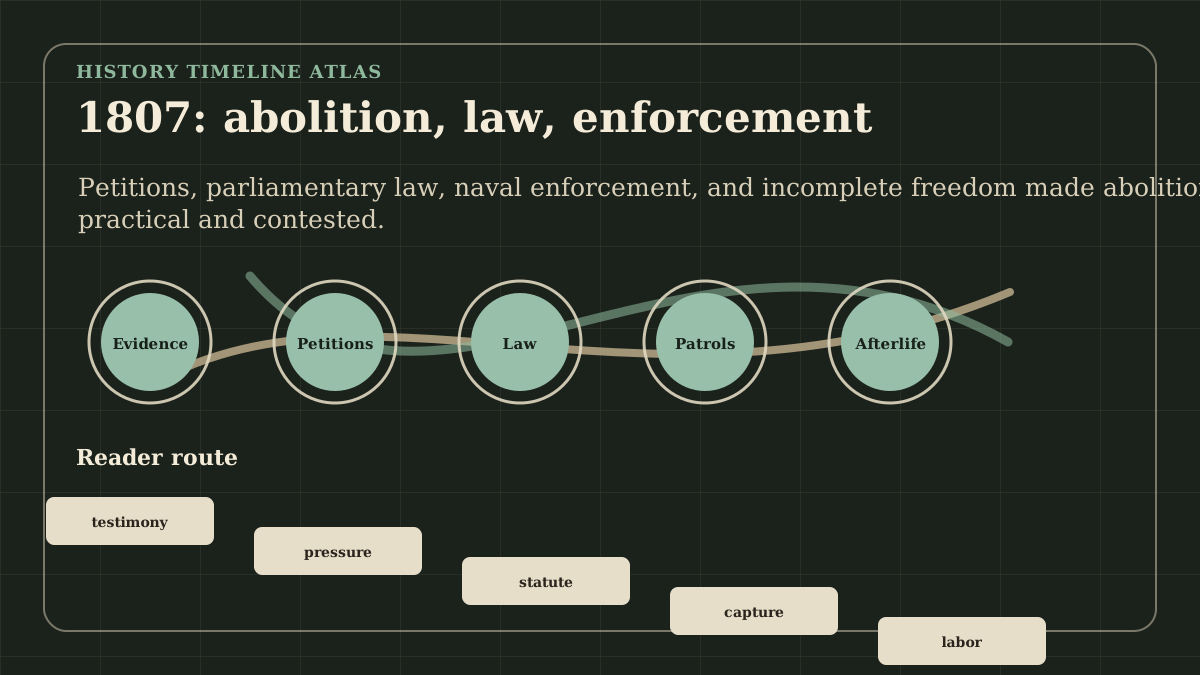
The campaign that led to 1807 was broad. Parliamentary advocates such as William Wilberforce mattered, but so did enslaved resistance, Black abolitionist testimony, Quaker organizing, women-led boycotts, petitions, religious reform, printed images, shipboard evidence, economic change, and revolutionary fear after Haiti. The law was the product of movement pressure, not a gift from one man.
The British state also had to enforce the ban across a maritime world. Patrols, courts, illegal trafficking, diplomatic treaties, prize claims, and loopholes made abolition a continuing struggle. Legal change altered the field, but it did not immediately dismantle the demand for plantation labor or the wealth built from slavery.
The gap between 1807 and 1833 is essential. Enslaved people in much of the British Empire remained enslaved after the trade ban. When slavery itself was abolished in 1833, compensation went to slaveholders, not to formerly enslaved people. That fact should shape how readers understand both moral victory and imperial injustice.
1807 therefore works as a lesson in partial reform. A law can be historically important and morally incomplete at the same time. The page leads readers from abolition of the trade to emancipation, apprenticeship, compensation, racial hierarchy, and the persistence of coerced labor after formal legal change.
Evidence made the campaign portable. Slave-ship diagrams, testimony, petitions, sermons, parliamentary speeches, newspaper arguments, and accounts by Black abolitionists helped distant readers imagine violence that merchants and planters wanted to keep profitable and abstract. The law emerged from a public battle over what could be known and what moral responsibility followed from that knowledge.
The maritime layer also matters for consequences. A trade ban required patrols, courts, treaties with other states, and decisions about what happened to people captured from illegal slaving ships. Enforcement could save lives and still operate inside imperial power. The next route moves from 1807 to 1833, Haiti, Brazil, Cuba, the United States, and post-emancipation labor systems, where legal freedom still had to confront labor coercion and racial hierarchy.
1807 CE in History gathers events that help readers move from a single date into wider historical patterns. A useful year entry does more than answer what happened; it shows why people keep using the year as a marker for change.
The connected events show how decisions, institutions, conflicts, ideas, and consequences crossed beyond one location or one person. The event links explain the immediate story, while the topic routes and timelines show what came before and after.
The year also helps organize broad questions. It gives readers a concise answer and a direct path into deeper event pages where causes, turning points, consequences, maps, and references are easier to inspect.
Read the date in three passes. First ask what happened inside the year itself. Then ask which older pressures made the event possible. Finally ask which later pages reuse the same vocabulary, institutions, borders, technologies, or memories. That sequence keeps the page from becoming a trivia answer.
Even when only one event is currently attached, the year still has a job: it gives students and curious visitors a stable chronological doorway into the atlas. The page makes the doorway useful by pointing to the event, the topic route, the timeline, the map, and the evidence trail that can turn a date into a broader explanation.
This year matters because it connects Britain Abolishes the Slave Trade to a wider sequence of causes and consequences. It gives the reader a chronological anchor while still pointing outward to people, places, institutions, and later effects. A thin year page would only name the event; a useful year page explains why this date is a handle for a larger route through history. 1807 matters because it shows how a movement can push an empire to change law while leaving deeper structures intact. The year connects Parliament, public evidence, Black testimony, slave resistance, humanitarian politics, naval enforcement, and the long distance between ending a trade and repairing the world that trade helped create.
Reader Lenses
Look for the pressures that made change possible.
Identify who acted and what options were available.
Follow what changed after the event.
Ask why this date still appears in historical summaries.
Separate abolition of the trade from abolition of slavery and from justice after emancipation.
Look for Black writers, enslaved resistance, Quakers, women organizers, petitioners, and parliamentary advocates together.
Ask what changed when law had to be enforced at sea, in courts, and across empire.
How This Year Connects
1807 CE in History is anchored by Britain Abolishes the Slave Trade. Read those pages together and the year stops being a date label; it becomes a crossroads where immediate choices met older pressures and opened later consequences.
The setting matters as much as the date. The year moves through London and belongs to Abolition. That combination helps readers avoid treating the year as isolated; geography, institutions, conflict, belief, economy, and communication all shape what a date can mean.
The year also opens into people and themes. Figures such as William Wilberforce and British abolitionists appear because their choices made the year visible, while themes such as Abolition, Slave Trade, and British Empire explain why the consequences outlived the moment. A useful next step is usually an event page, then a topic route, then a timeline.
Evidence changes the way a date reads. A treaty, battle report, inscription, newspaper, census, court record, memoir, photograph, or archaeological trace does not answer the same question. Looking at source type helps separate what happened in the year from how later people remembered it.
A year page is most useful when it keeps two scales open at once. The first scale is immediate: what happened, where, and who was involved. The second scale is interpretive: why later readers use this date to organize a wider story. Holding both scales together makes the page a starting point for deeper reading rather than a dead-end answer.
The before-and-after frame matters too. A date rarely begins the forces it reveals. Earlier pressures made the linked event possible, while later pages show which effects were temporary, which became institutions, and which turned into memory. Reading the year this way helps students avoid the false impression that history changes only when the calendar flips.
Use this page as a junction. If the event feels too brief, follow the topic route for background; if the cause feels too abstract, open the event page for sequence; if the consequence feels larger than the date, move into the timeline. The value of a year page is that it lets readers change scale without losing their place.
Read 1807 beside William Wilberforce, Zong, Britain Abolishes the Slave Trade, and the 1833 Slavery Abolition Act. That route keeps campaign, law, enforcement, and incomplete freedom connected.
Then compare with 1808 in the United States, Haiti, Brazil's Golden Law, and Cuba's abolition. The comparison shows why abolition moved through different legal and political timetables.
Events in This Year
- 1807Britain Abolishes the Slave Trade
Parliament abolished British participation in the transatlantic slave trade after decades of Black resistance, abolitionist campaigning, and political pressure.
Map Layer
1807 CE in History geography
Gold pins mark the approximate locations of published event pages. This is a schematic locator map, not a historical border map.
Coordinates are approximate and are used to help readers orient themselves before opening a full event page.
References
Where to Check the Facts
- The National Archives: British transatlantic slave trade recordsOfficial research guide reference for British slave-trade records and digitised legislation including the Abolition of the Slave Trade Act 1807 and Slavery Abolition Act 1833.
- Official archive: Emancipation ProclamationReference for the United States Emancipation Proclamation and its legal setting.
- Legifrance: French abolition decree, 1848Official legal reference for the 1848 abolition of slavery in French colonies and possessions.
- Gilder Lehrman Institute: Frederick Douglass, 1852Primary-source teaching reference for Douglass's abolitionist Fourth of July address.