How to Read the Year
Why does the Treaty of Kucuk Kaynarca make 1774 a turning point in Ottoman, Russian, and Black Sea history?
1774 is anchored by the Treaty of Kucuk Kaynarca, a diplomatic settlement after Ottoman defeat by Russia. The year matters because it changed more than a frontier. It opened new Russian influence around the Black Sea, altered the status of Crimea, shaped Orthodox protection claims, and exposed the pressure on Ottoman imperial power before the nineteenth-century reform age.
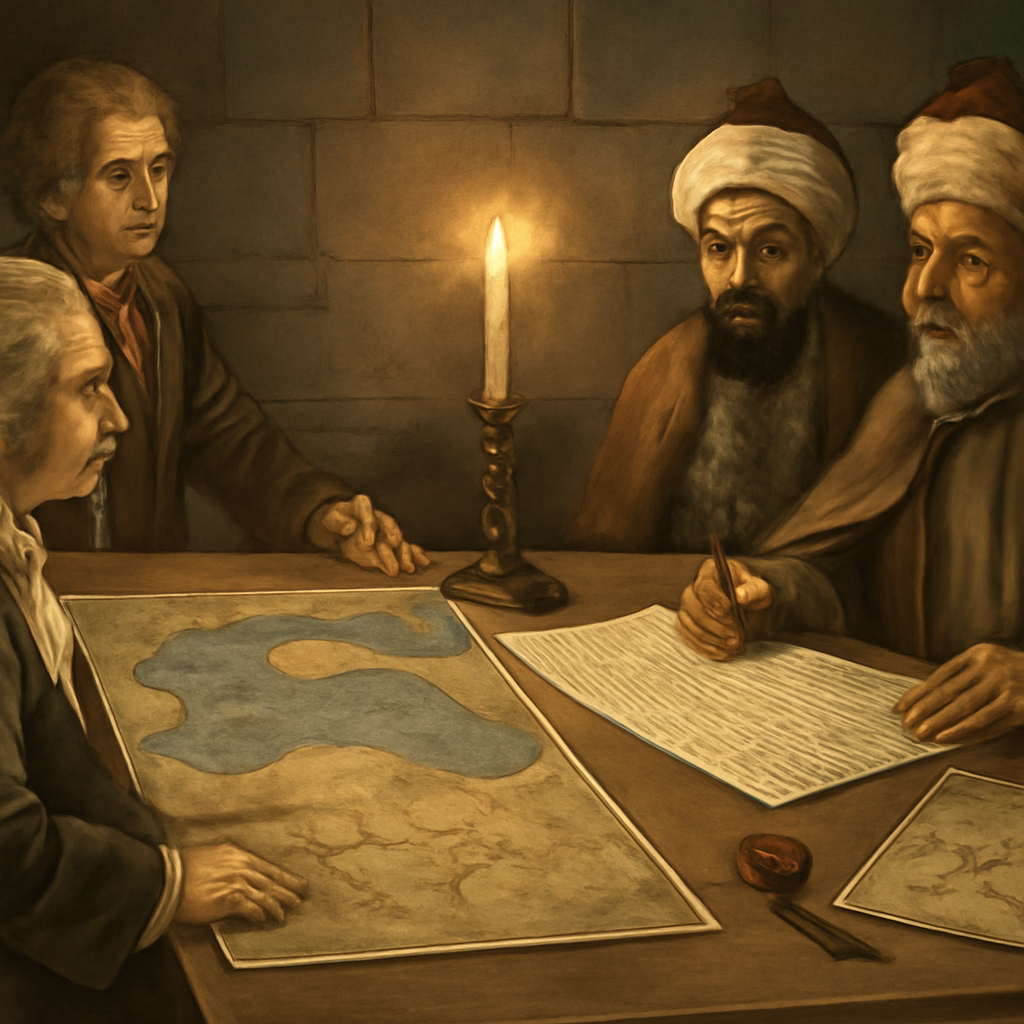
A treaty page can feel dry unless the map is kept visible. The Black Sea, Danube frontier, Crimea, Istanbul, St. Petersburg, ports, rivers, and steppe politics all mattered. Diplomats signed clauses, but the consequences moved through ships, merchants, soldiers, religious communities, tax systems, and imperial prestige.
The treaty also made language politically powerful. Protection, autonomy, religious rights, navigation, and recognition could be interpreted in different ways by different actors. That ambiguity gave later diplomacy room to expand claims, especially as Russia searched for influence and the Ottoman state tried to preserve sovereignty.
1774 therefore belongs to the longer history of reform and crisis. It did not cause every later Ottoman problem, but it made the balance of power harder to ignore. The year points toward Crimea, Balkan politics, Tanzimat reform, eastern question diplomacy, and the slow transformation of Black Sea geopolitics.
The year also teaches readers to look at treaty afterlives. A treaty is not only the day signatures are exchanged. It becomes part of later memoranda, diplomatic claims, naval planning, commercial privilege, religious argument, and public memory. Kucuk Kaynarca mattered because its clauses could be reused by states and communities facing new crises.
For a student, 1774 is a good antidote to battle-only history. No single battlefield scene explains the change. Military defeat, negotiation, legal wording, imperial prestige, Crimea's uncertain status, Orthodox protection claims, Black Sea access, and later reform debates all turned a signed settlement into a long historical problem.
That long problem also reached ordinary communities. Merchants, clergy, sailors, Crimean elites, frontier households, and imperial officials experienced treaty language through ports, taxes, protection claims, migration, and new uncertainty over who could guarantee order.
1774 CE in History gathers events that help readers move from a single date into wider historical patterns. A useful year entry does more than answer what happened; it shows why people keep using the year as a marker for change.
The connected events show how decisions, institutions, conflicts, ideas, and consequences crossed beyond one location or one person. The event links explain the immediate story, while the topic routes and timelines show what came before and after.
The year also helps organize broad questions. It gives readers a concise answer and a direct path into deeper event pages where causes, turning points, consequences, maps, and references are easier to inspect.
Read the date in three passes. First ask what happened inside the year itself. Then ask which older pressures made the event possible. Finally ask which later pages reuse the same vocabulary, institutions, borders, technologies, or memories. That sequence keeps the page from becoming a trivia answer.
Even when only one event is currently attached, the year still has a job: it gives students and curious visitors a stable chronological doorway into the atlas. The page makes the doorway useful by pointing to the event, the topic route, the timeline, the map, and the evidence trail that can turn a date into a broader explanation.
This year matters because it connects Treaty of Kucuk Kaynarca to a wider sequence of causes and consequences. It gives the reader a chronological anchor while still pointing outward to people, places, institutions, and later effects. A thin year page would only name the event; a useful year page explains why this date is a handle for a larger route through history. 1774 matters because it shows how diplomacy can move borders, prestige, trade, religious claims, and future intervention at the same time. The Treaty of Kucuk Kaynarca gives readers a concrete entry into Ottoman-Russian rivalry and the wider question of how empires survive when military defeat becomes written into international agreements. It is also a good year for learning how clauses become history: legal wording, Crimea, Black Sea navigation, Orthodox protection, and reform pressure kept producing consequences after the war ended.
Reader Lenses
Look for the pressures that made change possible.
Identify who acted and what options were available.
Follow what changed after the event.
Ask why this date still appears in historical summaries.
Look for clauses about autonomy, protection, navigation, recognition, and how later powers interpreted them.
Use geography to connect Crimea, ports, rivers, diplomacy, commerce, and military pressure.
Ask how a defeated empire preserves authority when rival powers gain legal and strategic openings.
How This Year Connects
1774 CE in History is anchored by Treaty of Kucuk Kaynarca. Read those pages together and the year stops being a date label; it becomes a crossroads where immediate choices met older pressures and opened later consequences.
The setting matters as much as the date. The year moves through Kucuk Kaynarca and belongs to Eighteenth-Century Empires. That combination helps readers avoid treating the year as isolated; geography, institutions, conflict, belief, economy, and communication all shape what a date can mean.
The year also opens into people and themes. Figures such as Catherine the Great and Ottoman negotiators appear because their choices made the year visible, while themes such as Ottoman Empire, Russia, Black Sea, and Diplomacy explain why the consequences outlived the moment. A useful next step is usually an event page, then a topic route, then a timeline.
Evidence changes the way a date reads. A treaty, battle report, inscription, newspaper, census, court record, memoir, photograph, or archaeological trace does not answer the same question. Looking at source type helps separate what happened in the year from how later people remembered it.
A year page is most useful when it keeps two scales open at once. The first scale is immediate: what happened, where, and who was involved. The second scale is interpretive: why later readers use this date to organize a wider story. Holding both scales together makes the page a starting point for deeper reading rather than a dead-end answer.
The before-and-after frame matters too. A date rarely begins the forces it reveals. Earlier pressures made the linked event possible, while later pages show which effects were temporary, which became institutions, and which turned into memory. Reading the year this way helps students avoid the false impression that history changes only when the calendar flips.
Use this page as a junction. If the event feels too brief, follow the topic route for background; if the cause feels too abstract, open the event page for sequence; if the consequence feels larger than the date, move into the timeline. The value of a year page is that it lets readers change scale without losing their place.
Read 1774 beside Ottoman, Russian, Black Sea, and Tanzimat routes. The path moves from treaty terms into reform, sovereignty, imperial competition, and the eastern question.
Then compare 1774 with Westphalia, Zuhab, Versailles, and Waitangi where available. Each treaty shows how written clauses can create new arguments rather than simply ending conflict.
Events in This Year
- 1774 CETreaty of Kucuk Kaynarca
The Treaty of Kucuk Kaynarca ended a Russo-Ottoman war and gave Russia new leverage around the Black Sea, Crimea, and claims involving Orthodox Christians.
Map Layer
1774 CE in History geography
Gold pins mark the approximate locations of published event pages. This is a schematic locator map, not a historical border map.
Coordinates are approximate and are used to help readers orient themselves before opening a full event page.
References
Where to Check the Facts
- Encyclopaedia Britannica: Treaty of Kucuk KaynarcaReference for the 1774 treaty and its Russo-Ottoman consequences.
- Encyclopaedia Britannica: Ottoman EmpireReference for Ottoman imperial chronology, institutions, reform, war, and decline.
- Encyclopaedia Britannica: TanzimatReference for the nineteenth-century Ottoman reform program and its administrative setting.