Historical Role
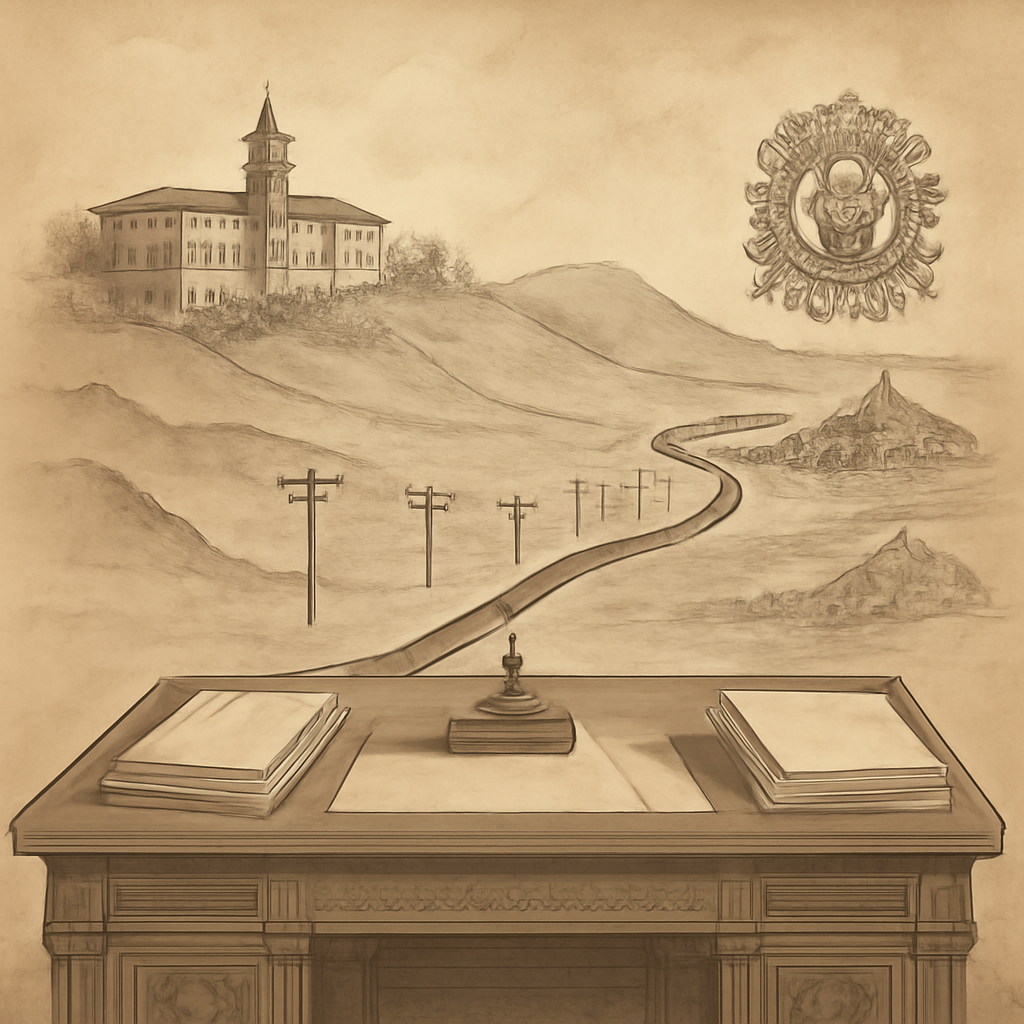
Abdulhamid II is best read as a ruler trying to hold together a pressured empire through centralization, surveillance, infrastructure, and legitimacy language. His reign followed the Tanzimat reform age, but it did not simply reject reform. It redirected reform toward palace control, imperial bureaucracy, railways, schools, telegraph lines, censorship, and pan-Islamic claims that could speak beyond the empire's shrinking territory.
The Young Turk Revolution gives the biography its constitutional hinge. Abdulhamid suspended constitutional politics, ruled through a highly centralized court, and watched nationalist, military, bureaucratic, and intellectual opposition gather force. When the constitution was restored in 1908, the event exposed a deeper Ottoman question: could an empire under external pressure survive through autocracy, or did survival require shared constitutional authority?
The crucial reading keeps modernization and coercion together. Railways, telegraphy, schools, and administrative reach could make government more capable, but they also helped surveillance, censorship, and tighter control. Abdulhamid's rule shows that modernization did not automatically mean liberalization.
His reign also belongs in the history of information. A late imperial government could not survive only through decrees from Istanbul; it needed reports, schools, provincial officials, consuls, telegraph messages, railway plans, spies, petitions, and newspapers that could be censored or redirected. That informational state helps explain why Abdulhamid's authority felt modern and anxious at the same time.
The biography becomes richer when readers notice the empire's audiences. Muslim subjects, Armenian communities, Arab provinces, Balkan national movements, European diplomats, officers, students, creditors, and reformers did not hear the same message when Abdulhamid spoke about order or unity. His political language tried to hold those audiences together, but the contradictions of debt, nationalism, violence, and constitutional demand kept widening.
The final layer is memory. Later Ottoman, Turkish, Arab, Armenian, and European accounts often remember Abdulhamid through sharply different moral frames. A useful biography does not ask readers to choose a slogan first. It asks what kind of evidence is being used: state reform, police practice, constitutional opposition, massacre and violence, diplomacy, religious language, or later nostalgia.
External finance sharpens the story. Debt, European bondholders, capitulations, foreign advisers, railway concessions, and imperial rivalry narrowed the room for Ottoman choice. Abdulhamid's centralization therefore looks less like isolated palace preference and more like a defensive response to an empire whose budget, borders, and public legitimacy were all under outside pressure.
Abdulhamid II helps connect individual action with wider historical change in Ottoman Empire. The biography works best when it keeps the surrounding world visible: authority, conflict, belief, reform, or discovery moved through decisions made under pressure.
The related events show how roles such as Ottoman sultan, Autocrat can be read through dates, places, institutions, and consequences rather than through reputation alone. The biography explains why this person matters, while the linked events explain what changed around them.
A richer reading starts with the limits around the person. Some figures acted through offices, armies, courts, laboratories, churches, parties, ships, trade networks, or protest movements; others became important because later communities turned their lives into symbols. The page therefore asks what this person could actually change, what was already moving before them, and which consequences later readers attached to the name.
Read the biography against absence as well. Many lives around Abdulhamid II are less visible in the record: opponents, collaborators, family members, workers, soldiers, students, subjects, victims, translators, scribes, or local communities. Keeping those surrounding people in view makes the page less like a name card and more like an entry point into historical systems.
Abdulhamid II also works as a navigation point. Open the linked event pages to see where the biography becomes chronology, then use the topic routes to test whether the same pattern appears beyond one life. That extra step matters because historical importance is rarely contained inside a single decision; it usually spreads through institutions, witnesses, opponents, imitators, and later arguments over memory.
Sources and Method
Source method: read Abdulhamid II through the Tanzimat and Young Turk Revolution pages, then separate three layers of evidence: reform institutions, palace autocracy, and later constitutional memory.
Evidence Notes
How Sensitive Claims Are Sourced
- 1
Late Ottoman centralization
The biography treats Abdulhamid's autocracy as a governing system built from palace authority, censorship, provincial administration, schools, railways, and telegraphy rather than as personality alone.
- 2
Constitutional crisis and opposition
The Young Turk Revolution anchors the page because it shows how military officers, reformers, intellectuals, and constitutional language challenged late Ottoman palace rule.
Why This Person Matters
Abdulhamid II matters because the connected events make a larger historical pattern easier to follow. The page links biography to consequences so readers can move from a life story into the wider atlas, compare the person with contemporaries, and understand why later memory kept returning to this figure. Abdulhamid II matters because his reign shows how a nineteenth-century empire could modernize defensively while narrowing political freedom. The biography connects Tanzimat reform, palace autocracy, pan-Islamic diplomacy, infrastructure, censorship, constitutional opposition, and the Young Turk challenge into one route through late Ottoman history.
How did Abdulhamid II use modern state tools to defend imperial authority, and why did those tools fail to settle the constitutional crisis around Ottoman survival?
How to Read This Life
Abdulhamid II is easiest to understand when the biography is read beside Young Turk Revolution, Tanzimat Reforms Begin. Those events show the historical setting in motion: dates, places, institutions, conflict, and consequences give the life a structure that a short biography alone cannot provide.
The surrounding route crosses Late Ottoman Empire, Nineteenth-Century Ottoman Empire and locations such as Ottoman Empire, Istanbul. That matters because influence rarely stays inside one person. It moves through offices, armies, movements, laws, texts, speeches, institutions, and later memory.
A useful reading path starts with the role labels, then opens the event pages to see what changed, and finally compares this person with other actors facing similar pressures.
For readers who arrive on a biography first, this page is meant to become a doorway rather than a stop. Read one paragraph for the answer, then use the turning points, topic routes, and event links to test whether the person's reputation matches the wider evidence.
Read Abdulhamid II beside Tanzimat, the Young Turk Revolution, Ottoman-Safavid and modern Middle East routes, and nationalism pages where available. That path makes late Ottoman survival a question of reform, control, empire, and public legitimacy.
Then compare him with Suleiman, Mehmed II, Nicholas II, and Qing or Meiji reform pages where available. The comparison asks why some states used reform to widen participation while others used modern tools to reinforce central authority.
Read Abdulhamid II through the roles of Ottoman sultan, Autocrat rather than as reputation alone.
Place the biography inside Ottoman Empire and the wider events linked below.
Ask which choices were personal and which were constrained by institutions or crisis.
Follow how later memory simplified, contested, or reused this person's role.
Track schools, railways, telegraphy, bureaucracy, and palace authority as tools of late imperial rule.
Use 1908 to ask why opposition turned legal and parliamentary language against autocracy.
Read pan-Islamic language, diplomacy, and public ceremony as strategies for holding a pressured empire together.
Legacy, Limits, and Memory
A useful biography keeps scale in view. Abdulhamid II mattered because individual choices met a wider structure: institutions, enemies, allies, audiences, technologies, beliefs, and inherited conflicts. The related event pages help separate personal agency from conditions that no single person controlled.
Memory is part of the biography too. Later readers often simplify a figure into a hero, villain, founder, reformer, conqueror, prophet, scientist, or symbol. Those labels can be helpful, but they become misleading when they hide conflict, compromise, exclusion, uncertainty, or the experiences of people outside the main biography.
For the next step, compare this life with a topic route rather than stopping at the name. If the same pattern appears across several figures, the reader has found a historical structure; if this person breaks the pattern, the contrast is usually where the most interesting question begins.
The main risk is a simple tyrant-versus-reformer frame. Abdulhamid's rule combined real state-building tools with censorship, coercion, and suspicion of constitutional politics.
A second risk is writing late Ottoman history as inevitable decline. The empire was under intense pressure, but Ottoman actors still made choices about diplomacy, education, religion, bureaucracy, violence, and legitimacy.
Turning Points to Read Next
Young Turk Revolution
The Young Turk Revolution restored the Ottoman constitution and parliament, challenging Abdulhamid II's autocracy while intensifying debates over empire and nationalism.
Tanzimat Reforms Begin
The Tanzimat reforms began with an imperial reform program that aimed to reorganize Ottoman law, administration, taxation, military service, and subjecthood.
Related Timeline
- July 1908Young Turk Revolution
The Young Turk Revolution restored the Ottoman constitution and parliament, challenging Abdulhamid II's autocracy while intensifying debates over empire and nationalism.
- 1839 CETanzimat Reforms Begin
The Tanzimat reforms began with an imperial reform program that aimed to reorganize Ottoman law, administration, taxation, military service, and subjecthood.
References
Where to Check the Facts
- Encyclopaedia Britannica: Abdulhamid IIBiographical reference for Abdulhamid II and the late Ottoman political order.
- Encyclopaedia Britannica: Ottoman EmpireReference for Ottoman imperial chronology, institutions, reform, war, and decline.
- Encyclopaedia Britannica: TanzimatReference for the nineteenth-century Ottoman reform program and its administrative setting.