Central Question
How did the Abbasids turn a dynastic revolution into an urban, scholarly, and political system that shaped Islamic-world history far beyond Baghdad?
Start With These Dates
- c. 610 CEBeginning of Muhammad's Revelations
Islamic tradition places the first revelations to Muhammad near Mecca, beginning a religious movement that would transform Arabia and much of the wider world.
- 622 CEHijra to Medina
Muhammad and his followers migrated from Mecca to Medina, creating a new community that linked religious authority with social and political organization.
- 637 CERashidun Conquest of Jerusalem
Jerusalem surrendered to the Rashidun caliphate after Byzantine control in the Levant weakened, placing one of the eastern Mediterranean's most sacred cities inside the expanding Islamic political world.
- 661 CEUmayyad Caliphate Founded
The Umayyad dynasty established a caliphal regime centered on Damascus, turning early Islamic rule toward a more durable dynastic and imperial form.
- 751 CEBattle of Talas
Tang and Abbasid forces fought near the Talas River as rival powers competed over Central Asian alliances, trade corridors, and frontier influence.
- 969 CEFatimid Cairo Founded
The Fatimids founded Cairo after taking Egypt, creating a new capital that competed with Abbasid authority and reshaped Islamic North Africa and the eastern Mediterranean.
- February 1258Mongol Sack of Baghdad
Mongol forces under Hulagu captured Baghdad, ending the Abbasid caliphate's political center and shocking the Islamic world.
Sources Used Here
- Encyclopaedia Britannica: Abbasid caliphate
Reference for the Abbasid takeover, Baghdad capital, political chronology, and later Mongol destruction.
- Encyclopaedia Britannica: Baghdad, Abbasid history
Reference for the founding of Baghdad and its Abbasid urban setting.
- Encyclopaedia Britannica: Islamic world, conversion and crystallization
Reference for early Islamic expansion, Umayyad-Abbasid transition, conversion, and social change.
- The Metropolitan Museum of Art: Trade and Travel in the Islamic World
Reference for Islamic-world land and sea routes, travel, and exchange with China, the Near East, and Indian Ocean networks.
Abbasid Caliphate is designed as a route, not a folder. It gathers events that answer related reader questions about power, belief, conflict, exchange, institutions, and memory. The strongest way to read the page is to move from the earliest events toward the later ones, watching how one kind of pressure changes form across different places.
The route currently runs from c. 610 CE to February 1258. That span lets readers compare immediate turning points with slower consequences: the founding of institutions, the spread of ideas, the shock of war or disease, and the way later societies reused earlier events as warnings, models, or symbols.
Start with Beginning of Muhammad's Revelations, Hijra to Medina, Rashidun Conquest of Jerusalem, Umayyad Caliphate Founded, Abbasid Revolution and then follow the internal links into people, timelines, years, maps, and source lists. The route structure stays visible when each event explains why it belongs with the others and where the next useful page is.
Compare the events by scale. Some are concentrated moments, such as a battle, proclamation, trial, or publication. Others are long processes, such as a reform movement, pandemic, trade route, or diplomatic order. Reading both types together helps prevent the page from becoming a list of dates.
A useful route keeps uncertainty visible. Historical change rarely has one cause or one clean ending, so the reader can separate background pressure, immediate trigger, turning point, result, and later memory. That pattern is what makes the atlas expandable without making the reader start over each time.
This route is also a comparison tool. After reading one event, compare it with a later event on the same page and ask what changed in scale, language, geography, technology, authority, or public memory. The comparison is often more useful than the individual summary because it reveals the pattern the topic page is built to expose. When a claim feels too neat, open the full event page and check whether the evidence supports one cause, several causes, or a contested interpretation before moving on.
The Abbasid Caliphate route begins with a political revolution, but its real reader value is that it shows how a revolution becomes an urban and intellectual system. The Abbasids did not only replace the Umayyads. They shifted the caliphal center of gravity toward Iraq and the eastern Islamic world, drew on Khurasani military support, reused older Persian and Mesopotamian administrative habits, and made Baghdad into a capital where court culture, commerce, scholarship, and imperial symbolism could meet.
Baghdad gives the hub its geographic center. The city mattered because the Tigris connected older Mesopotamian urban zones, commercial movement, river transport, and administrative reach. Founding a new capital gave the dynasty a way to stage legitimacy in space. Baghdad was not a static golden-age backdrop. It was a working city: officials, soldiers, translators, physicians, jurists, poets, merchants, artisans, enslaved workers, visitors, and religious minorities all made the capital function.
The House of Wisdom adds the knowledge layer, but the page avoids myth. Translation and scholarship in Abbasid Baghdad were not the work of one room or one modern-style university. They depended on patrons, multilingual scholars, paper, book markets, medical needs, astronomical calculation, legal culture, and court competition. That makes the event more interesting than a simple celebration of learning. Knowledge moved because institutions, money, language, and status made movement possible.
The route also needs rivals and limits. Fatimid Cairo appears because Abbasid authority was not the only caliphal claim in the Islamic world. Regional dynasties, military households, sectarian claims, and urban centers all challenged the idea of one unified caliphate. The Mongol sack of Baghdad then gives the route a rupture without making Islamic history end. The capital could be destroyed while law, scholarship, trade, religious institutions, and other states continued in different forms.
A strong Abbasid page answers search intent and gives a reason to keep reading. Readers may arrive asking for an Abbasid Caliphate timeline or summary. The better answer explains revolution, Baghdad, scholarship, rivalry, and destruction as connected stages. The route then points outward to Talas, Cairo, Mansa Musa, Delhi, and the Indian Ocean, showing that the Abbasid story is both a capital-centered history and a wider Afro-Eurasian network.
The Abbasid Revolution belongs at the beginning because it exposes how caliphal authority was contested from inside the Islamic world. The movement drew support from eastern networks, claims about the Prophet's family, dissatisfaction with Umayyad rule, and the political power of Khurasan. A dynasty that later appears as a cultural golden age began through mobilization, propaganda, military organization, and the problem of making a revolution look legitimate after victory.
Baghdad's circular-city memory is useful because it turns rule into urban design. Court access, gates, markets, river traffic, palaces, barracks, scribal offices, mosques, and neighborhoods made authority visible. The capital gathered people from many regions and communities. That density made intellectual life possible, but it also created tension over taxation, military pay, factional politics, religious authority, and the distance between court culture and ordinary urban life.
Paper changed the route's texture. The spread of paper, book markets, copying, libraries, correspondence, legal notes, and teaching circles made knowledge easier to store and circulate. Translation was not only a court hobby. It intersected with medicine, astronomy, mathematics, philosophy, law, theology, administration, and commercial record-keeping. The route becomes more concrete when readers imagine booksellers, copyists, teachers, physicians, and students alongside caliphs.
The House of Wisdom is best treated as a window into a wider ecosystem. Greek, Syriac, Persian, Sanskrit, and Arabic knowledge moved through translators, Christian scholars, Muslim patrons, physicians, astronomers, and mathematicians. Al-Khwarizmi matters because mathematical writing connected calculation, administration, astronomy, and later global knowledge. The Abbasid route therefore links to science history without pretending that science was separate from institutions and funding.
Religious and legal life gives the hub another center. Jurists, theologians, hadith scholars, judges, mosque teachers, sectarian debates, and questions about caliphal power shaped public authority. The caliphate was never only a palace and army. It depended on arguments over law, legitimacy, moral leadership, and the relationship between rulers and scholars. Those arguments continued even when Abbasid political control weakened.
The route also needs provincial scale. Basra, Kufa, Samarra, Cairo, Cordoba, Nishapur, Bukhara, Samarkand, and other centers remind readers that Baghdad was central but not alone. Military governors, tax officials, merchants, scholars, and regional dynasties carried Abbasid influence outward while also reducing direct control. A map of the caliphate becomes more accurate when it shows networks and rival centers, not just a single colored block.
Fatimid Cairo complicates the story in a productive way. It shows that the title of caliph could become competitive, sectarian, regional, and diplomatic. Cairo was not only a rival city; it was a rival claim to leadership in an Islamic world that had grown too large and diverse for one uncontested center. The comparison with Baghdad helps readers understand symbolic power, urban patronage, and the politics of religious legitimacy.
The Mongol sack of Baghdad matters because it was both catastrophe and memory. It destroyed a major capital, killed and displaced people, damaged institutions, and shocked later writers. Yet Islamic scholarship, law, trade, and political life continued through Cairo, Damascus, Anatolia, Iran, Central Asia, India, and the Indian Ocean. The route uses the event to separate the fall of a city from the end of a civilization.
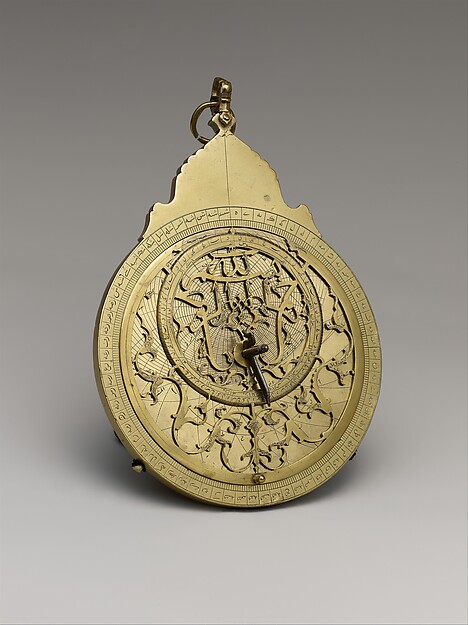
Visual material can clarify the Abbasid route. A map of Baghdad shows urban planning; a manuscript image shows knowledge circulation; an astrolabe or mathematical page shows scientific culture; a coin shows legitimacy; a trade map shows river and caravan movement; an image of later Cairo shows rivalry and afterlife. Each visual answers a question about how power, knowledge, and memory became material.
The source trail includes chronicles, geographical works, biographical dictionaries, legal texts, scientific manuscripts, coins, architecture, archaeology, and later memory literature. These sources preserve courtly and scholarly voices more easily than the voices of servants, enslaved people, women, rural taxpayers, and laborers. A careful reading keeps those silences visible while still using the records that survive.
The internal path connects the Abbasid hub to several other routes. Talas leads toward Central Asia and paper; Baghdad leads toward science and translation; Cairo leads toward rival caliphates; Mansa Musa leads toward West African Islamic networks; Delhi leads toward Persianate and Islamic South Asia; Indian Ocean routes show merchants and scholars moving beyond capitals. The hub becomes a connector rather than a closed golden-age summary.
The closing synthesis is that Abbasid history is a study of how a revolution became institutions, how a capital became a knowledge system, and how symbolic authority survived political fragmentation. Readers leave with a stronger question than when the Abbasids rose and fell: how did urban life, scholarship, trade, law, rivalry, and memory make the caliphate matter beyond the dynasty's direct control?
Social hierarchy gives the route a sharper human scale. Caliphs and viziers appear clearly in chronicles, but the Abbasid world also depended on soldiers, secretaries, artisans, women of the court, enslaved workers, merchants, physicians, translators, teachers, judges, farmers, and tax collectors. Each group experienced the caliphate differently. A court ceremony, a medical text, a tax record, and a market street all reveal different Abbasid worlds.
The route also needs conflict inside knowledge. Translation and scholarship were not smooth progress. Patrons competed for prestige; scholars argued over theology and philosophy; practical needs shaped what was funded; religious critics questioned some forms of speculation; court favor could protect or endanger intellectual work. This tension makes Abbasid knowledge more interesting than a simple golden-age celebration.
Economy connects Baghdad to the wider map. Grain, dates, textiles, paper, books, slaves, spices, metalwork, horses, coinage, and tax revenue moved through rivers, roads, deserts, and seas. Merchants linked Iraq to the Gulf, Central Asia, India, East Africa, and the Mediterranean. The caliphate's cultural influence depended partly on these material routes. Ideas traveled with people, credit, letters, and goods.
Samarra and military politics complicate the Baghdad-centered story. The movement of caliphal residence, the role of Turkish military households, and the tension between army power and court authority show that the Abbasid state was not stable simply because Baghdad was brilliant. Military dependence, fiscal strain, and factional competition weakened direct rule while leaving caliphal symbolism alive.
Women appear unevenly in the sources, but their absence from many official narratives is itself instructive. Elite women could influence patronage, succession, property, and court culture; enslaved women and performers could shape music, poetry, and household politics under constrained conditions; ordinary women appear more often through legal and social traces. The route becomes more careful when it names both visibility and silence.
For readers arriving through a timeline search, the route has a clean sequence: revolution, Baghdad, translation, rivalry, fragmentation, Mongol sack, and afterlife. For readers arriving through a summary search, the answer is thematic: legitimacy, capital, knowledge, law, trade, rivalry, and memory. The hub works because both routes lead to the same structure rather than competing with each other.
The Abbasid route also helps readers compare centers and edges. Baghdad explains court and scholarship; Khurasan explains revolutionary support and eastern networks; Samarra explains military politics; Cairo explains rival caliphal claims; Central Asia explains frontier scholarship and trade; West Africa and India show how Islamic institutions traveled beyond Abbasid administration. The story becomes larger when influence and control are kept separate.
The final comparison is between administrative power and cultural afterlife. Abbasid officials could lose provinces, armies could dominate courts, and rival dynasties could claim authority, yet the memory of Baghdad, Arabic scholarly culture, legal traditions, and caliphal symbolism continued to matter. That difference between ruling and shaping is the hub's most useful lesson.
Read the events in order first; the page is built to reveal change over time.
Ask which pressures existed before the visible turning point and which actors had room to choose.
Follow what changed afterward in institutions, borders, law, belief, or everyday life.
Notice which events became symbols and why later generations kept returning to them.
Ask how anti-Umayyad mobilization, Khurasani networks, Abbasid family claims, and Iraqi support turned rebellion into durable government.
Read Baghdad through rivers, offices, markets, libraries, patronage, military force, and urban populations rather than as a symbol alone.
Follow translation and scholarship through languages, patrons, paper, physicians, mathematicians, astronomers, and court needs.
Use Fatimid Cairo and the Mongol sack to see where Abbasid authority became contested, symbolic, or broken.
Follow judges, jurists, theologians, mosque teachers, and hadith scholars as public authorities beside the caliphal court.
Use paper, manuscripts, coins, instruments, book markets, and urban architecture to connect ideas with physical evidence.
Choose a Reading Path
Start With the Timeline
Use the related timeline first when you want a chronological route through the topic.
Start with c. 610 CE: Beginning of Muhammad's RevelationsOpen a Person Page
Use people pages when the topic is easier to understand through leadership, resistance, reform, or memory.
Start with 622 CE: Hijra to MedinaUse Year Pages
Use year pages when you need a fast answer to what changed in a specific year.
Start with 637 CE: Rashidun Conquest of JerusalemReturn to the Map
Use the map to keep geography visible while moving between events and regions.
Start with 661 CE: Umayyad Caliphate FoundedNeed the Timeline
Start with the Abbasid Revolution, then move to Baghdad, the House of Wisdom, Fatimid Cairo, and the Mongol sack.
Start with 751 CE: Battle of TalasNeed Baghdad
Read Baghdad Founded before the House of Wisdom so the intellectual story has an urban and administrative setting.
Start with 969 CE: Fatimid Cairo FoundedNeed Science
Use Al-Khwarizmi and the House of Wisdom to connect Islamic-world history with mathematics, astronomy, translation, and later knowledge transfer.
Start with February 1258: Mongol Sack of BaghdadNeed the Wider Network
Move outward to Talas, Cairo, Mansa Musa, Delhi, and Indian Ocean routes when the question is how Abbasid influence traveled beyond Baghdad.
How the Story Builds
Begin with Beginning of Muhammad's Revelations. The opening event usually shows the pressure that made the route necessary: a crisis of authority, an expanding exchange system, a new technology, a contested idea, or a conflict that older institutions could no longer contain.
Battle of Talas works as a checkpoint because it lets readers ask what had become irreversible, which actors still had choices, and how the route changed scale between the opening event and the later consequences.
The later edge of the route includes House of Wisdom Flourishes, Fatimid Cairo Founded, and Mongol Sack of Baghdad. These pages help readers see what survived beyond the first shock: institutions, borders, laws, memories, technologies, movements, or arguments that kept shaping later history.
The route is easier to remember through people and places. Watch figures such as Muhammad, Umar ibn al-Khattab, Sophronius of Jerusalem, Muawiya I, and Ali ibn Abi Talib move through settings such as Mecca, Medina, Jerusalem, Damascus, and Kufa and the eastern caliphate; that is where large structures become visible as choices, risks, costs, and memories.
The Abbasid Revolution shifts the route from Umayyad Damascus toward Iraq, Khurasan, and a new language of dynastic legitimacy.
Baghdad turns caliphal power into an urban system of administration, scholarship, trade, and public ceremony.
Fatimid Cairo shows that Islamic-world authority could be plural, competitive, and regionally grounded.
The Mongol sack destroys a capital but does not erase the wider legal, scholarly, commercial, and religious world that Abbasid history helped shape.
As direct rule fragmented, Abbasid memory, titles, law, scholarship, and urban models continued to shape later Islamic worlds.
- Which event in Abbasid Caliphate feels like the true point of no return, and why might another reader choose a different event?
- What changes if the route is read from the perspective of ordinary people rather than rulers, armies, inventors, reformers, or institutions?
- Which consequence was immediate, and which consequence only became clear decades later?
- Where does the map change the interpretation by showing distance, borders, routes, ports, capitals, or frontiers?
- What made Abbasid legitimacy different from Umayyad legitimacy?
- How much of Baghdad's intellectual life depended on imperial patronage, and how much depended on wider urban markets and scholarly networks?
- When did the caliphate become more symbolic than administrative?
- Why does the destruction of Baghdad remain such a powerful memory even though Islamic history continued in many regions?
- Which sources show court power clearly, and which communities remain harder to see?
- How did paper, book markets, instruments, and urban spaces change what knowledge could do?
Interactive Timeline
Follow Abbasid Caliphate by sequence
Beginning of Muhammad's Revelations
Islamic tradition places the first revelations to Muhammad near Mecca, beginning a religious movement that would transform Arabia and much of the wider world.
Read the full event pageMap Layer
Abbasid Caliphate geography
Gold pins mark the approximate locations of published event pages. This is a schematic locator map, not a historical border map.
Coordinates are approximate and are used to help readers orient themselves before opening a full event page.
Route Events
Events in This Topic
Beginning of Muhammad's Revelations
Islamic tradition places the first revelations to Muhammad near Mecca, beginning a religious movement that would transform Arabia and much of the wider world.
Hijra to Medina
Muhammad and his followers migrated from Mecca to Medina, creating a new community that linked religious authority with social and political organization.
Rashidun Conquest of Jerusalem
Jerusalem surrendered to the Rashidun caliphate after Byzantine control in the Levant weakened, placing one of the eastern Mediterranean's most sacred cities inside the expanding Islamic political world.
Umayyad Caliphate Founded
The Umayyad dynasty established a caliphal regime centered on Damascus, turning early Islamic rule toward a more durable dynastic and imperial form.
Abbasid Revolution
The Abbasid movement overthrew the Umayyad dynasty and reoriented caliphal power toward Iraq and the eastern Islamic world.
Battle of Talas
Tang and Abbasid forces fought near the Talas River as rival powers competed over Central Asian alliances, trade corridors, and frontier influence.
Baghdad Founded in 762: Al-Mansur, Round City, and Abbasid Aftermath
In 762, Abbasid caliph al-Mansur founded Baghdad as the Round City near the Tigris. What happened was a capital-building project; the main side was the Abbasid court; why it matters is that the city became a political and scholarly center with a long aftermath.
House of Wisdom Flourishes
The Abbasid court's Bayt al-Hikmah, or House of Wisdom, became a symbol of translation, scholarship, and mathematical and scientific work in Baghdad.
Fatimid Cairo Founded
The Fatimids founded Cairo after taking Egypt, creating a new capital that competed with Abbasid authority and reshaped Islamic North Africa and the eastern Mediterranean.
Mongol Sack of Baghdad
Mongol forces under Hulagu captured Baghdad, ending the Abbasid caliphate's political center and shocking the Islamic world.
References
Where to Check the Facts
- Encyclopaedia Britannica: Abbasid caliphateReference for the Abbasid takeover, Baghdad capital, political chronology, and later Mongol destruction.
- Encyclopaedia Britannica: Baghdad, Abbasid historyReference for the founding of Baghdad and its Abbasid urban setting.
- Encyclopaedia Britannica: Islamic world, conversion and crystallizationReference for early Islamic expansion, Umayyad-Abbasid transition, conversion, and social change.
- The Metropolitan Museum of Art: Trade and Travel in the Islamic WorldReference for Islamic-world land and sea paths, travel, and exchange with China, the Near East, and Indian Ocean networks.