At a Glance
The shape of the event
- Date
- c. 200 BCE-600 CE
- Place
- Nazca Desert
- Type
- Landscape and Ritual Construction
Nazca communities created large geoglyphs in the desert, turning landscape, movement, ritual, and visibility into historical evidence.
c. 200 BCE-600 CE; place the event in Nazca Desert before comparing causes or consequences.
The event gives the atlas a visual route into Indigenous American landscape history without treating the images as mysteries detached from society.
Nazca communities / Andean ritual specialists are the first names or groups to compare before widening the story.
The geoglyphs became one of the most durable material traces of ancient Andean ritual life.
The geoglyphs became one of the most durable material traces of ancient Andean ritual life.
The event gives the atlas a visual route into Indigenous American landscape history without treating the images as mysteries detached from society.
Follow the Nazca Lines into connected histories of Andean landscape-making: how societies turned arid plains, terraces, and river valleys into stages for public ritual, production, and power.
Background
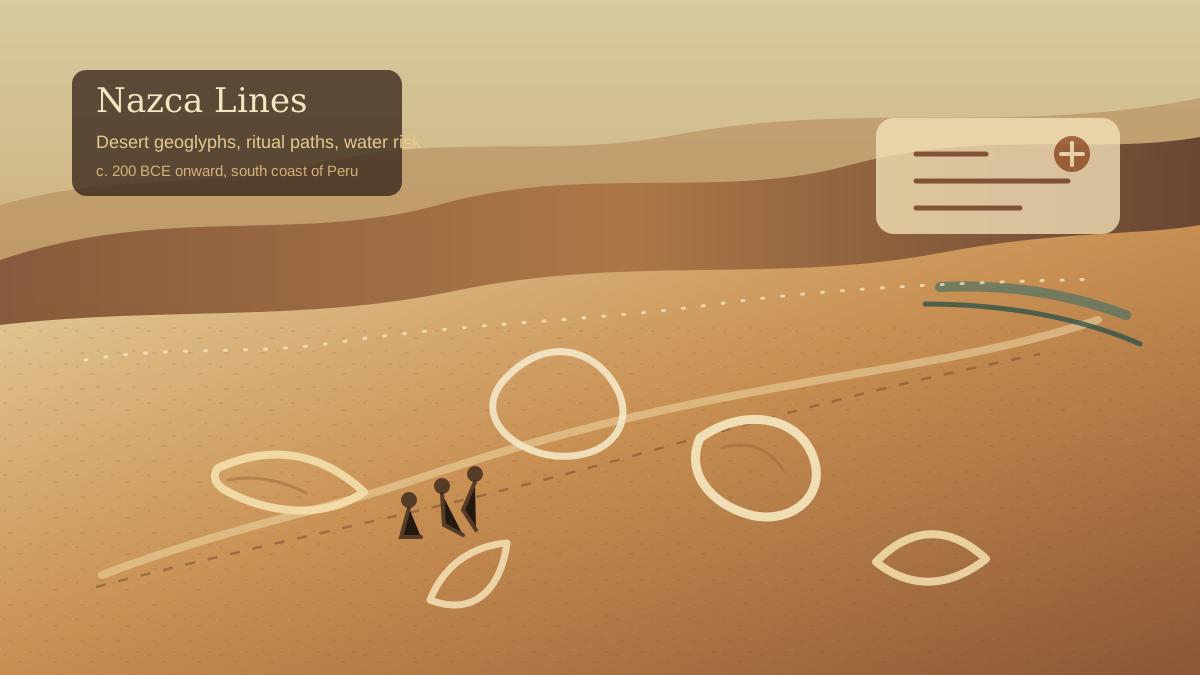
The Nazca Desert is a narrow coastal plain wedged between the Pacific and the Andes, where strong winds, minimal rainfall, and a stable surface preserve marks that elsewhere would vanish. From about 200 BCE to 600 CE, groups now called Nazca built villages, tended irrigation, and practiced ritual life shaped by this environment. Ritual specialists and local communities negotiated relationships with ancestors, water sources, and the visible world. The making of geoglyphs—long straight lines, geometric shapes, and representational figures—was embedded in movement across the plain: processions, ritual walks, or viewing routes that tied settlements to sacred places. These constructions required coordination of labor, local knowledge of materials and microclimates, and decisions about when and how to open the desert surface.
Archaeology records traces of tools, patterns of wear, and the persistence of the designs; oral memory and later public attention add other layers. No single explanation—ritual offering, cosmological map, territorial marker, itinerant performance—fully accounts for the Lines. Instead, they sit at the intersection of environment, social organization, and religious practice, their survival shaped as much by dry conditions as by human intention. The Nazca Lines are richer when they are treated as landscape practice rather than a mystery postcard. The geoglyphs were made by removing dark desert stones to expose lighter ground beneath, creating shapes and lines that worked at a scale larger than ordinary human viewing.
Their setting in one of the world's driest coastal deserts matters because water, ritual movement, mountains, and pathways shaped how people used the landscape. Interpretation needs caution. Some lines may relate to processions, water rituals, astronomy, social gathering, or sacred geography, but no single explanation accounts for everything. A strong page lets the evidence stay plural: archaeology, aerial survey, preservation science, and local environmental knowledge all matter.
The Turning Point
What changed during the period when the Lines were made was not merely a technical innovation but a social reorientation of landscape. Nazca communities and Andean ritual specialists chose to scale ritual expression to the horizontal sweep of the desert. That choice involved concrete acts: clearing the dark surface stones to expose paler subsoil, aligning long straight pathways across dunes and plains, and arranging figural forms—birds, animals, and abstract signs—at sizes legible across valleys and ridgelines. These were collective projects requiring organized labor, local leadership, and the sanction of ritual experts who could frame these interventions as meaningful for rain, fertility, or social cohesion.
The decision to make images that depended on movement and distant sight changed how people used the plain: pathways and sightlines directed processions, gatherings, and perhaps the routes of offerings. By making ritual visible at scale, communities turned ephemeral gestures into durable groundworks. This was a deliberate amplification of social life into landscape: choices about placement, orientation, and method made the desert itself a medium of memory and authority. The Lines reveal those priorities—how groups negotiated religious expertise, communal investment, and the desire to make their claims legible across space and time. The turning point was the transformation of desert surface into a durable ritual and social map.
Nazca communities made human activity visible across a landscape where survival depended on water, seasonal knowledge, and shared meaning.
Consequences
In the near term, the geoglyphs altered how ritual and social identity were practiced. Large-scale features created focal points for communal action—processional routes, seasonal ceremonies, or visible declarations of belonging linked to water and agricultural cycles. Those activities reinforced social networks and the authority of ritual specialists who directed labor and interpreted the landscape. Over the long term, the Lines became one of the most durable material traces of ancient Andean ritual life: their survival in dry conditions insulated them from the slow erasures that erase smaller, less public acts.
Because they are so visible, they shaped later encounters—when outsiders first documented or photographed them, when national and international interests recognized their value, and when modern infrastructure and tourism further reframed their meanings. Importantly, interpretations of what the Lines signify diverge depending on whose evidence is centered: local community practices, ritual expertise, archaeological patterning, colonial and national records, and later public memory each tell partial stories. That multiplicity is itself a consequence—the Lines have become a contest of narratives as much as an archaeological resource. Their existence forces historians to weigh landscape, labor, law, and memory alongside iconography, rather than treating the designs as isolated mysteries.
The lines' afterlife includes modern rediscovery from the air, UNESCO protection, tourism pressure, conservation debates, and popular speculation. Their history is not only about why they were made; it is also about how fragile evidence survives when curiosity, roads, climate, and visitors change the desert.
Interpretation Notes
Interpretations of Nazca Lines Created depend on whose evidence is centered: rulers and official records, affected communities, oral memory, archaeology, law, diplomacy, labor, and later public memory do not always tell the same story.
Why Keep Reading
Follow the Nazca Lines into connected histories of Andean landscape-making: how societies turned arid plains, terraces, and river valleys into stages for public ritual, production, and power. The Lines open questions about labor organization, the authority of ritual specialists, and the ways visibility shapes politics. Reading the Lines alongside histories of irrigation, mountain cults, and coastal exchange shows how indigenous communities made environment and belief inseparable. For readers, the next steps invite tracing routes—literal and interpretive—through ancient institutions, colonial disruption, and modern preservation debates. Read Nazca with Chavin, Tiwanaku, Inca expansion, and Andean independence routes to see how South American landscapes carried ritual, political, and environmental meaning across very different eras.
Reading Path
Follow the story without losing the thread
Before This
- Monte Alban Foundedc. 500 BCE
- Chavin Culture Flourishesc. 900 BCE
- Olmec Centers Flourishc. 1200 BCE
After This
- Tiwanaku State Expandsc. 700 CE
- Inca Expansion under Pachacutic. 1438
- Tupac Amaru II Rebellion1780-1781
Same Period
- Olmec Centers Flourishc. 1200 BCE
- Chavin Culture Flourishesc. 900 BCE
- Monte Alban Foundedc. 500 BCE
Wider Timeline
Mind Map
How to think about Nazca Lines Created
environmental preservation
Dry, wind-swept desert conditions preserved cleared earth and stone, making geoglyphs durable over centuries
Map Layer
Where this event sits geographically
Gold pins mark the approximate locations of published event pages. This is a schematic locator map, not a historical border map.
Coordinates are approximate and are used to help readers orient themselves before opening a full event page.
References
Where to Check the Facts
- UNESCO World Heritage Centre: Lines and Geoglyphs of Nasca and PalpaSpecific World Heritage reference for the Nazca and Palpa geoglyphs, desert setting, cultural landscape, and archaeological significance.
- Encyclopaedia Britannica: Nazca LinesSpecific reference for the Nazca Lines as desert geoglyphs, their forms, dating, and scholarly interpretation.