How to Read the Year
Why does 1215 CE in History deserve a focused year page?
Magna Carta makes 1215 a year about bargaining under pressure, not a finished constitution. King John faced rebellion, military failure, fiscal demands, aristocratic anger, and church conflict. The document emerged from crisis between a king and powerful subjects before later generations turned it into a wider symbol of liberty.
The clauses were practical and uneven. They addressed debts, inheritance, reliefs, scutage, forests, widows, towns, courts, and limits on arbitrary action by royal officials. Some later readers remembered only broad principles, but the original document was full of specific feudal and administrative grievances.
The year also shows how failure can become legacy. The 1215 settlement quickly broke down and civil war followed. Yet reissues of Magna Carta, legal memory, parliamentary development, and later political argument gave the text a much longer life than its immediate success would suggest.
A careful page separates original audience from later myth. Magna Carta did not create democracy, universal rights, or modern parliament in 1215. It did, however, preserve language about lawful judgment and limits on royal power that later lawyers and politicians could reuse.
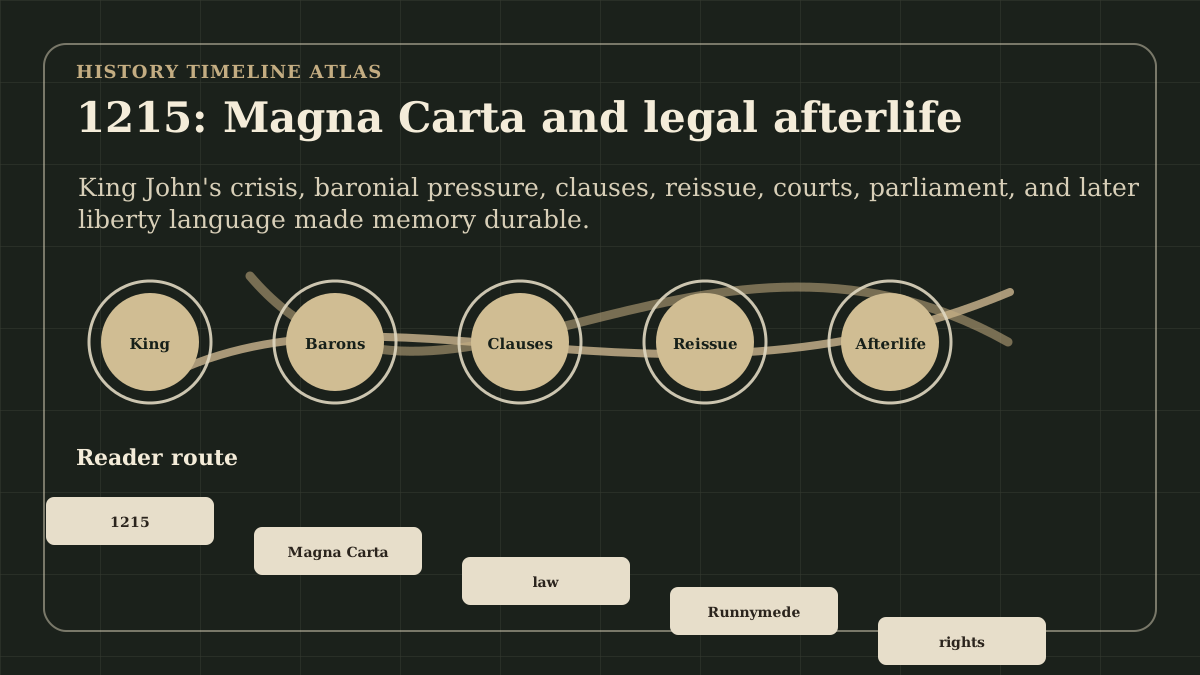
The best route moves from Runnymede to English civil conflict, parliament, Atlantic revolutions, and rights language. The year matters because a baronial crisis became a resource for much later constitutional imagination.
The physicality of the charter helps the page breathe. Seals, scribes, copies, public reading, reissue, storage, and legal citation turned a negotiated text into an object that could travel through institutions. Its later power depended on preservation and reuse as much as on the drama at Runnymede.
King John's weakness also keeps the story grounded. Military losses in France, disputes with the church, heavy taxation, and distrust among leading barons made the charter a crisis document. It was not drafted in a calm theory seminar.
The clauses about lawful judgment and limits on royal officers became famous because they were reusable. Later readers could detach those phrases from their feudal setting and make them speak to parliament, common law, colonial resistance, and modern rights culture.
The year is therefore useful for teaching how documents change meaning. A text can begin as elite bargaining, fail almost immediately, and still become a durable political resource because institutions keep copying, citing, and arguing over it.
That afterlife should be read with discipline. Magna Carta's later reputation is real historical evidence, but it is evidence of reuse rather than proof that 1215 already contained modern rights. The richer question is how legal memory lets later societies borrow authority from older crisis documents.
1215 CE in History gathers events that help readers move from a single date into wider historical patterns. A useful year entry does more than answer what happened; it shows why people keep using the year as a marker for change.
The connected events show how decisions, institutions, conflicts, ideas, and consequences crossed beyond one location or one person. The event links explain the immediate story, while the topic routes and timelines show what came before and after.
The year also helps organize broad questions. It gives readers a concise answer and a direct path into deeper event pages where causes, turning points, consequences, maps, and references are easier to inspect.
Read the date in three passes. First ask what happened inside the year itself. Then ask which older pressures made the event possible. Finally ask which later pages reuse the same vocabulary, institutions, borders, technologies, or memories. That sequence keeps the page from becoming a trivia answer.
Even when only one event is currently attached, the year still has a job: it gives students and curious visitors a stable chronological doorway into the atlas. The page makes the doorway useful by pointing to the event, the topic route, the timeline, the map, and the evidence trail that can turn a date into a broader explanation.
This year matters because it connects Magna Carta to a wider sequence of causes and consequences. It gives the reader a chronological anchor while still pointing outward to people, places, institutions, and later effects. A thin year page would only name the event; a useful year page explains why this date is a handle for a larger route through history. 1215 matters because it shows how a local political settlement can acquire a world-historical afterlife. Magna Carta began as a negotiated limit on King John's rule in a feudal context. Its later power came from reuse: lawyers, rebels, parliamentarians, colonists, and reformers found language in it for arguing that government could be bound by law.
Reader Lenses
Look for the pressures that made change possible.
Identify who acted and what options were available.
Follow what changed after the event.
Ask why this date still appears in historical summaries.
Start with King John's immediate failures and baronial pressure rather than later mythology.
Read the practical legal and fiscal grievances behind famous constitutional language.
Track reissue, reinterpretation, and later political uses of the charter.
How This Year Connects
1215 CE in History is anchored by Magna Carta. Read those pages together and the year stops being a date label; it becomes a crossroads where immediate choices met older pressures and opened later consequences.
The setting matters as much as the date. The year moves through Runnymede and belongs to Medieval World. That combination helps readers avoid treating the year as isolated; geography, institutions, conflict, belief, economy, and communication all shape what a date can mean.
The year also opens into people and themes. Figures such as King John appear because their choices made the year visible, while themes such as England, Law, and Monarchy explain why the consequences outlived the moment. A useful next step is usually an event page, then a topic route, then a timeline.
Evidence changes the way a date reads. A treaty, battle report, inscription, newspaper, census, court record, memoir, photograph, or archaeological trace does not answer the same question. Looking at source type helps separate what happened in the year from how later people remembered it.
A year page is most useful when it keeps two scales open at once. The first scale is immediate: what happened, where, and who was involved. The second scale is interpretive: why later readers use this date to organize a wider story. Holding both scales together makes the page a starting point for deeper reading rather than a dead-end answer.
The before-and-after frame matters too. A date rarely begins the forces it reveals. Earlier pressures made the linked event possible, while later pages show which effects were temporary, which became institutions, and which turned into memory. Reading the year this way helps students avoid the false impression that history changes only when the calendar flips.
Use this page as a junction. If the event feels too brief, follow the topic route for background; if the cause feels too abstract, open the event page for sequence; if the consequence feels larger than the date, move into the timeline. The value of a year page is that it lets readers change scale without losing their place.
Read 1215 beside Magna Carta, English civil conflict, parliament, Atlantic revolutions, and rights explainers. That path keeps the original feudal crisis separate from the later constitutional afterlife.
Then compare 1215 with 1776, 1789, 1848, and 1948 where available. The comparison asks how rights language moves from elite bargaining to public claims.
Events in This Year
- June 15, 1215Magna Carta
English barons forced King John to accept Magna Carta, a charter that limited royal action through written obligations and procedures.
Map Layer
1215 CE in History geography
Gold pins mark the approximate locations of published event pages. This is a schematic locator map, not a historical border map.
Coordinates are approximate and are used to help readers orient themselves before opening a full event page.
References
Where to Check the Facts
- Encyclopaedia Britannica: Magna CartaSpecific reference for the 1215 CE anchor event, chronology, and historical setting.
- Encyclopaedia BritannicaBackground reference for chronology, names, and historical context.
- WikidataStructured reference for dates, places, alternate names, and entity links.