Historical Role
Ashoka is most useful when read as a ruler after conquest, not only as a pious name attached to Buddhism. The Kalinga War gave later tradition and inscriptional memory a scene of remorse, but the larger historical issue is how an emperor tried to make ethical language part of rule across a very large Mauryan state. His edicts turned royal concern into public messages about restraint, welfare, officials, animals, religious respect, and the conduct expected from subjects and administrators.
Administration stays in view because Ashoka's power moved through roads, provincial centers, officers, inscriptions, gifts, punishments, and communication across different languages and regions. That machinery matters because moral rule was not simply a private conversion. It had to be announced, repeated, interpreted, and enforced through the tools of empire.
Ashoka also helps readers avoid treating Buddhism as separate from politics. His patronage gave Buddhist institutions prestige and reach, yet the edicts speak in a broader language of dhamma that addressed social conduct, religious communities, family duty, and royal responsibility. The result is a biography about empire, ethics, communication, and memory at once.
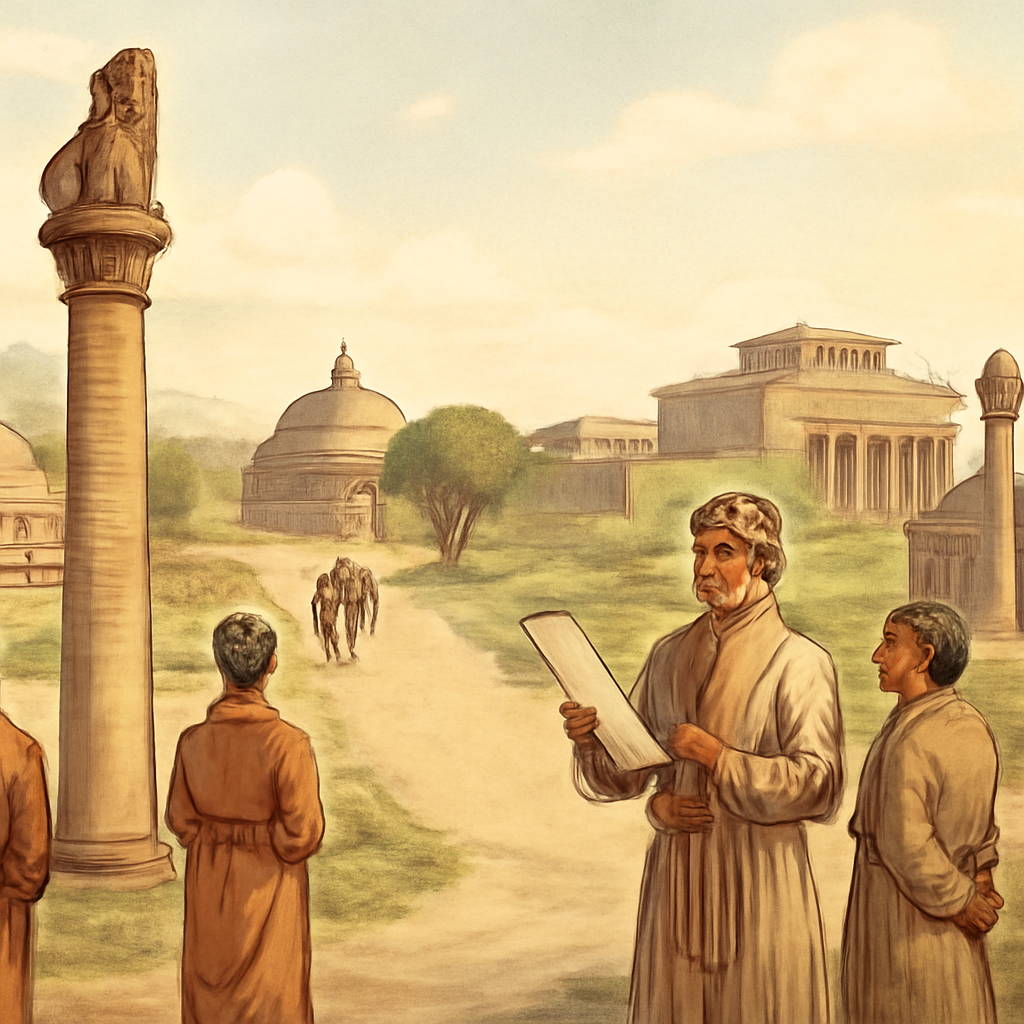
The edicts turn Ashoka into a source problem as well as a ruler. Rock and pillar inscriptions were placed across different regions, using public language that could travel beyond the court. Their survival lets readers hear a ruler explaining policy, regret, moral conduct, and administrative concern in a way that many ancient biographies cannot. The evidence is powerful because it is official, public, and material; it is also limited because it tells readers how the state wanted rule to be understood.
Kalinga remains the emotional hinge, but the aftermath is the deeper historical question. Remorse only mattered politically if it changed how power was described and organized. Welfare measures, religious respect, officers, public instruction, and concern for subjects all suggest a ruler trying to turn conquest into a different kind of legitimacy. That effort still belonged to empire, with hierarchy and command intact.
Ashoka's afterlife also matters. Modern states, Buddhist communities, school histories, national symbols, and global ethics discussions have all reused his image. That afterlife can inspire readers, but it can also make Ashoka too clean. A stronger page keeps the contradiction visible: a conqueror remembered for remorse, an emperor associated with compassion, and a state using public moral language while remaining a state.
Ashoka helps connect individual action with wider historical change in Mauryan Empire. The biography works best when it keeps the surrounding world visible: authority, conflict, belief, reform, or discovery moved through decisions made under pressure.
The related events show how roles such as Mauryan emperor can be read through dates, places, institutions, and consequences rather than through reputation alone. The biography explains why this person matters, while the linked events explain what changed around them.
A richer reading starts with the limits around the person. Some figures acted through offices, armies, courts, laboratories, churches, parties, ships, trade networks, or protest movements; others became important because later communities turned their lives into symbols. The page therefore asks what this person could actually change, what was already moving before them, and which consequences later readers attached to the name.
Read the biography against absence as well. Many lives around Ashoka are less visible in the record: opponents, collaborators, family members, workers, soldiers, students, subjects, victims, translators, scribes, or local communities. Keeping those surrounding people in view makes the page less like a name card and more like an entry point into historical systems.
Ashoka also works as a navigation point. Open the linked event pages to see where the biography becomes chronology, then use the topic routes to test whether the same pattern appears beyond one life. That extra step matters because historical importance is rarely contained inside a single decision; it usually spreads through institutions, witnesses, opponents, imitators, and later arguments over memory.
Sources and Method
Source method: read Ashoka through the linked Ashoka Turns Toward Buddhism event, the Britannica biography, and the World History Encyclopedia overview, while treating edicts as political communication rather than as a simple diary of inner belief.
Why This Person Matters
Ashoka matters because the connected events make a larger historical pattern easier to follow. The page links biography to consequences so readers can move from a life story into the wider atlas, compare the person with contemporaries, and understand why later memory kept returning to this figure. Ashoka matters because he makes ancient empire feel less like a list of dynasties and more like a problem of communication and legitimacy. His reign connects conquest, remorse, public inscriptions, Buddhist patronage, administrative scale, and the question of whether a ruler can use state power to promote ethical conduct without erasing the coercion that makes empire possible.
The page is also useful for comparison: Qin standardization, Roman law, Umayyad monumentality, and Mughal debate all show rulers trying to make authority readable. Ashoka's special contribution is that the language of rule became openly ethical and public.
What becomes clearer when this person's life is read through connected events instead of isolated biography, and where do the consequences outgrow the person?
How to Read This Life
Ashoka is easiest to understand when the biography is read beside Ashoka Turns Toward Buddhism. Those events show the historical setting in motion: dates, places, institutions, conflict, and consequences give the life a structure that a short biography alone cannot provide.
The surrounding route crosses Classical Antiquity and locations such as Kalinga. That matters because influence rarely stays inside one person. It moves through offices, armies, movements, laws, texts, speeches, institutions, and later memory.
A useful reading path starts with the role labels, then opens the event pages to see what changed, and finally compares this person with other actors facing similar pressures.
For readers who arrive on a biography first, this page is meant to become a doorway rather than a stop. Read one paragraph for the answer, then use the turning points, topic routes, and event links to test whether the person's reputation matches the wider evidence.
Read Ashoka beside Maurya Empire, Qin unification, Han foundation, and early Buddhist routes. That path asks how large states tried to make conquest governable through law, roads, officials, moral language, and public ritual.
Then compare him with Constantine, Abd al-Malik, and Akbar. Each figure shows a different relationship between state power, public religion, legitimacy, and the problem of ruling diverse communities.
Read Ashoka through the roles of Mauryan emperor rather than as reputation alone.
Place the biography inside Mauryan Empire and the wider events linked below.
Ask which choices were personal and which were constrained by institutions or crisis.
Follow how later memory simplified, contested, or reused this person's role.
Treat inscriptions as public political communication: who could see them, who repeated them, and what behavior they asked for.
Follow roads, officials, provinces, punishments, and welfare measures as the practical side of moral kingship.
Ask why later readers made Ashoka a model of remorse, Buddhist patronage, and ethical rule.
Legacy, Limits, and Memory
A useful biography keeps scale in view. Ashoka mattered because individual choices met a wider structure: institutions, enemies, allies, audiences, technologies, beliefs, and inherited conflicts. The related event pages help separate personal agency from conditions that no single person controlled.
Memory is part of the biography too. Later readers often simplify a figure into a hero, villain, founder, reformer, conqueror, prophet, scientist, or symbol. Those labels can be helpful, but they become misleading when they hide conflict, compromise, exclusion, uncertainty, or the experiences of people outside the main biography.
For the next step, compare this life with a topic route rather than stopping at the name. If the same pattern appears across several figures, the reader has found a historical structure; if this person breaks the pattern, the contrast is usually where the most interesting question begins.
Ashoka is often remembered as the good emperor who turned from violence to compassion. That memory is important, but a richer reading asks how far imperial remorse can travel when the state still depends on hierarchy, taxation, punishment, and command.
Buddhism is not decoration around a ruler in this story. The historical question is how religious patronage, ethical vocabulary, public inscriptions, and imperial administration changed one another.
Turning Points to Read Next
Ashoka Turns Toward Buddhism
After the Kalinga War, Ashoka promoted Buddhist ethics and imperial moral rule through inscriptions and public policy.
Related Timeline
- c. 260 BCEAshoka Turns Toward Buddhism
After the Kalinga War, Ashoka promoted Buddhist ethics and imperial moral rule through inscriptions and public policy.
References
Where to Check the Facts
- Encyclopaedia Britannica: AshokaBiographical reference for Ashoka's life dates, roles, institutions, and historical setting.
- World History Encyclopedia: Ashoka the GreatNarrative reference for Ashoka's political and religious legacy after conquest.